
OEM/ODM Water Purifier and Dispenser Manufacturing: The Complete Guide for Brands
Quick answer: A brand launching its own water purifier or water dispenser can work with a manufacturer in three ways:
- ODM: customise a proven platform the factory already produces.
- OEM: the factory builds the brand’s own design.
- Joint development: both teams create a new product together.
The right route depends on budget, time to market and how differentiated the product must be. A successful program then follows a fixed sequence:
- product definition
- platform or design selection
- filter and water-quality specification
- certification planning for each target market
- tooling and samples
- pilot production
- mass production with incoming, in-process and final quality control
- a long-term replacement filter supply
Brands that plan certification and filter supply at the start avoid the two most expensive surprises in this category: products that cannot legally be sold, and customers who cannot buy replacement filters.
How this guide differs from a supplier checklist: it follows the brand’s full program from concept to after-sales. If you are still shortlisting factories, see how to find the best water purifier manufacturer in China and how to choose an OEM/ODM manufacturer of water purifiers.
What is the difference between OEM, ODM and joint development for water purifiers?
The three manufacturing models differ in who owns the design, how much the brand invests, and how long it takes to reach the market.
| Model | Who designs the product | Typical time to market | Upfront investment | Best fit |
|---|---|---|---|---|
| ODM (private label on an existing platform) | Factory; brand customises appearance, functions, filters and packaging | Shortest, often a few months | Lowest; little or no new tooling | New brands, retailers, distributors testing a market |
| OEM (build to brand’s design) | Brand supplies the industrial design and specifications | Longer; depends on design maturity and tooling | Higher; brand typically pays for molds | Brands with in-house design and clear product identity |
| Joint development (JDM) | Brand and factory engineering teams together | Longest; includes engineering validation | Highest; shared or brand-funded development | Differentiated products, new technologies, large volumes |
Many brands start with ODM to prove demand, then move to OEM or joint development for their second generation once sales data shows which features customers value. The decision also affects intellectual property. With ODM, the platform design usually remains the factory’s property, and the brand owns its trademark, artwork and any exclusive cosmetic changes it pays for. With OEM and joint development, the contract should clearly assign ownership of the design, the molds and the software.
Which water purifier and dispenser categories can be produced under OEM/ODM?
Most residential and light-commercial drinking water products can be produced under a private-label program. Common categories include:
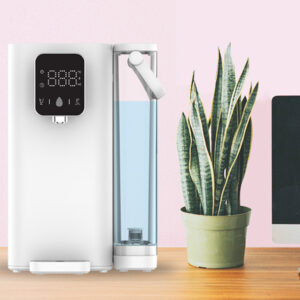
- countertop reverse osmosis (RO) purifiers that need no installation
- under-sink RO and ultrafiltration (UF) systems
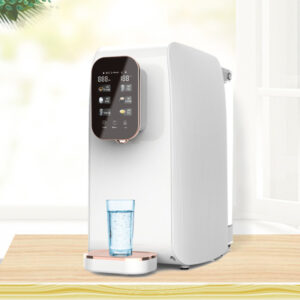
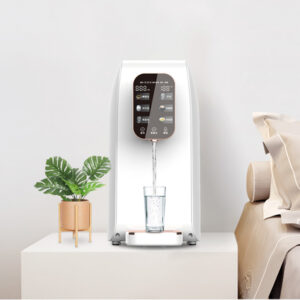
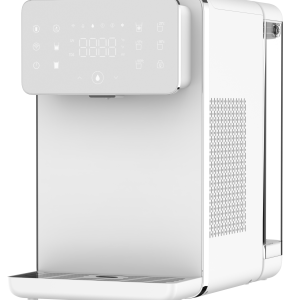
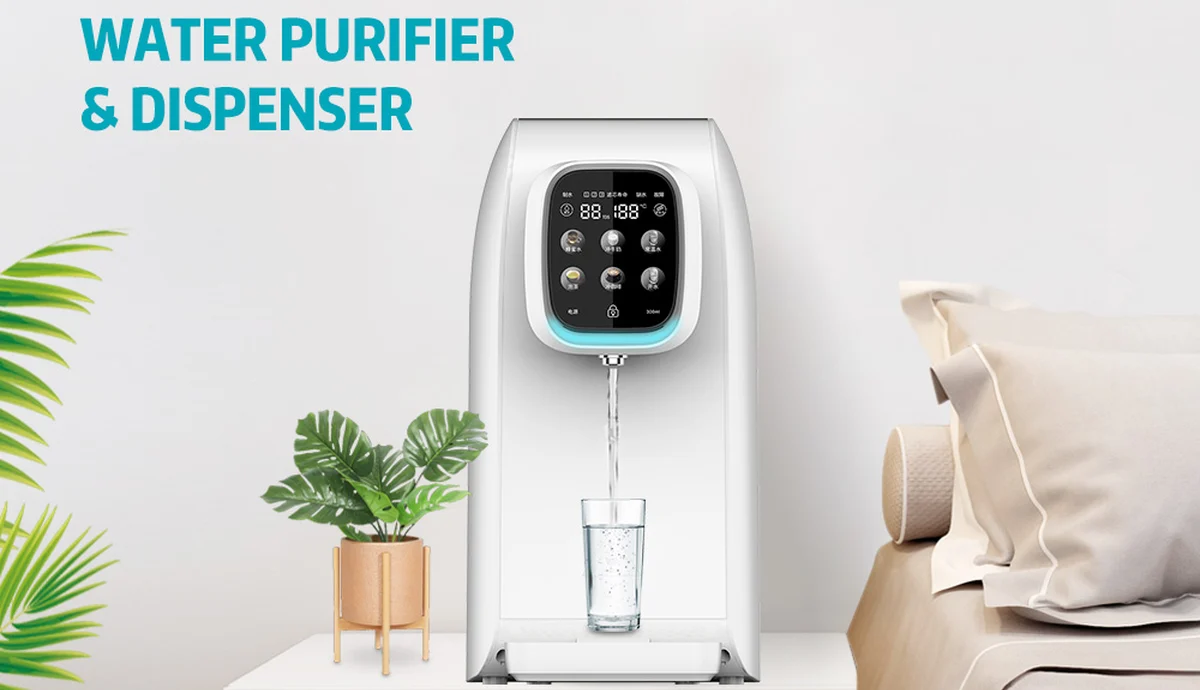
- instant hot water purifier dispensers
- hot and cold water dispensers with built-in filtration, also called bottleless or point-of-use dispensers
- sparkling water dispensers
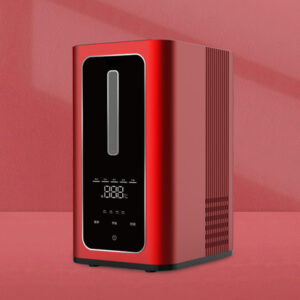
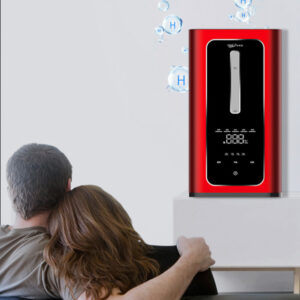
- hydrogen-rich water machines
- replacement filter cartridges for any of these
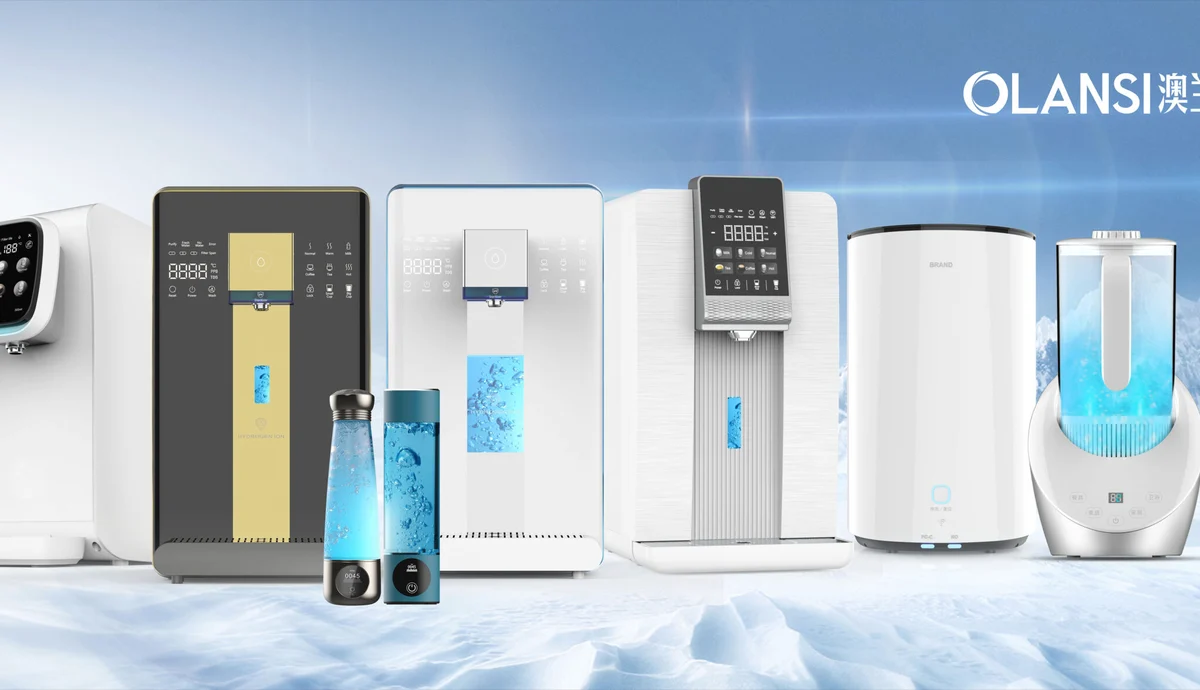
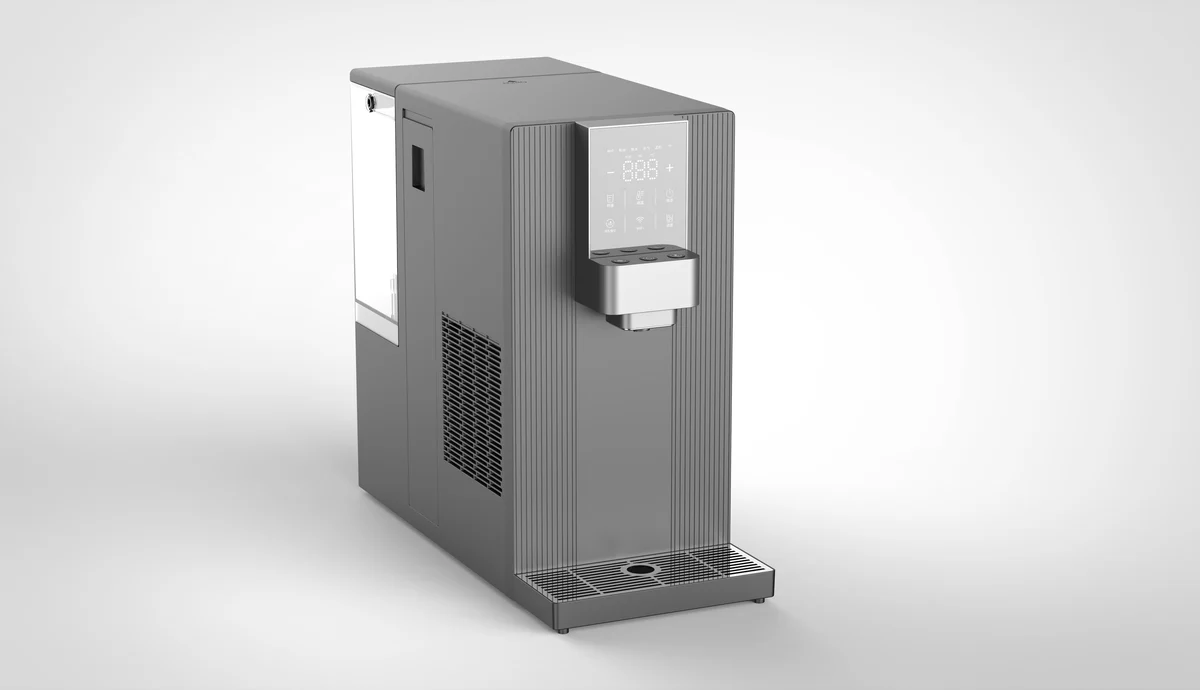
Each category carries different engineering and compliance work. A countertop RO purifier combines water treatment, a pump, electronics and often a heating element. That means water-quality performance, food-contact materials and electrical safety must all be verified. A hot and cold dispenser adds a refrigeration system and hot-tank safety. Sparkling models add CO₂ cylinder handling. Choosing a category that matches the brand’s channel, price point and service capability is the first strategic decision. See the water purifier range and the water dispenser range for examples of platforms available for customisation.
How should a brand define the product before contacting factories?
A clear product brief lets factories propose the right platform and quote comparable prices. The brief should state:
- the target market and sales channel, such as e-commerce, retail chains, direct sales or offices
- the target retail price and target landed cost
- the local water conditions the product must handle, for example high TDS, hard water, chloramine or well water
- the required treatment claims
- functions: hot, cold, ambient, sparkling, hydrogen-rich water, temperature presets, child lock
- tank sizes, flow rate and RO recovery ratio
- electrical voltage and plug type
- connectivity needs
- expected annual volume
Local water quality deserves particular attention, because it decides the filter design. A product built for low-TDS municipal water may perform poorly, or block quickly, in a market with hard or high-TDS water. Brands should share local water test data or a reference water profile with the manufacturer. They should also ask for the filter life and output quality to be validated against that profile, not only against the factory’s own tap water.
Which filter configuration should a private-label water purifier use?
The filter configuration determines what the purifier removes, how much wastewater it produces, and how much the user pays for replacement filters each year. Typical configurations are:
| Configuration | What it does well | Trade-offs | Typical market fit |
|---|---|---|---|
| Composite sediment and carbon (PP + activated carbon) | Improves taste and odour, reduces chlorine and particles | Does not reduce dissolved salts or many dissolved contaminants | Good municipal water; budget products |
| Ultrafiltration (UF) with carbon | Removes particles and bacteria-size contaminants while retaining minerals; no wastewater | Does not reduce TDS or dissolved metals | Low-TDS markets wanting mineral retention |
| Reverse osmosis (RO) with pre- and post-carbon | Broad reduction of dissolved solids, heavy metals and many contaminants | Produces wastewater; needs a pump; removes minerals | High-TDS or uncertain water quality; premium products |
| RO with remineralisation or alkaline post-filter | RO purity with adjusted taste and mineral content | Extra cartridge cost; claims must be supportable | Markets that prefer mineral or alkaline water |
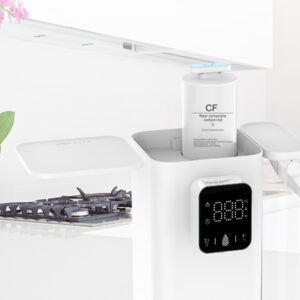
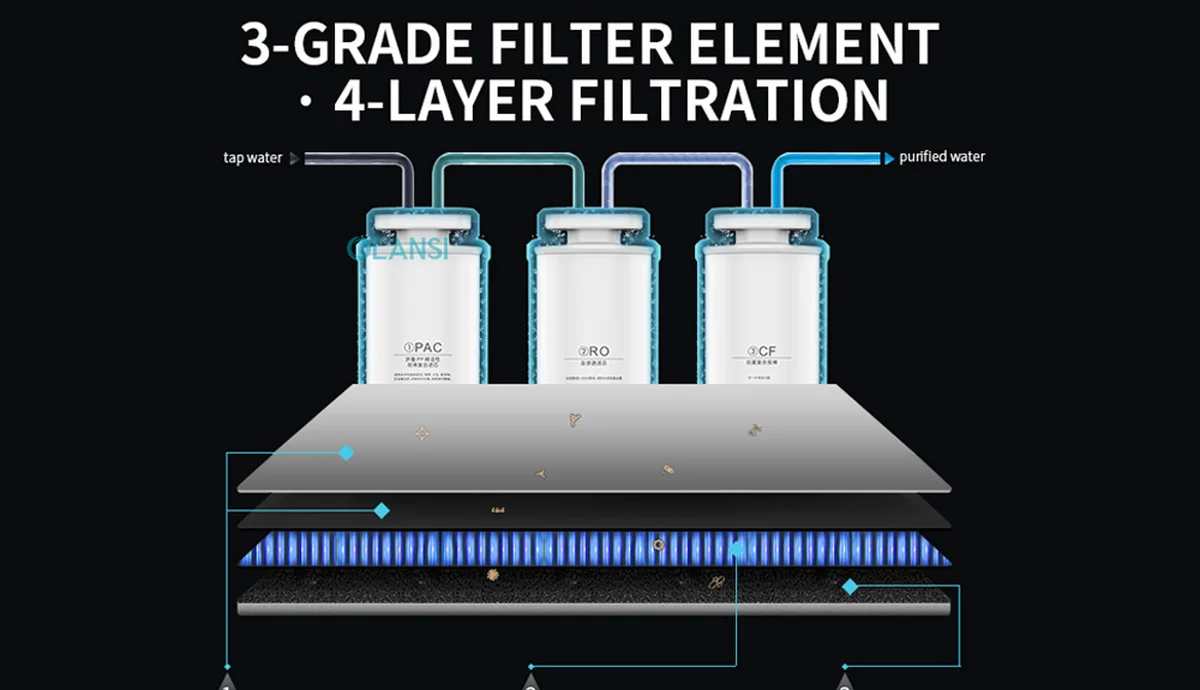
Filter design is also a commercial decision. A proprietary cartridge interface protects replacement-filter revenue and prevents low-quality copies. A standard interface makes filters easier for consumers to find, but lowers the brand’s control. Cartridge size, the number of stages and the filter life indicator should be agreed together. Different cartridges should be marked so that users replace the right one. More about multi-stage designs is in the multiple filtering of OLANSI purifiers and reverse osmosis water benefits.
How do OEM/ODM programs differ for water purifiers and water dispensers?
Water purifiers and water dispensers share filtration technology, but their manufacturing programs differ in where the engineering risk sits.
| Aspect | Water purifier (RO, UF, carbon) | Water dispenser (hot, cold, sparkling) |
|---|---|---|
| Main engineering risk | Water-quality performance, filter life, wastewater ratio | Heating and cooling safety, energy use, hygiene of tanks and water paths |
| Key components | Membrane, pump, filter housings, sensors | Compressor or thermoelectric cooler, heater, tanks, CO₂ system for sparkling models |
| Typical tests | Contaminant reduction, TDS rejection, burst and cycle tests | Electrical safety, temperature performance, scald protection, refrigerant handling |
| After-sales focus | Replacement filters and membrane life | Filters plus cleaning and sanitising routines, spare parts for heating and cooling |
Combined purifier-dispensers carry both sets of risks. A brand launching a combined product should check that the manufacturer has proven experience in both water treatment and heating and cooling appliances, and that it tests the two functions together rather than separately.
Which certifications do private-label water purifiers and dispensers need?
Certification requirements depend on the destination market and fall into three groups:
- electrical safety and electromagnetic compatibility
- materials in contact with drinking water
- water treatment performance claims
Because the brand is usually the party placing the product on the market, it carries legal responsibility for compliance. Certification should therefore be planned, budgeted and scheduled at the product definition stage.
| Market | Typical electrical and EMC requirements | Water contact and performance requirements |
|---|---|---|
| European Union | CE marking under the low voltage, EMC and (for wireless models) radio equipment rules; RoHS | Food-contact and drinking-water material rules; EU-wide requirements for materials in contact with drinking water under the recast Drinking Water Directive are being phased in, so confirm current national and EU status |
| United Kingdom | UKCA or CE marking as currently accepted | Water fittings regulations for products connected to the mains supply |
| United States and Canada | Safety listing by a recognised laboratory (for example to UL standards for water coolers and appliances); FCC for electronics | NSF/ANSI 42 (aesthetic effects), 53 (health effects), 58 (reverse osmosis), 401 (emerging contaminants), and NSF/ANSI 372 for lead content where applicable; state rules such as California’s for treatment claims |
| Australia and New Zealand | RCM electrical safety and EMC compliance | WaterMark for plumbing-connected products where required |
| Middle East, Asia and others | National marks such as SASO (Saudi Arabia), KC (Korea), PSE (Japan), CCC (China) | National drinking water product approvals and hygiene licences |
Two practical points save time. First, a performance claim such as “removes lead” must be backed by test data to the relevant standard, and in some markets by certification. Marketing copy should be written from the test report, not before it. Second, certification applies to a specific product configuration. A change of pump, heater, membrane or plastic resin after certification may require re-testing, so the supplier must notify the brand before any component change.
What does the development timeline look like from brief to launch?
A private-label water purifier or dispenser program usually moves through six stages. The duration of each stage depends mainly on how much new design is involved.
- Brief and platform selection: The brand shares the product brief. The factory proposes platforms or a design concept, with target pricing.
- Customisation and engineering: The colour, control panel, functions, filters, logo, user interface and packaging are agreed. For OEM and joint projects, industrial design, structural design and engineering validation take place here.
- Tooling and first samples: New molds are built if needed, and first samples are produced for appearance, function and water-quality checks.
- Testing and certification: Reliability testing, third-party certification testing and any market-specific approvals take place, often in parallel with sample refinement.
- Pilot run: A small production batch confirms the assembly process, quality control points and packaging, and supplies units for field testing and marketing.
- Mass production and shipment: Production follows the approved golden sample, with inspection reports for every batch.
An ODM project that changes only appearance and packaging can move from approved samples to first shipment in a short time. A new OEM design with new molds and full certification takes considerably longer. Certification is often the longest single step, so it should start as soon as the configuration is frozen.
What drives the cost and MOQ of an OEM/ODM water purifier?
Unit cost and minimum order quantity (MOQ) depend on the following factors:
- Platform: Existing ODM platforms are cheaper per unit at low volumes.
- Bill of materials: Pump, membrane, heater, compressor, display and sensors make up most of it.
- Cosmetic customisation: Colour changes, panel printing and custom parts.
- Packaging and accessories: Printed packaging, manuals and accessories.
- Certification and testing: Fees for each market.
- Tooling: New molds, usually a one-time cost paid by the brand, sometimes amortised over agreed volumes.
MOQs are lowest when the brand uses a standard platform with a logo and packaging change. They rise with custom colours, custom panels and unique parts, because each requires dedicated materials.
| Customisation level | Typical changes | Effect on MOQ and cost |
|---|---|---|
| Logo and packaging | Brand logo on product, branded gift box, manual | Lowest MOQ; minimal added cost |
| Cosmetic customisation | Housing colour, panel graphics, button layout | Moderate MOQ for coloured materials and printing |
| Functional customisation | Filter stages, temperature settings, Wi-Fi app, voltage version | Higher MOQ; possible re-certification |
| New design (OEM/JDM) | New housing, structure, electronics | Tooling investment plus volume commitments |
Brands should compare landed cost, which includes freight, duties and the cost of replacement filters, rather than the factory unit price alone.
Why is the replacement filter program as important as the purifier itself?
For most water purifier brands, replacement filters generate a large share of lifetime revenue and customer contact. A purifier sold without a dependable supply of filters creates complaints and returns. It also lets customers drift to other brands when their first filters expire.
The OEM/ODM agreement should therefore cover:
- guaranteed filter supply for a defined number of years after the last purifier is sold
- filter pricing and lead times
- branded filter packaging
- batch traceability for every cartridge
- how quickly filters can be shipped to distribution centres or directly to consumers
Brands selling online often bundle the first year of filters, or offer subscription replacement. Both depend on reliable, forecastable filter production.
How should a brand control quality during mass production?
Quality in water purifier manufacturing is controlled at three points:
- Incoming quality control (IQC): Checks pumps, membranes, carbon, resins, electronics and packaging against specifications.
- In-process quality control (IPQC): Checks assembly, sealing, wiring and labelling on the line.
- Final quality control (FQC): Tests finished units for function, leakage, electrical safety and appearance.
Water products need specific tests, including pressure and leak tests, burst and cycle tests on water paths, electrical safety tests (hi-pot and leakage current), heating and cooling performance checks, and output water checks such as TDS reduction for RO models. Aging or burn-in tests on electronics reduce early failures in the field.
A brand should approve a golden sample and a written inspection standard before mass production. It should receive inspection reports for every batch, and keep the right to independent pre-shipment inspection. The supplier should also run a change-notification process, so that no material, component or sub-supplier changes without the brand’s approval. OLANSI’s quality process is outlined on the quality control page.
How should branding, packaging and documentation be prepared?
Branding work for a private-label water purifier extends beyond the logo. The deliverables include:
- on-product logo placement and printing method
- control panel graphics and any app branding
- rating labels with the brand’s legal entity and certification marks
- gift box and shipping carton design that meets drop-test and retail requirements
- a user manual and quick-start guide in the market’s languages
- filter replacement instructions
- warranty cards
- marketing images and videos
Every claim on packaging and in the manual should be traceable to a test report or certificate.
Documentation also supports after-sales service. Brands should receive exploded views, spare parts lists, troubleshooting guides and service manuals so that their own or third-party technicians can repair units. Clear documentation reduces return rates, because many apparent defects are installation or filter-change issues that a good guide prevents. Background on how dispensers work, useful for writing user content, is in hot and cold water dispenser: how it works.
What should an OEM/ODM agreement for water purifiers include?
A written agreement protects both the brand and the manufacturer. It should cover:
- product specifications and the approved golden sample
- ownership of trademarks, artwork, designs, molds and software
- exclusivity, if any, by product, region or channel
- pricing, payment terms and price-review triggers
- MOQ, forecasts and lead times
- the quality standard and acceptance criteria
- certification responsibility and costs
- warranty terms and spare parts supply
- replacement filter supply commitments
- change notification
- confidentiality
- product liability and insurance
Warranty terms deserve detail. The agreement should state who pays for field failures, whether replacement units or spare parts are supplied free for a defined failure rate, and how returned units are analysed. A manufacturer that shares failure analysis data helps the brand improve the next production batch and its customer support.
What are the most common mistakes brands make in OEM/ODM water purifier projects?
The mistakes that most often delay or damage private-label water purifier launches are:
- Late certification: Starting certification after mass production has been ordered.
- Unsupported claims: Making contaminant-removal claims that are not supported by test reports.
- Wrong water profile: Choosing a filter configuration that does not match local water quality.
- No filter contract: Ignoring replacement filter supply in the contract.
- Customising too early: Over-customising the first product, which raises MOQ and delays launch before demand is proven.
- No golden sample: Not approving a golden sample and written inspection standard.
- No change control: Allowing component changes without notification and re-testing.
Frequently asked questions
Is ODM or OEM better for a new water purifier brand?
ODM is usually better for a first product because it uses a proven, often pre-certified platform, which lowers cost and shortens time to market. OEM or joint development makes more sense once the brand knows its customers and needs a distinctive design.
Who owns the molds in a water purifier OEM project?
When the brand pays for new molds, the agreement should state that the brand owns them, along with rules for storage, maintenance and transfer. Molds for an existing ODM platform normally remain the manufacturer’s property.
Can a private-label water purifier use the manufacturer’s existing certifications?
Sometimes. Some certificates can be extended or listed under the brand’s name for an identical product. However, many markets require the certificate holder or the importer of record to be named, and any product change may require new testing. Confirm each market’s rules with the certification body.
How many filters should be ordered with the first purifier shipment?
Most brands order enough replacement filters to cover at least the first scheduled replacement for every unit sold, plus a buffer for faster-than-expected filter use in poor water areas.
Start your OEM/ODM water purifier or dispenser program with OLANSI
OLANSI Healthcare has manufactured water purifiers, water dispensers, hydrogen water machines and other home health appliances in Guangzhou, China, since 2009. The company runs a 60,000 m² factory with in-house mold making, injection molding, filter production lines, robotic assembly and a water testing laboratory, with monthly capacity of up to 80,000 units under an ISO 9001 quality system. Its R&D centre launches more than ten new products each year, giving brands a wide choice of ODM platforms, including water purifiers, hot and cold water dispensers, sparkling water dispensers and hydrogen water makers.
Through its OEM/ODM service, OLANSI supports brands with engineering and design, branding and customisation, testing and certification support, mass production, and long-term replacement filter supply. Distributors, retailers and brand owners can send their target market, sales channel, target price, preferred product category, local water conditions and expected volume. The team will recommend a suitable platform or development plan with a quotation. Contact OLANSI to request samples, a product catalogue or an OEM/ODM proposal, and see the factory workshop and R&D centre for more about the company’s capabilities.