
Air Purifier Buying Guide 2026
Quick answer: To choose an air purifier in 2026, take these steps:
- Size it by Clean Air Delivery Rate (CADR) for the room it will serve.
- Check that the particle filter is a genuine HEPA grade, such as H13.
- Add a substantial activated carbon stage if odours, smoke or VOCs are a concern.
- Confirm the unit has verified low ozone emissions.
- Compare noise at the fan speed you will actually use.
- Calculate the yearly cost of filters and electricity before you buy.
Smart sensors, app control and design matter less than these performance basics. A purifier that is correctly sized, quiet enough to run all day and cheap enough to maintain will clean more air than a more advanced model that is undersized or switched off.
How this guide is organised: it starts with the pollutant and the room, then covers sizing, filtration, safety, noise, running costs and smart features. It ends with use-case recommendations and a checklist for retailers and brands sourcing air purifiers for the 2026 season. For the basic science, see how does an air purifier work.
What should you decide before comparing air purifier models?
The right air purifier depends on two facts: what you want to remove and how large the space is. Particles such as dust, pollen, pet dander, PM2.5 and smoke particles are captured by mechanical filters. Gases and odours, including cooking smells, formaldehyde, VOCs and the gas phase of tobacco smoke, need an adsorbent such as activated carbon. Microorganisms attached to particles are captured mainly by the particle filter. A buyer who skips this step often pays for features that do not address the real problem.
Write down three things before shopping:
- the main pollutant
- the room’s floor area and ceiling height
- the hours the room is occupied
These three facts decide nearly every later choice, including the CADR, the filter combination, acceptable noise levels and running cost. A bedroom used for eight hours a night and an open-plan living area used all day need different machines, even in the same home.
How do you calculate the right CADR for a room?
CADR measures how much filtered air a purifier delivers. It is the most important number on an air purifier specification. Sizing is easiest using air changes per hour (ACH), meaning how many times the purifier can filter the room’s full air volume each hour. The formula in metric units is:
Required CADR (m³/h) = floor area (m²) × ceiling height (m) × target ACH
For a 20 m² bedroom with a 2.7 m ceiling, the room volume is 54 m³. At a target of 5 ACH, the required CADR is about 270 m³/h. Common target levels are:
- General air quality: about 4–5 ACH.
- Allergies or asthma: about 5–8 ACH.
- Wildfire smoke, heavy pollution or high-risk occupants: 8 ACH or more.
Buyers in North America often meet CADR in cubic feet per minute (CFM). The common rule there is that the smoke CADR in CFM should be at least two-thirds of the room’s floor area in square feet, assuming an 8-foot ceiling. One CFM equals about 1.7 m³/h. China’s GB/T 18801 standard uses a different shortcut: it estimates the suitable room area as roughly 0.07 to 0.12 times the CADR in m³/h.
Real rooms usually need more capacity than the label suggests. Higher ceilings, open doorways to other rooms, a nearby kitchen, and the habit of running the purifier on a quiet low setting all reduce the real air changes. A practical rule is to choose a unit with 20–30% more CADR than the calculation requires, so it can run on a quieter speed and still reach the target.
| Room type and size | Room volume (2.7 m ceiling) | CADR for 5 ACH | CADR for 8 ACH |
|---|---|---|---|
| Small bedroom or office, 12 m² | 32 m³ | about 160 m³/h | about 260 m³/h |
| Main bedroom, 20 m² | 54 m³ | about 270 m³/h | about 430 m³/h |
| Living room, 30 m² | 81 m³ | about 405 m³/h | about 650 m³/h |
| Open-plan area or classroom, 50 m² | 135 m³ | about 675 m³/h | about 1,080 m³/h |
For very large spaces, two medium units placed apart often work better than one very large unit, because air in a big room does not mix evenly. More advice is in why you should select an air purifier for a large room.
Which CADR figure should you trust?
A CADR figure is only comparable when it comes from a recognised test method and states the pollutant tested. The North American method, ANSI/AHAM AC-1, reports separate CADR values for tobacco smoke, dust and pollen. Smoke CADR is the most relevant for fine particles such as PM2.5. China’s GB/T 18801 reports a particle CADR and can also report a formaldehyde CADR, which describes gas removal. A single unlabelled “CADR” number on a product page tells you little. Ask which pollutant and which standard were used, and whether the figure was verified by a third party.
Room-coverage claims such as “for rooms up to 100 m²” deserve the same scrutiny. Some manufacturers calculate coverage at one air change per hour, while others use five or more. The same purifier can therefore be advertised for very different room sizes. Converting the coverage claim back to CADR and ACH is the only reliable way to compare two models.
What is the difference between True HEPA, H13 and HEPA-type filters?
HEPA describes a filter efficiency class, and the labels used in marketing are not equivalent. Under the European EN 1822 / ISO 29463 classification, an H13 filter captures at least 99.95% of particles at the most penetrating particle size. An H14 filter captures at least 99.995%. The common North American definition of “True HEPA” is 99.97% efficiency at 0.3 microns. By contrast, terms such as “HEPA-type”, “HEPA-like” or “99% HEPA” have no standard definition and often describe lower-grade media.
A higher filter grade does not automatically mean cleaner air in the room. Room performance depends on both the filter’s efficiency and how much air the fan pushes through it, which is what CADR measures. A well-sealed H13 filter in a purifier with a strong fan will usually outperform an H14 filter in a weak or poorly sealed unit. Air leaking around the filter frame also bypasses the media entirely, so the quality of the gasket and housing fit is as important as the filter label.
Do you need activated carbon, and how much?
Activated carbon is needed when the problem is odour or gas rather than particles. HEPA media does not capture gases. Cooking smells, pet odours, cigarette smoke gases, formaldehyde from new furniture, and VOCs from paints or cleaning products all pass through a particle filter unless an adsorbent stage removes them. The amount of carbon decides how much gas the filter can hold before it is saturated.
A thin carbon-coated mesh can reduce mild odours for a short period, but it saturates quickly. A filter with a substantial bed of granular or pelletised carbon, often specified by weight, removes gases for much longer. Some products also report a formaldehyde CADR or a formaldehyde cumulative clean mass (CCM), which gives a measurable comparison. If you are buying mainly for smoke or odour, see the best air purifier for cigarette smoke and do air purifiers remove odours.
Are ionizers, UV lights and other add-on technologies worth paying for?
Add-on technologies should be judged on verified safety first and claimed benefit second. Ionizers, electrostatic precipitators and some photocatalytic systems can generate ozone, a lung irritant, as a by-product. Devices sold specifically as “ozone generators” should not be used in occupied rooms. Health authorities such as Health Canada advise avoiding air cleaners that produce ozone. California limits ozone emissions from indoor air cleaners sold in the state to 0.050 ppm. The UL 2998 validation goes further and confirms essentially zero ozone emissions.
UV-C lamps inside a purifier can inactivate microorganisms on the filter surface, but exposure time in a fast-moving airstream is short. The main benefit is usually keeping the filter surface cleaner rather than disinfecting room air. A practical rule is that an add-on feature is acceptable when the product has a verified low-ozone certification and the feature can be switched off. The core particle and gas filters should still meet your needs without it. The function of a UV air purifier explains the UV stage in more detail.
How quiet should an air purifier be?
Noise matters because a purifier only cleans air while it runs. Units that are loud on their effective settings tend to be switched down or off. For bedrooms, aim for about 35–40 dB(A) or less on the setting used overnight. For living areas and offices, 45–50 dB(A) is usually acceptable during the day. Most specifications list the noise only at the lowest fan speed. That number is not useful on its own.
The better comparison is the noise level at the fan speed that delivers the CADR you need. One purifier rated 600 m³/h may reach 270 m³/h on a quiet middle speed. A smaller unit rated 300 m³/h must run at full speed to deliver the same air. This is the main reason a slightly oversized purifier is often the quieter real-world choice. Motor type also matters. Brushless DC motors generally run quieter and more efficiently at low and medium speeds than older AC motors.
What does an air purifier really cost to own each year?
The yearly ownership cost of an air purifier is often higher than buyers expect, because filters and electricity add up over continuous use. Replacement cost depends on filter price, filter life and how many filters the unit uses. Electricity cost depends on power draw at the normal operating speed and the hours of use. A purifier running at 40 W around the clock uses about 350 kWh per year. Standby power, display lights and Wi-Fi modules add a smaller but continuous load.
| Cost item | What to check | Why it matters |
|---|---|---|
| HEPA filter | Price, rated life in months or by CCM, availability of genuine replacements | Usually the largest recurring cost |
| Carbon filter | Separate or combined with HEPA; carbon weight | Combined filters force both to be replaced together |
| Pre-filter | Washable or disposable | A washable pre-filter extends HEPA life in dusty or pet homes |
| Electricity | Watts at the normal speed, energy efficiency (CADR per watt), standby power | 24/7 use makes small differences significant |
Filter life indicators are usually timers, not measurements, unless the product has a pressure or airflow sensor. Real filter life is shorter in homes with smokers, pets, construction dust or high outdoor pollution. China’s GB/T 18801 standard expresses filter capacity as cumulative clean mass (CCM). It grades particle capacity from P1 to P4 and formaldehyde capacity from F1 to F4, with higher grades meaning the filter can hold more pollutant before performance falls. This gives a more objective basis for comparing filter life than a month count.
Which smart features are useful, and which are optional?
Smart features are worth paying for when they keep the purifier running effectively without user effort. An automatic mode driven by a reliable particle sensor raises fan speed when cooking, cleaning or outdoor pollution increases particle levels, then drops back to a quiet level. Laser PM2.5 sensors are generally more responsive and more accurate than the simpler infrared dust sensors in entry-level units. A sleep or night mode that dims lights and limits fan speed improves bedroom use.
App control, scheduling, voice assistant support and filter-life notifications add convenience but not filtration. A CO2 reading on a purifier display can prompt you to ventilate a room. Purifiers do not remove carbon dioxide, so fresh air is still needed. Treat smart features as a tiebreaker between models that already meet the CADR, filter, noise and cost requirements.
Which air purifier suits each common situation?
Matching the purifier to the situation prevents both under-buying and paying for unused features. The comparison below summarises typical priorities.
| Situation | Top priority | Recommended configuration |
|---|---|---|
| Allergies and pollen | High particle CADR, good sealing | H13 HEPA, 5–8 ACH, washable pre-filter |
| Pet hair and dander | Pre-filter capacity and odour control | Washable pre-filter, HEPA, moderate carbon stage |
| Wildfire smoke or urban PM2.5 | Maximum smoke CADR | H13 HEPA, 8+ ACH, laser PM2.5 sensor |
| Cooking and household odours | Gas adsorption capacity | Heavy carbon bed, HEPA, placed near the source |
| New furniture or renovation (formaldehyde, VOCs) | Formaldehyde CADR or CCM | Specialised carbon or chemisorbent media, plus ventilation |
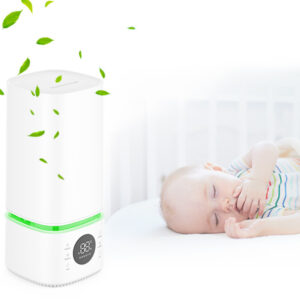
| Nursery or bedroom | Low noise and no ozone | Quiet night mode, lights off, no ozone-producing features |
| Classrooms and offices | CADR per occupant, durability | Large-CADR units or several medium units, easy filter access |
| Damp rooms prone to mould | Spore capture alongside moisture control | HEPA purifier combined with dehumidification |
For specific cases, see the best air purifier for mould and air purifiers for schools and classrooms.
Where should an air purifier be placed for best results?
Placement decides how much of the rated CADR actually reaches the air you breathe. A purifier works best in the room where people spend the most time, with doors and windows closed while it runs. It should have open space around the inlet and outlet, usually at least 30–50 cm from walls and furniture. Placing it close to the pollution source, such as a pet bed or an entry door that lets in dust, removes pollutants before they spread. Placing it in a corner behind a sofa can cut effective performance sharply. Detailed advice is in where is the best place to put an air purifier.
What has changed in air purifiers for 2026?
The 2026 market is defined less by new filtration principles than by better measurement, efficiency and ownership economics. The main trends buyers will see are:
- Better efficiency disclosure: More attention to CADR per watt and standby power, as energy labelling schemes reward efficient fans.
- Quieter motors: Wider use of brushless DC motors that deliver useful airflow at low noise.
- Better sensors: Laser PM2.5 and PM1 sensors are moving into mid-priced models.
- Gas removal claims: More products state formaldehyde or VOC removal with test data rather than general “odour removal” wording.
- Lower filter costs: Washable pre-filters, separate carbon cartridges and recyclable filter frames.
- Ozone scrutiny: Closer attention to ozone emissions, with retailers increasingly requesting verified low- or zero-ozone certification for ionizer and UV features.
For buyers, the practical effect is that verified data is easier to find. A 2026 purchase should be supported by a test-referenced CADR, a defined filter grade, an ozone certification where relevant, and published filter prices.
What should retailers and brands check when sourcing air purifiers for 2026?
Retailers, distributors and private-label brands face a different set of risks from home buyers. Their product must meet the target market’s regulations, perform as labelled in independent testing, and remain supportable with filters for several years. A sourcing checklist for 2026 should cover:
- Performance evidence: CADR test reports to the standard used in the target market, such as AHAM AC-1 or GB/T 18801, plus noise and power measured at each fan speed.
- Market approvals: Electrical safety and EMC approvals for each destination. Examples include CE (with RoHS) for Europe, UKCA for Great Britain, UL or ETL listing and FCC for the United States, RCM for Australia, and CCC for China. Wireless models need radio approvals.
- Ozone compliance: Ozone test data or certification for any ionizer, UV or plasma function, especially for California and for retailers with zero-ozone policies.
- Filter supply: Long-term availability and pricing of replacement filters, and whether filters can be branded and packed for the buyer.
- Quality control: Incoming material inspection, filter sealing checks, aging tests and outgoing CADR sampling.
- Customisation scope: Housing colours, control panels, app integration, voltage and plug types, packaging and manuals in the destination language.
Choosing the manufacturing partner is as important as choosing the model. See how to find the best China air purifier manufacturer for a supplier evaluation framework.
What are the most common air purifier buying mistakes?
Most disappointing purchases come from a few predictable mistakes:
- Room-size claims: Buying by an advertised room size instead of calculating the CADR needed.
- Unverified filter labels: Trusting “HEPA-type” wording without a defined filter grade.
- No real carbon stage: Expecting odour removal from a thin carbon mesh.
- Ignoring running costs: Overlooking filter prices until the first replacement is due.
- Low-speed noise ratings: Comparing noise at the lowest speed rather than at the useful one.
- Unchecked ozone: Running ozone-producing features without checking certification.
- Poor placement: Placing the unit where airflow is blocked.
Each mistake reduces real air cleaning, even when the specification sheet looks impressive.
Frequently asked questions
What CADR do I need for a 20 m² bedroom?
For a 20 m² bedroom with a 2.7 m ceiling, a CADR of about 270 m³/h gives roughly five air changes per hour. Allergy sufferers or smoky conditions justify 400 m³/h or more. Choose a unit that reaches the target CADR on a quiet setting.
Is H14 better than H13 for a home air purifier?
H14 captures a slightly higher share of the most penetrating particles. For a home, the difference is usually smaller than the effect of CADR and sealing. A well-sealed H13 purifier with adequate airflow is sufficient for most households.
How often should air purifier filters be replaced?
Most HEPA filters last about 6–12 months in normal home use, and carbon filters often need replacement sooner in homes with strong odours. Pets, smoking, nearby construction and high outdoor pollution all shorten filter life.
Can an air purifier run all day?
Yes. Air purifiers are designed for continuous operation, and continuous running on a moderate setting usually gives better results than short bursts on high speed. Energy-efficient models keep the electricity cost of 24-hour use low.
Does an air purifier replace ventilation?
No. A purifier removes particles and, with carbon, some gases, but it does not remove carbon dioxide or supply fresh air. Ventilation is still needed when outdoor air quality allows.
Source air purifiers for your 2026 range with OLANSI
OLANSI Healthcare has manufactured air purifiers, water purifiers and other home health appliances in Guangzhou, China, since 2009. The company operates a 60,000 m² factory with its own R&D, injection moulding and assembly lines. It produces around 3,000 units per day and runs a 100% aging test on mass production. Its air purifier range covers desktop and personal units, bedroom and living room HEPA purifiers, and high-CADR models for classrooms and offices, with options for laser PM2.5 sensors, Wi-Fi control, humidification and multi-stage filtration.
For distributors, retailers and brand owners, OLANSI provides OEM and ODM services, including housing and colour customisation, control and app options, filter configuration, voltage and plug versions for different markets, private-label packaging, and long-term supply of replacement filters. Send your target market, required CADR range, filter specification, certification needs, order volume and launch schedule. The team can recommend suitable models or a custom development plan. Contact OLANSI to request a quotation, samples or a product catalogue for your 2026 air purifier line.