
Filter Life Calculation: Liters, Months and Smart Filter Reminders
Quick answer: water filter life is calculated with two limits, a rated volume in liters and a maximum time in months, and the filter should be replaced when either limit is reached first. The volume-based life in days equals the rated capacity multiplied by a water-quality factor and divided by the average daily volume that actually passes through that filter. For reverse osmosis systems, pre-filters see the full feed water, including the water sent to drain, so they reach their limit faster than drinking-water volume alone suggests. Smart filter reminders automate this calculation with timers, flow meters, TDS sensors or pressure sensors, and the most reliable designs combine volume and time with a water-quality check.
How this guide differs from a replacement schedule: most articles list typical lifespans for each filter type. This guide explains how to calculate filter life for a specific household or office, how water quality and system design change the result, how smart reminders work and where they fail, and what brands and distributors should specify when they develop purifiers and replacement filters. Maintenance practice for dispensers is covered in maintenance tips for RO hot and cold water dispensers.
Why does water filter life have two limits, liters and months?
Water filter life has two limits because filters wear out in two different ways. Volume-related wear happens as the filter media captures particles and adsorbs chlorine, organic compounds and other contaminants; once its capacity is used, contaminants pass through. Time-related wear happens even with low use, because a wet filter can support bacterial growth, carbon can lose effectiveness, and membranes and seals age. A filter used very little can therefore still need replacement after its maximum months.
The rule “replace at whichever limit comes first” combines both mechanisms. In a busy household or office the volume limit usually arrives first, while in a lightly used holiday home or a small apartment the time limit usually decides. A correct replacement plan always calculates both and uses the earlier date.
What are typical capacities and time limits for each filter stage?
Typical capacities and time limits differ widely between filter stages because each stage uses different media and protects different parts of the system. The table below gives common ranges for household and light commercial purifiers; actual values depend on the specific cartridge design and should be taken from the product’s rated data.
| Filter stage | Typical rated volume | Typical time limit | What wears it out |
|---|---|---|---|
| PP sediment filter | About 2,000-6,000 L of feed water | 3-6 months | Particles, rust, turbidity |
| Granular or block carbon pre-filter | About 3,000-10,000 L | 6-12 months | Chlorine, organics, taste and odor |
| Composite PP + carbon cartridge | About 3,000-8,000 L | 6-12 months | Particles and chlorine together |
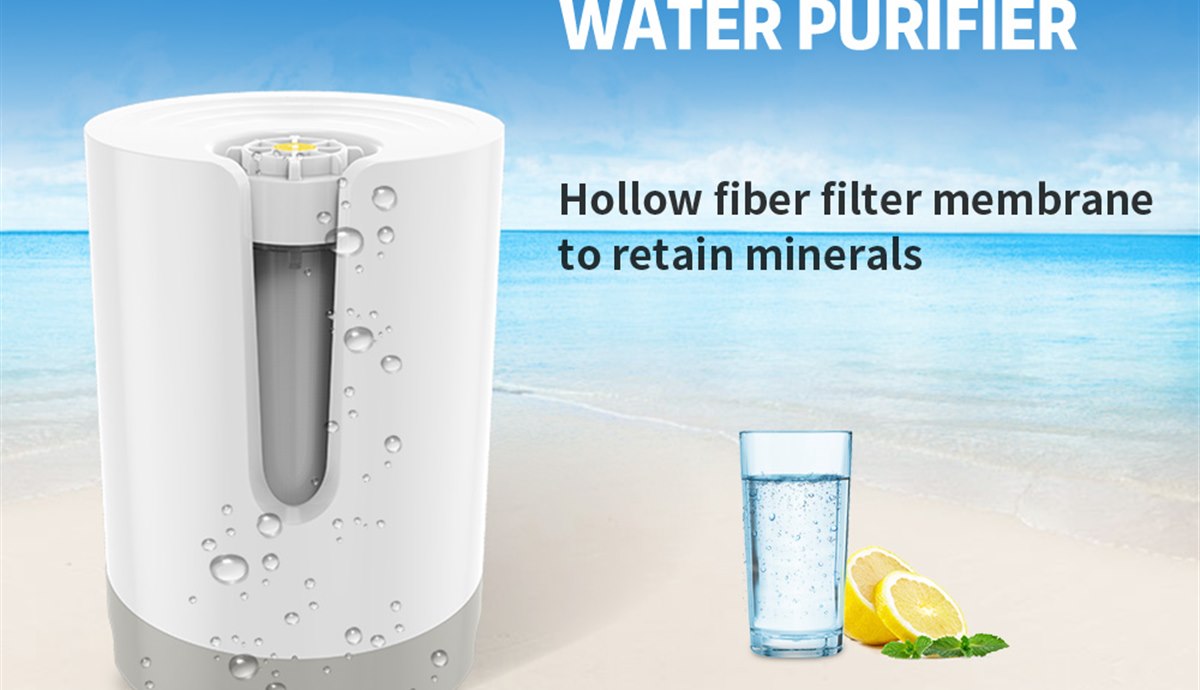
| RO membrane | Several thousand to tens of thousands of liters of product water | 24-36 months | Scaling, fouling, chlorine damage |
| Ultrafiltration membrane | About 5,000-15,000 L | 12-24 months | Fouling, biofilm |
| Post carbon or mineral cartridge | About 3,000-6,000 L | 6-12 months | Taste polishing, mineral depletion |
These ranges show why a purifier usually has several replacement intervals. Pre-filters are replaced most often because they protect the more expensive membrane. When pre-filters are changed on time, the membrane often reaches the upper end of its life; when they are neglected, the membrane fails early.
How do you calculate filter life in days?
Filter life in days is calculated with a simple formula: volume-based life equals rated capacity in liters multiplied by a water-quality factor, divided by the average liters per day that pass through the filter. The final replacement interval is the shorter of this volume-based life and the filter’s time limit. Written as a formula: replacement days = minimum of (rated liters × quality factor ÷ daily liters) and (time limit in days).
For example, a household of four uses about 2.5 liters per person per day for drinking and cooking, or 10 liters per day. A carbon cartridge rated for 3,000 liters with a 12-month time limit gives 3,000 ÷ 10 = 300 days of volume life, which is about 10 months. Because 10 months is shorter than the 12-month limit, the cartridge should be replaced after about 10 months. If the same family used only 5 liters per day, the volume life would be 600 days, and the 12-month time limit would decide instead.
Why do RO pre-filters wear out faster than drinking-water volume suggests?
RO pre-filters wear out faster than the drinking-water volume suggests because they treat all the water entering the system, including the concentrate that the RO membrane sends to drain. If a system produces one liter of purified water for every liter of concentrate, a 1:1 ratio, the pre-filters process two liters for every liter the user drinks. In older systems with lower recovery, the pre-filters may process three or four liters per liter of drinking water.
For the household in the previous example, an RO system with a 1:1 ratio sends 20 liters per day through the sediment and carbon pre-filters while producing 10 liters of drinking water. A sediment filter rated for 2,000 liters of feed water therefore lasts about 100 days, or a little over three months, not six. Smart reminders that count only product water from the faucet must apply the system’s recovery ratio to estimate pre-filter wear correctly. The difference between tank and tankless RO designs, including recovery, is explained in tankless vs tank RO systems.
How does water quality change filter life?
Water quality changes filter life because rated capacities are measured under defined test conditions, while real water can carry more sediment, chlorine, hardness or organic matter. High turbidity and rust clog sediment filters faster. High chlorine or chloramine levels exhaust carbon sooner. Hard water and high total dissolved solids (TDS) increase scaling on RO membranes. Warm water can accelerate bacterial growth in idle filters.
A quality factor adjusts the rated capacity to local conditions. Clean municipal water may justify a factor close to 1.0, typical municipal water with noticeable chlorine a factor around 0.8, and well water, high-sediment water or old pipe networks a factor around 0.5 to 0.7. These values are planning assumptions, not standards, and they should be refined with local water test results and field experience. Brands selling in several countries often set different default reminder intervals for each market.
| Water condition | Main effect | Illustrative quality factor |
|---|---|---|
| Clean municipal water, low chlorine | Near rated capacity | 0.9-1.0 |
| Typical municipal water with chlorine | Faster carbon exhaustion | 0.7-0.8 |
| High sediment or old pipes | Fast sediment clogging | 0.5-0.7 |
| Well water, high hardness or TDS | Clogging and membrane scaling | 0.5-0.7 |
How do you calculate filter life for an office or commercial dispenser?
Filter life for an office or commercial dispenser is calculated in the same way as for a household, but daily volume is based on the number of users and working days. An office with 30 people who each drink about 1.5 liters per working day uses about 45 liters per day. Over 22 working days, that is roughly 1,000 liters per month. A carbon cartridge rated for 3,000 liters therefore lasts about three months, even if its time limit is 12 months.
Commercial users often need shorter and more predictable intervals because service contracts are based on scheduled visits. A practical approach is to calculate the volume-based interval, round it down to the nearest service cycle, and confirm it with the dispenser’s flow meter data after the first few months. Commercial dispenser design is discussed in the technical guide to hot and cold water dispensers with filters.
How do idle periods and temperature affect filter life?
Idle periods and temperature affect filter life because stagnant water inside a filter allows bacteria to multiply, especially in warm climates and in carbon media that has removed the disinfecting chlorine. A purifier left unused for several weeks during holidays or office closures may deliver water with off-taste or higher bacterial counts even though the filters have plenty of volume capacity left. The time limit on each cartridge exists largely to control this risk.
After an idle period, the system should be flushed for several minutes before use, and filters that have stood unused for a long time may need earlier replacement. Purifiers installed in hot locations, such as unventilated kitchen cabinets or offices without air conditioning, benefit from shorter time limits. Some smart systems record idle time and remind users to flush or replace filters after long periods without use, which improves hygiene without adding cost.
What signs show that a filter needs replacement before the reminder?
A filter may need replacement before the calculated date when the water shows clear signs of exhausted or clogged media. Reduced flow at the faucet or a longer tank refill time indicates a clogged sediment filter or membrane. The return of chlorine taste or a musty odor indicates exhausted carbon. A rising TDS reading in RO product water indicates declining membrane rejection. Visible particles, cloudy water or unusual noise from the pump also justify inspection.
These signs should override the calendar. A reminder system is a planning tool, not a guarantee, and users should be told that water quality symptoms always take priority. Product manuals should list these symptoms clearly next to the replacement instructions.
How do smart filter reminders work?
Smart filter reminders work by estimating how much of each filter’s life has been used and alerting the user before the limit is reached. The simplest systems use a timer that counts days since the last reset. More advanced systems count water volume with a flow meter, monitor water quality with TDS sensors, or detect clogging through pressure or flow changes. The controller converts these inputs into a remaining-life percentage for each filter stage and shows it on the product display or in a mobile app.
| Reminder method | What it measures | Strengths | Limitations |
|---|---|---|---|
| Timer | Days since last reset | Low cost, simple | Ignores actual usage and water quality |
| Flow meter | Liters through the system | Follows real usage | Needs recovery ratio for pre-filters; meter accuracy matters |
| TDS sensor | Dissolved solids before and after RO | Detects membrane decline directly | Does not measure carbon or sediment wear |
| Pressure or flow-rate monitoring | Pressure drop or reduced flow | Detects clogging | Affected by inlet pressure changes |
| Combined algorithm | Volume, time and quality together | Most accurate and reliable | Higher cost and more firmware complexity |
The best practice is to combine at least volume and time for each stage, and to add TDS monitoring for RO membranes. Each stage should have its own counter, because pre-filters, membranes and post-filters have different lives.
How should a flow-meter reminder be calibrated?
A flow-meter reminder should be calibrated so that counted liters match real liters within an acceptable tolerance, because a small meter error accumulates into a large error over thousands of liters. Hall-effect flow meters produce pulses per liter that vary with flow rate, pressure and installation, so the controller’s pulses-per-liter setting should be verified with a measured volume at typical operating flow. Production testing should confirm calibration on a sample of units from each batch.
For RO systems, the firmware should distinguish between product water and feed water. If only product water is metered, pre-filter counters should multiply the counted volume by the system’s feed-to-product ratio. If feed water is metered, the membrane counter should use product water or apply the recovery ratio in the opposite direction. Documenting these rules in the product specification prevents inconsistent reminders across production batches.
How should filter reset and authenticity be handled?
Filter reset and authenticity should be handled so that counters restart only when a real filter is replaced, and so that users are guided to correct replacement cartridges. Simple systems use a reset button, which is easy to use but can be pressed without changing the filter. More advanced systems detect cartridge removal and insertion, or use chips or RFID tags in the cartridge that identify the filter type and reset the counter automatically.
Chip-based identification also helps brands protect replacement filter sales and reduce the use of counterfeit cartridges, which may not meet performance claims. It must be balanced with user expectations and local consumer rules, so brands should make genuine replacement filters easy to buy, clearly labeled and fairly priced. Clear on-screen or app instructions for each stage reduce incorrect resets.
How should brands set filter life ratings for their products?
Brands should set filter life ratings from test data under defined conditions and apply a safety margin for real-world water. Capacity testing typically runs challenge water containing a defined contaminant level through the filter until reduction falls below a target, and the rated capacity is set below the measured breakthrough point. Products sold with performance claims in certain markets are tested to recognized standards for chlorine reduction, particulate reduction and other contaminants.
The reminder settings should be consistent with the rating printed on the packaging and manual, and should be adjustable in firmware for different markets. A brand may, for example, use a shorter default interval for regions with high turbidity and a longer one for clean municipal water. Keeping test reports, reminder parameters and packaging claims aligned protects the brand from complaints and regulatory issues. Product development for private-label purifiers is explained in the OEM/ODM water purifier and dispenser manufacturing guide.

How does filter life affect the total cost of a water purifier?
Filter life strongly affects the total cost of a water purifier, because replacement filters over five years often cost as much as or more than the purifier itself. Total cost per liter equals the purifier price spread over its service life plus the annual cost of all replacement filters, divided by the liters of water produced per year. Longer-lasting filters, efficient RO recovery that reduces pre-filter wear and accurate reminders that avoid premature replacement all lower the cost per liter.
For distributors and brands, replacement filters are also a recurring revenue stream. A clear filter program with predictable intervals, easy online ordering, bundled filter kits and service subscriptions improves customer retention. Planning filter stock levels from installed base and calculated intervals avoids stock-outs, which push customers to third-party filters or to stop using the purifier.
What should a filter replacement plan include?
A filter replacement plan should list each filter stage with its rated volume, time limit, expected replacement interval for typical local usage, part number and replacement procedure. For households, the plan can be a simple chart in the manual combined with automatic reminders. For offices and commercial users, it should be part of a service schedule with recorded replacement dates and, where available, flow-meter readings at each visit.
- Filter stage name, part number and position in the system
- Rated capacity in liters and maximum time in months
- Expected interval for typical daily usage and local water quality
- Symptoms that require earlier replacement
- Reset procedure for the reminder system
- Flushing instructions after installing a new filter
- Where to buy genuine replacement filters
What are the most common filter life mistakes?
The most common filter life mistake is using only the time limit and ignoring actual water usage, which leads to exhausted filters in busy homes and offices and wasted filters in lightly used ones. The second common mistake is calculating RO pre-filter life from drinking-water volume alone and forgetting that pre-filters also treat the water sent to drain.
Other frequent mistakes include resetting reminders without changing the filter, ignoring water quality symptoms because the reminder has not appeared yet, using one counter for all stages, using uncalibrated flow meters, setting the same reminder interval for very different water qualities, and replacing the RO membrane while leaving old pre-filters in place. Each of these mistakes shortens the life of the system or reduces water quality.
Frequently asked questions
Should I replace a water filter by liters or by months?
A water filter should be replaced when either its rated liters or its maximum months are reached, whichever comes first. Liters reflect how much contaminant load the filter has handled, while months protect against aging and bacterial growth during low use.
How long does an RO membrane last?
An RO membrane typically lasts about two to three years with regular pre-filter replacement and suitable feed water. Hard water, high TDS and chlorine reaching the membrane shorten its life, and a rising TDS reading in product water indicates that replacement is approaching.
Can a smart reminder be wrong?
A smart reminder can be wrong if the flow meter is not calibrated, if it was reset without a filter change, or if local water is much worse than the rating assumes. Water quality symptoms such as reduced flow, odor or rising TDS should always override the reminder.
Why does my sediment filter need replacement so often?
A sediment filter needs frequent replacement when the water contains high levels of particles or rust, or when it is installed ahead of an RO membrane that sends a large share of water to drain. Both conditions increase the load on the sediment filter.
Can filter reminder intervals be customized for different markets?
Yes. Many purifiers allow reminder intervals to be set in firmware, so manufacturers can supply different default settings for markets with different water quality and usage patterns, as long as they remain consistent with tested filter ratings.
Develop purifiers with accurate filter reminders with OLANSI
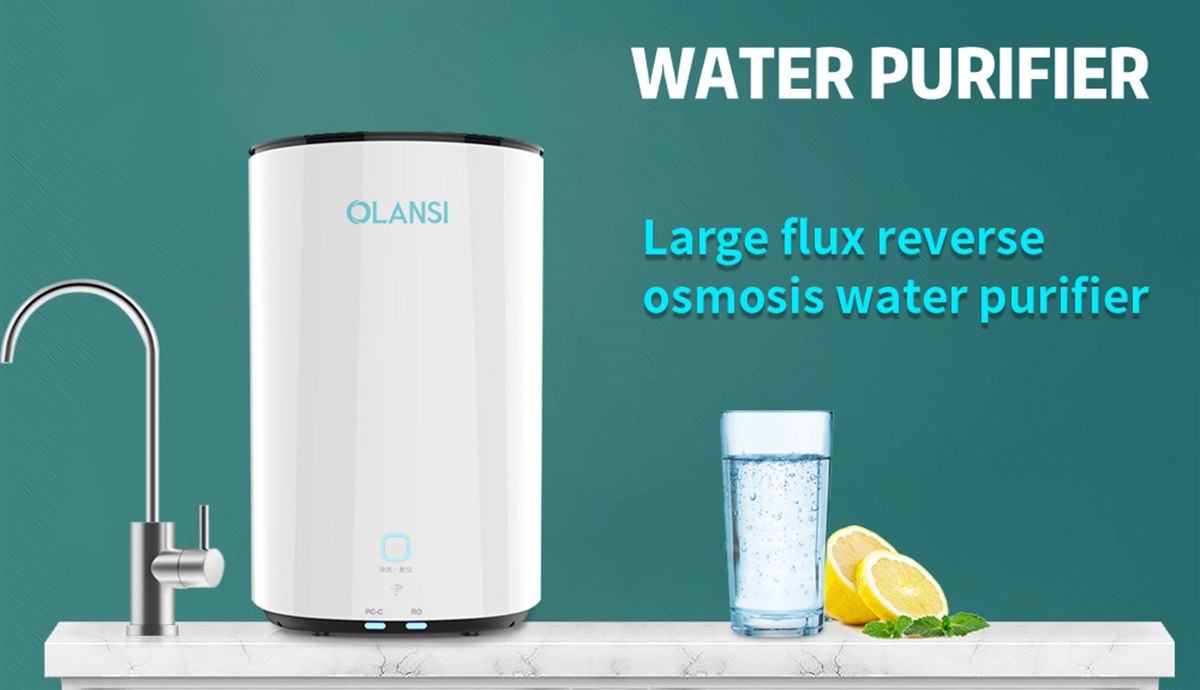
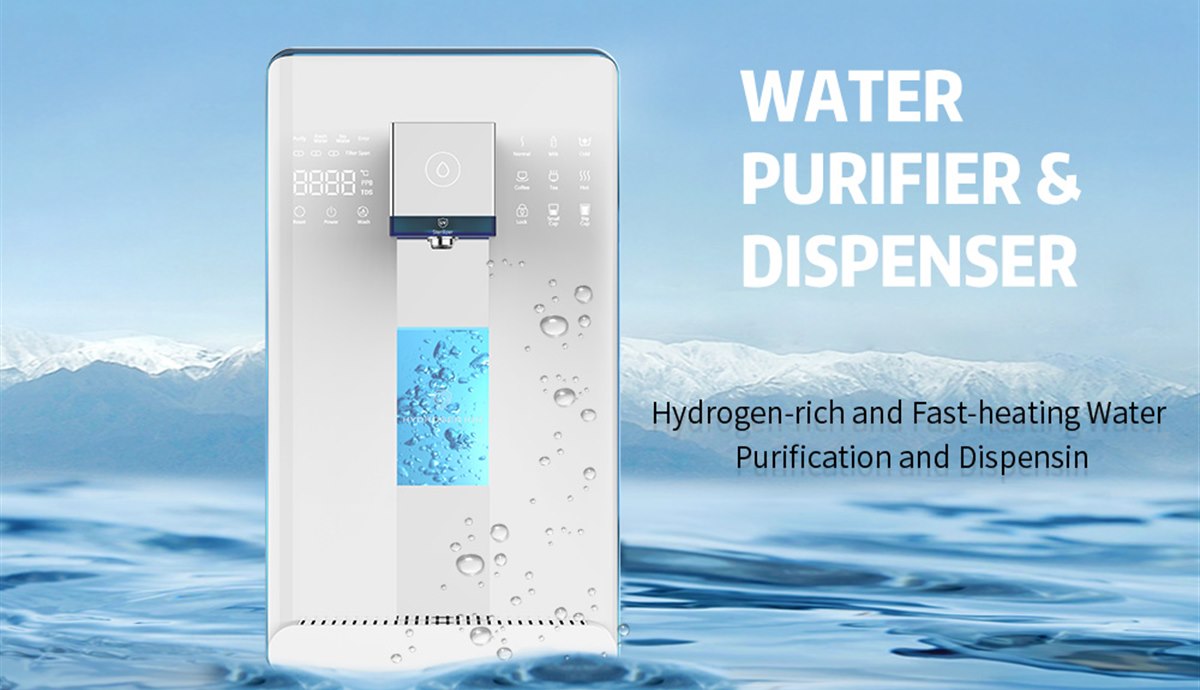
OLANSI manufactures RO water purifiers, tankless purifiers, hot and cold purifier dispensers and replacement filter cartridges for distributors and private-label brands. Our engineering team configures filter stages, rated capacities and smart reminder logic for each market, including flow-meter calibration, stage-by-stage counters, TDS monitoring and filter identification options, and supplies matching replacement filters for long-term programs. Explore our water purifiers, water dispensers, the multiple filtering of OLANSI purifiers, our OEM/ODM services and our R&D and quality capabilities.
Planning a purifier line or a replacement filter program? Send your target market, water conditions, product type and estimated volumes through the OLANSI contact page. Our team will recommend filter configurations and reminder settings, share filter capacity data and test reports, and prepare samples and a quotation for your project.