
Hydrogen Water Makers: Technology, Specifications and Sourcing Guide for Brands
Quick answer: A hydrogen water maker is an electrolysis device that splits water into hydrogen and oxygen and dissolves the molecular hydrogen (H2) into drinking water. For a brand, the most important sourcing decisions are the electrolysis technology (SPE/PEM membrane cell or simple direct electrolysis), the electrode material, the realistic dissolved hydrogen concentration measured by a stated method, the food-contact materials, the battery and electrical safety certifications for each target market, and the factory’s quality control and after-sales support. A brand that writes these items into a clear specification sheet before requesting quotations gets comparable offers, avoids inflated concentration claims and launches a product that can be sold legally.
How this guide differs from consumer reviews: consumer articles rank finished products. This guide is written for brand owners, distributors and retailers who want to develop or private-label hydrogen water bottles, pitchers and dispensers, and it explains the technology, the specification parameters, the testing methods, the certifications and the sourcing process. For the general OEM/ODM process across water products, see the OEM/ODM water purifier and dispenser manufacturing guide.
What is a hydrogen water maker?
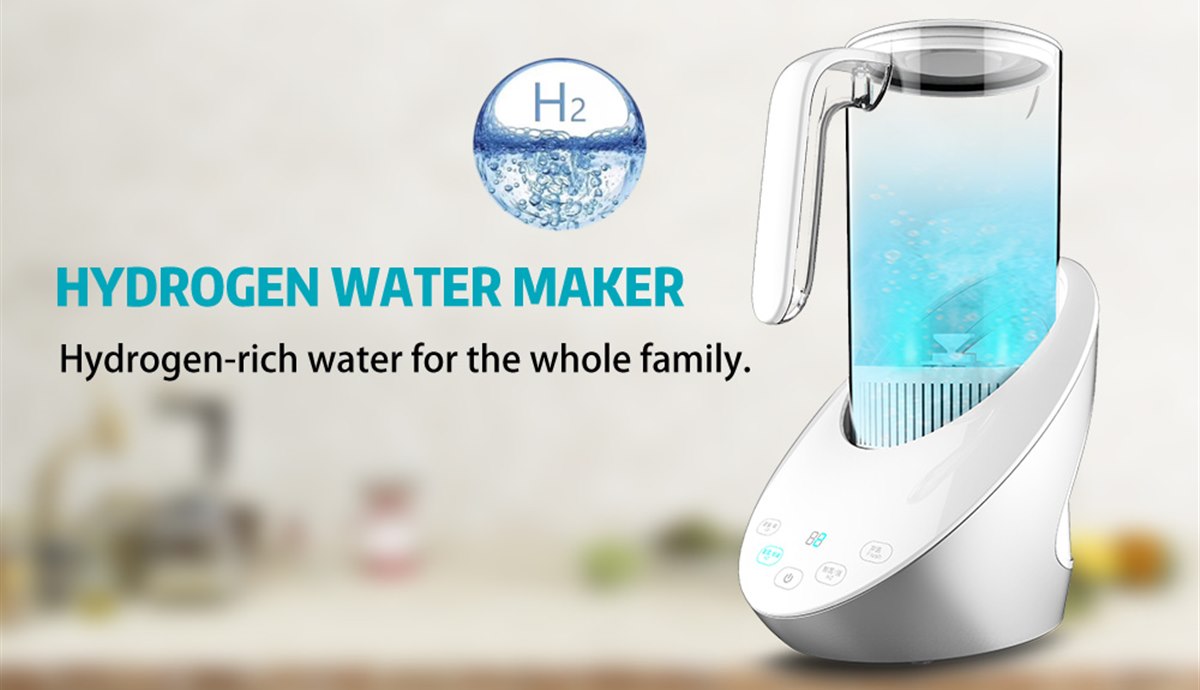
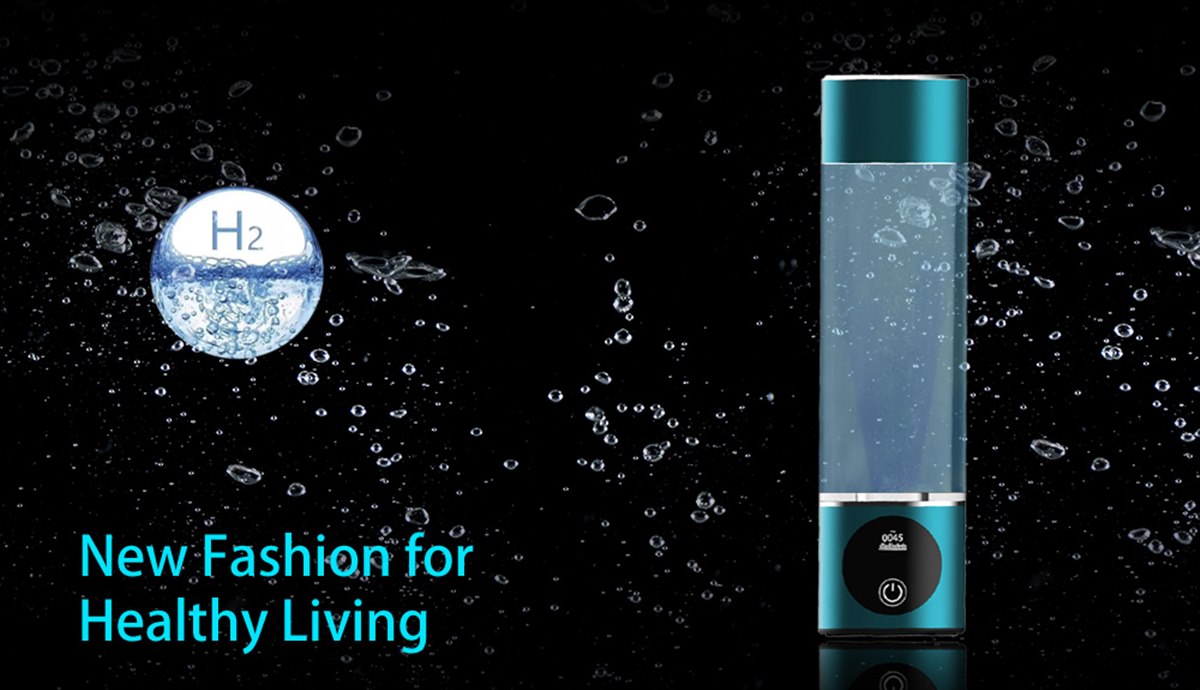
A hydrogen water maker is a small electrolysis appliance that produces hydrogen-rich water by passing a direct current through water between two electrodes. Hydrogen gas forms at the cathode and dissolves into the drinking water, while oxygen forms at the anode. The product category includes portable hydrogen water bottles (typically 250 to 450 ml), countertop hydrogen water pitchers and kettles (typically 1 to 2 liters), hydrogen water dispensers connected to a water supply, and hydrogen water units integrated into reverse osmosis purifiers.
A hydrogen water maker is different from an alkaline water ionizer. An alkaline ionizer is designed to change pH and produces alkaline and acidic water streams, while a hydrogen water maker is designed to raise the dissolved hydrogen concentration with little or no change in pH. The distinction matters for brands because the two product types are tested, marketed and regulated differently. A detailed comparison is available in the article hydrogen water vs alkaline water.
How does SPE/PEM electrolysis work in a hydrogen water maker?
SPE/PEM electrolysis uses a solid polymer electrolyte, also called a proton exchange membrane, placed between the anode and the cathode. Water is split at the anode, the oxygen and any by-products stay on the anode side and are vented away, and only protons pass through the membrane to the cathode, where they form pure hydrogen that dissolves into the drinking water. The membrane physically separates the two chambers, so ozone, chlorine and oxygen generated at the anode do not mix into the drinking water.
The quality of an SPE/PEM cell depends on three components. The first is the membrane itself, usually a perfluorosulfonic acid membrane whose thickness and grade affect hydrogen output and service life. The second is the electrode, typically titanium coated with platinum or a platinum-group metal, where the coating thickness determines durability. The third is the venting path, which must release oxygen and by-products without leaking. A dual-chamber design with a separate exhaust port is the clearest sign that a hydrogen water maker uses true membrane separation.
What is the difference between SPE/PEM and non-membrane hydrogen water makers?
The difference between SPE/PEM and non-membrane hydrogen water makers is whether the anode by-products are separated from the drinking water. A non-membrane design places both electrodes directly in the drinking water, which is cheaper but allows oxygen, traces of ozone and, in chlorinated tap water, chlorine compounds to form in the same water the user drinks. An SPE/PEM design separates the chambers and vents the anode products, which gives cleaner taste, more consistent hydrogen output and stronger compliance documentation.
| Factor | SPE/PEM membrane cell | Non-membrane direct electrolysis |
|---|---|---|
| By-product separation | Oxygen, ozone and chlorine vented from a separate chamber | By-products can remain in the drinking water |
| Typical dissolved H2 per cycle | About 800–1,600 ppb in common bottle designs | Often lower and more variable |
| Sensitivity to water quality | Lower, works with purified and low-TDS water | Higher, output depends on mineral content |
| Unit cost | Higher, due to membrane and coated electrodes | Lower |
| Suitability for premium brands | High | Limited to entry-level price points |
For a brand that wants to make credible quality claims, an SPE/PEM cell is the recommended baseline. A non-membrane design only makes sense for low-price promotional products, and even then the brand should test for ozone and chlorine by-products in the target market’s tap water.
What dissolved hydrogen concentration should a hydrogen water maker deliver?
A well-designed hydrogen water maker typically delivers between about 800 and 1,600 ppb (0.8 to 1.6 ppm) of dissolved hydrogen per cycle at room temperature and normal atmospheric pressure. The saturation limit of hydrogen in water under these conditions is about 1.6 ppm, so stable values above this figure in an open container are physically unlikely. Some devices reach higher values for a short time by running longer cycles, using a pressurized sealed bottle or measuring immediately at the electrode, but those values fall quickly once the container is opened.
For sourcing, a brand should specify the concentration together with the measurement conditions: water type, water temperature, volume, cycle time, time between the end of the cycle and measurement, and the measurement method. A specification such as “≥1,000 ppb measured within 1 minute after a 5-minute cycle, 25 °C purified water, 400 ml, closed bottle, dissolved hydrogen meter” can be verified. A specification such as “up to 5,000 ppb” without conditions cannot be verified and creates advertising risk for the brand.
How should dissolved hydrogen be measured during sourcing and quality control?
Dissolved hydrogen should be measured with a dedicated dissolved hydrogen meter or with a calibrated titration reagent designed for dissolved hydrogen. A dissolved hydrogen meter uses a polarographic or galvanic sensor and gives a direct ppb reading, which is best for laboratory validation and production sampling. A titration reagent based on methylene blue and a platinum colloid is inexpensive and portable, which makes it useful for incoming inspection and for distributors who need a simple field check.
Oxidation-reduction potential (ORP) is not a reliable substitute for dissolved hydrogen measurement. A negative ORP reading shows a reducing environment, but ORP is also affected by pH, other dissolved substances and electrode condition, so two waters with the same ORP can contain very different hydrogen levels. Brands should therefore request dissolved hydrogen data, not only ORP data, and should repeat the test on their own samples before approving a supplier.
Which technical specifications belong on a hydrogen water maker specification sheet?
A hydrogen water maker specification sheet should define every parameter that affects performance, safety, user experience and cost, so that quotations from different factories can be compared line by line. The table below lists the parameters most brands include for a portable hydrogen water bottle; pitchers and dispensers add flow rate, filtration and installation parameters.
| Parameter | Typical range or option | Why it matters |
|---|---|---|
| Electrolysis technology | SPE/PEM dual chamber, or direct electrolysis | Determines by-product separation and quality claims |
| Electrode material | Platinum-coated titanium; coating thickness stated | Determines durability and metal release risk |
| Dissolved H2 | 800–1,600 ppb with stated test conditions | Core performance claim |
| Cycle time | 3–10 minutes per cycle; optional high-concentration mode | Affects user convenience and battery use |
| Capacity | 250–450 ml bottles; 1–2 L pitchers | Defines use case and price point |
| Container material | Borosilicate glass, Tritan copolyester, food-grade stainless steel | Food-contact compliance and durability |
| Battery | Lithium-ion, about 1,000–2,000 mAh; cycles per charge stated | Shipping certification and runtime |
| Charging | USB-C, magnetic or wireless | Market expectations and accessory cost |
| Water compatibility | Purified, filtered or tap water; maximum TDS stated | Prevents scaling and electrode damage |
| Cell service life | Rated electrolysis hours or cycles | Warranty planning and replacement parts |
| Display and controls | LED ring, digital timer, self-cleaning mode | Perceived value and user guidance |
Which materials should a hydrogen water maker use for safe water contact?
Every part of a hydrogen water maker that touches drinking water must be made from food-contact-approved materials with supporting test reports. Common choices are borosilicate glass for premium bottles, Tritan or other BPA-free copolyesters for lightweight bottles and pitchers, food-grade 304 or 316 stainless steel for metal parts, and food-grade silicone for seals. The electrode must be a coated titanium electrode suitable for drinking water, and the membrane must be specified by grade.
Brands should request migration test reports for the target market, such as tests aligned with US FDA food-contact regulations, European framework regulation EC 1935/2004 with relevant material-specific tests, or German LFGB testing. A brand should also ask for heavy-metal release testing on the electrolyzed water, because a poor electrode coating can release metal ions over time. These documents protect the brand during retailer onboarding, marketplace audits and customs inspections.
Which certifications does a private-label hydrogen water maker need?
A private-label hydrogen water maker usually needs electrical safety, electromagnetic compatibility, battery transport, chemical restriction and food-contact documentation for each target market. The exact set depends on the market, the product type and the sales channel, and brands should confirm requirements with their importer or a testing laboratory before production.
- European Union: CE marking covering EMC and, where applicable, low-voltage requirements; RoHS; REACH; WEEE registration; food-contact compliance; battery regulation obligations.
- United States: FCC Part 15 for electronic devices; food-contact compliance; state-level requirements such as California Proposition 65 labeling where relevant.
- Batteries in all markets: UN38.3 transport testing and an MSDS for lithium-ion batteries, plus IEC 62133 safety testing where the market or retailer requires it.
- Other markets: UKCA for Great Britain, PSE for Japan, KC for Korea, RCM for Australia and New Zealand, and local drinking water appliance approvals where they apply.
Certificates issued to the factory’s model can sometimes support a private-label version, but many markets and retailers require test reports in the brand’s name or a formal model-listing agreement. Brands should plan certification cost and time into the launch schedule rather than treat it as a final step.
What health and marketing claims can brands make for hydrogen water makers?
Brands should make only claims they can support with documentation that is acceptable in each target market. Measurable product claims, such as dissolved hydrogen concentration under stated conditions, SPE/PEM membrane separation, materials used and cycle time, are generally safe when backed by test reports. Claims that a hydrogen water maker treats, cures or prevents a disease are regulated as medical or health claims in most markets and can trigger enforcement, marketplace delisting or product reclassification.
A practical approach is to separate technical claims from wellness messaging. Technical claims belong on the packaging and product page with test references. Wellness messaging should stay general, should not name diseases and should be reviewed against local advertising rules before launch. Background explanations about hydrogen-rich water are available on the page what is hydrogen-rich water.
Which hydrogen water maker formats suit which brand strategies?
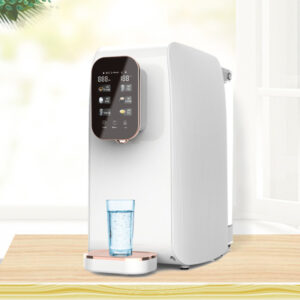
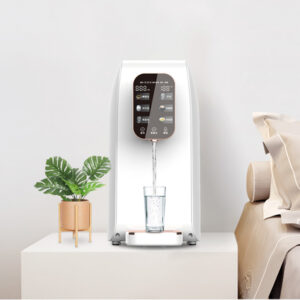
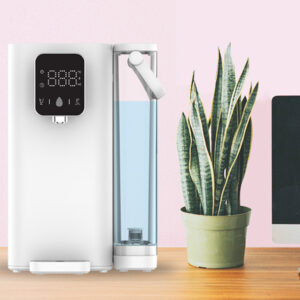
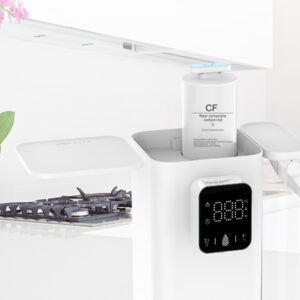
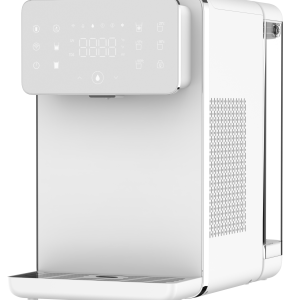
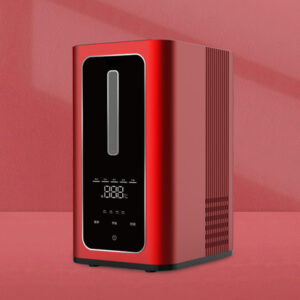
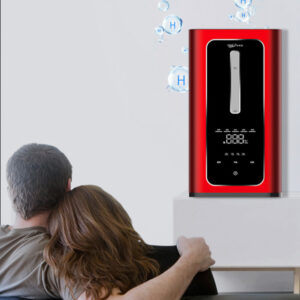
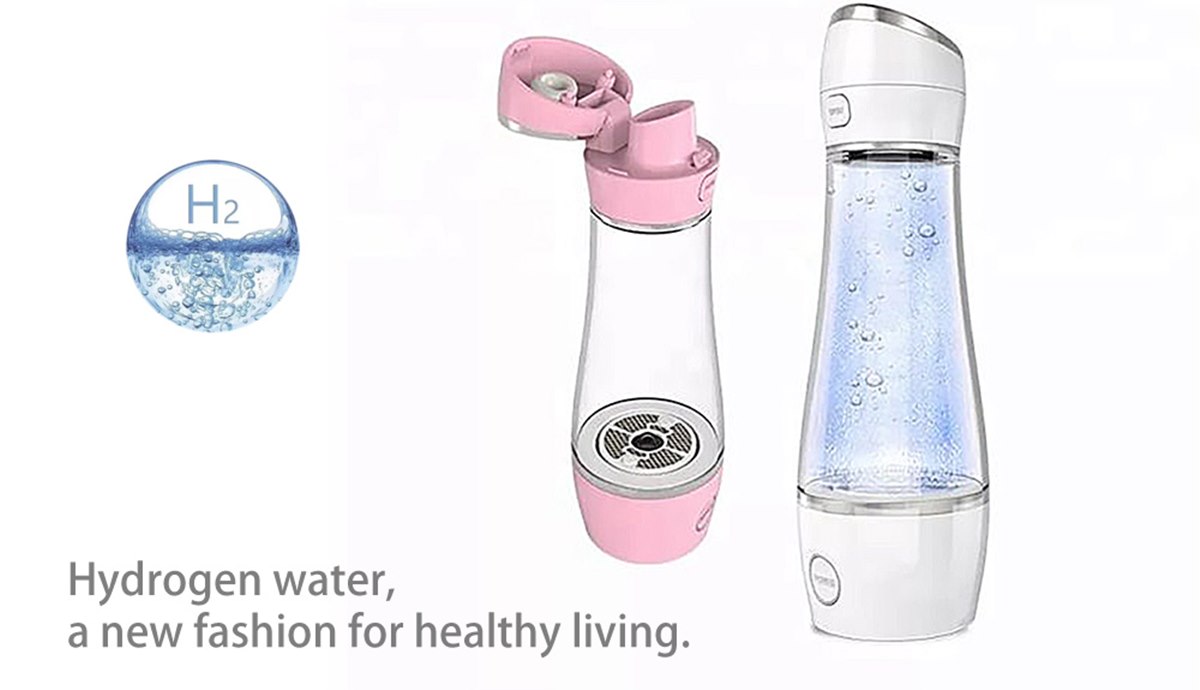
Each hydrogen water maker format fits a different sales channel and price strategy. Portable hydrogen water bottles suit e-commerce, gifting, fitness and travel channels, because they are compact, easy to ship and easy to demonstrate. Countertop pitchers and kettles suit household and family positioning, because they produce larger volumes per cycle. Hydrogen water dispensers and purifier-integrated units suit premium home, office and wellness-center channels, because they combine filtration, temperature control and hydrogen generation in one appliance.
A brand entering the category often starts with one portable bottle and one countertop pitcher to cover two price points, then adds a dispenser once the channel is proven. OLANSI examples of these formats include the H1 portable SPE hydrogen water bottle, the H6 PEM hydrogen water pitcher and the full hydrogen water maker range.
What is the difference between OEM and ODM for hydrogen water makers?
ODM for hydrogen water makers means the brand customizes an existing, proven factory platform, while OEM means the factory produces a product based on the brand’s own design. ODM projects typically change the color, finish, logo, display graphics, packaging, user manual and sometimes the cycle settings or battery capacity, and they reach market in roughly 30 to 60 days after sample approval. OEM projects require new industrial design, new molds and new certification testing, and they usually take four to eight months.
Most new hydrogen water brands start with ODM because the electrolysis cell, battery management and sealing are already validated, which lowers technical risk. OEM becomes worthwhile when the brand needs a unique shape, a patented feature or exclusive tooling to defend its market position. More detail about the service model is available on the OLANSI OEM/ODM page.
What drives the cost and MOQ of a hydrogen water maker?
The cost of a hydrogen water maker is driven mainly by the electrolysis cell, the container material, the battery and the level of customization. An SPE/PEM cell with a thicker platinum coating and a quality membrane costs more than a basic direct electrolysis cell, borosilicate glass and stainless steel cost more than copolyester, and larger batteries add cost and shipping documentation. Custom colors, printed logos and gift packaging add smaller increments, while new molds add a one-time tooling investment.
Minimum order quantity depends on the type of customization. Logo printing and standard color options on an existing ODM model usually have the lowest MOQ, often in the range of several hundred units. Custom colors that require new material batches, custom packaging and custom display graphics raise the MOQ. Fully new OEM designs require tooling and are typically planned for several thousand units per year. Brands should ask for tiered pricing at different quantities so they can plan reorders.
How should a brand evaluate a hydrogen water maker factory?
A brand should evaluate a hydrogen water maker factory on its engineering capability, its testing equipment, its production control and its export experience. Engineering capability shows in whether the factory designs and assembles its own electrolysis cells or only buys finished modules. Testing capability shows in whether the factory owns dissolved hydrogen meters, battery test equipment, aging racks and leak-test stations. Production control shows in documented incoming, in-process and final inspection procedures.
A factory visit or video audit should cover the electrolysis cell assembly area, the battery and charging test area, the aging test line and the packing area. Brands can review OLANSI capabilities on the R&D, quality and workshop pages before requesting samples.
Which quality control tests should a hydrogen water maker pass?
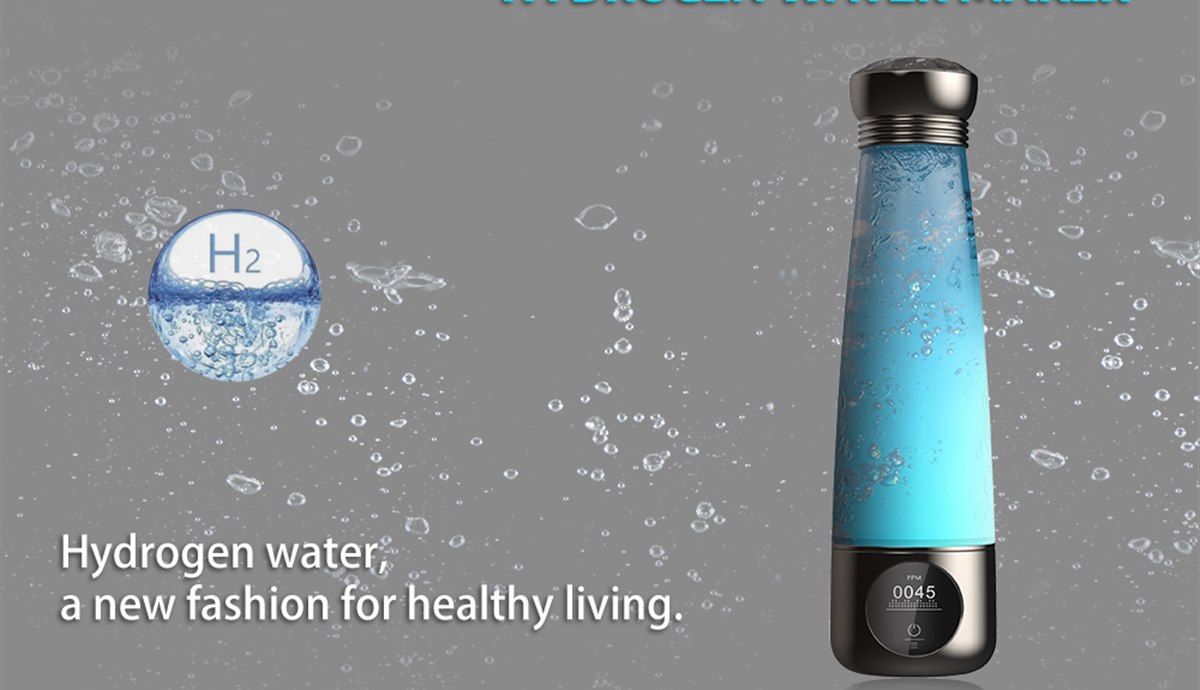
A hydrogen water maker should pass performance, safety, durability and appearance tests before shipment. Performance testing samples each batch for dissolved hydrogen under the agreed conditions. Safety testing covers battery protection against overcharge, over-discharge and short circuit, insulation and charging behavior. Durability testing includes aging runs of the electrolysis cell for a defined number of cycles, drop tests, seal and leak tests under pressure, and button and charging-port endurance.
The agreed acceptance criteria should be written into the purchase agreement, together with the sampling standard, such as an AQL level for final inspection. Brands that use third-party inspection should give the inspector the dissolved hydrogen test method and the target value so the inspection checks performance and not only appearance.
What service life and after-sales support should brands plan for?
The service life of a hydrogen water maker depends mainly on the electrolysis cell, the battery and the water used. A quality SPE/PEM cell used with purified or filtered water typically lasts for thousands of cycles, while hard water with high mineral content causes scaling on the electrodes and shortens service life. Lithium-ion batteries in portable bottles typically retain usable capacity for several hundred full charge cycles. Practical guidance for end users is covered in the article how long does a hydrogen water bottle last.
Brands should agree on the warranty period, the spare parts list and the defect-handling process before launch. Typical spare parts include replacement containers, seals, charging cables and, for some designs, replaceable electrolysis modules. A clear user guide about water type, cleaning, self-cleaning cycles and storage reduces return rates more than any other single measure.
What does the sourcing process look like from brief to launch?
The sourcing process for a private-label hydrogen water maker follows a predictable sequence that typically takes two to four months for an ODM project. The steps are:
- Brief: define target market, price point, format, capacity and key claims.
- Specification sheet: fix technology, materials, concentration with test method, battery and certifications.
- Supplier shortlist and samples: test samples for dissolved hydrogen, leaks, battery behavior and taste.
- Customization: approve colors, logo, display graphics, packaging and manuals.
- Certification: complete market-specific testing and documentation.
- Pilot run: verify production consistency on a small batch.
- Mass production and inspection: run production with agreed QC and pre-shipment inspection.
- Launch and support: ship with spare parts, warranty process and sales training materials.
What are the most common mistakes brands make when sourcing hydrogen water makers?
The most common mistake is choosing a supplier by the highest advertised ppb figure without checking the measurement conditions. Inflated concentration claims lead to customer complaints, negative reviews and, in some markets, advertising violations. The second common mistake is skipping battery transport documentation, which can stop shipments at the forwarder or marketplace warehouse.
Other frequent mistakes include using non-membrane cells for a premium price point, failing to test with the target market’s tap water, making disease-related claims on packaging, ordering without spare parts, and ignoring user instructions about water type and cleaning. Each of these problems can be prevented with a written specification sheet, sample testing and a pre-launch compliance review.
Frequently asked questions
What does SPE/PEM mean on a hydrogen water maker?
SPE means solid polymer electrolyte and PEM means proton exchange membrane; both terms describe the same membrane electrolysis technology. On a hydrogen water maker, SPE/PEM means the cell separates the hydrogen side from the oxygen side and vents by-products such as ozone and chlorine away from the drinking water.
Is a higher ppb always better in a hydrogen water maker?
A higher ppb is only meaningful when it is measured under realistic conditions. Around 1,600 ppb is the saturation level of hydrogen in water at normal pressure and room temperature, so claims far above this value usually depend on special conditions and drop quickly after the container is opened.
Can a hydrogen water maker use tap water?
Many hydrogen water makers can use tap water, but purified or filtered water gives more stable results and longer electrode life. Brands should state a maximum TDS or water hardness in the user manual and test the product with water typical of the target market.
How many units are needed for a private-label hydrogen water bottle?
A private-label hydrogen water bottle based on an existing ODM model with logo printing usually starts at a few hundred units, while custom colors and packaging require more. The exact MOQ depends on the model, materials and customization level, so brands should request tiered quotations.
Can a hydrogen water maker be combined with a water purifier?
Yes. Hydrogen generation can be integrated into countertop reverse osmosis purifiers and water dispensers, which deliver filtered, temperature-controlled and hydrogen-rich water from one appliance. This format suits premium home and office channels.
Develop your hydrogen water maker line with OLANSI
OLANSI is a Guangzhou-based manufacturer of water purifiers, water dispensers, hydrogen water makers and hydrogen inhalation machines and supports brands, distributors and retailers with OEM and ODM development. Our team helps define the specification sheet, selects the right SPE/PEM platform, customizes colors, logos and packaging, supports market certification and runs production with documented quality control. Explore our hydrogen water makers, hydrogen inhalation machines and water purifiers to build a complete product line.
Ready to launch or expand your hydrogen water brand? Send your target market, preferred format, estimated quantity and branding requirements through the OLANSI contact page. Our sales engineers will recommend suitable models, share specification data and test reports, and prepare samples and a tiered quotation for your project. Wholesalers, importers and Amazon sellers are welcome to ask about distribution and private-label programs.