
Selling Water Dispensers in the EU: CE, RoHS, REACH and Ecodesign Requirements
To sell an electric water dispenser in the European Union, a supplier must do more than place a CE logo on the enclosure. The responsible business must identify every applicable EU law for the exact model, test and document the product, issue an EU Declaration of Conformity, control restricted substances, verify food-contact materials, register for applicable waste obligations, and maintain traceability after launch. CE, RoHS, REACH and ecodesign address different risks, so evidence for one requirement cannot replace evidence for another.
This guide is written for EU importers, private-label brands, distributors and purchasing teams sourcing countertop, floor-standing, bottled, point-of-use, hot-and-cold or filtration-equipped water dispensers. It provides a practical compliance route rather than legal advice. Because product functions and Member State rules differ, the final applicability assessment should be confirmed by a competent EU compliance professional before placing a model on the market.
What is the minimum EU compliance route for a water dispenser?
The minimum route is a model-specific process: define the intended use and configuration; map applicable legislation; design against relevant safety and performance requirements; test a representative production unit; collect component and material evidence; create the technical file; prepare labels, instructions and the EU Declaration of Conformity; appoint and identify the correct EU economic operator; complete registrations; and operate a post-market system. A supplier that starts with a generic 鈥淐E package鈥?before freezing the product specification risks testing the wrong configuration.
| Product feature | Likely EU requirement | Evidence to request |
|---|---|---|
| Mains-powered heating, cooling or pumping | Low Voltage Directive, EMC Directive and RoHS | Electrical safety report, EMC report, risk assessment and RoHS technical documentation |
| Wi-Fi, Bluetooth or another radio module | Radio Equipment Directive instead of treating EMC alone as sufficient | Radio, EMC, safety and spectrum evidence for the final integrated product |
| Tank, tubing, faucet, filter or seal contacting drinking water | EU food-contact framework plus material-specific and, where relevant, national drinking-water rules | Declarations of compliance, composition data and migration or hygienic test evidence |
| Standby, off or networked standby mode | Ecodesign requirements when the model falls within an implementing measure | Mode definitions, power measurements, automatic power-management behavior and technical documentation |
| Electrical or electronic equipment sold in an EU country | WEEE producer obligations and marking | Country registrations, reporting process, take-back arrangement and crossed-out wheeled-bin marking |
| Refrigeration circuit | Refrigerant safety and potentially EU fluorinated-gas controls | Refrigerant identity, charge, leak and servicing information, and applicable labeling |
The matrix is a screening tool, not a universal declaration. A room-temperature gravity dispenser has a different legal profile from a compressor-cooled, instant-heating, Wi-Fi-connected reverse-osmosis unit. The model name alone does not determine scope; voltage, radio functions, energy modes, materials, intended users and route to market all matter.
What does CE marking mean for an electric water dispenser?
CE marking means that the manufacturer declares the finished product conforms to all applicable EU harmonization legislation that requires the mark. It is not an approval issued by the European Commission, and there is no single official 鈥淐E certificate鈥?that replaces the conformity-assessment process. According to the European Commission鈥檚 CE marking guidance, the manufacturer remains responsible for assessing conformity, preparing technical documentation, issuing the declaration and affixing the mark.
For a typical mains-powered dispenser, the first CE scope review normally considers the Low Voltage Directive 2014/35/EU, the Electromagnetic Compatibility Directive 2014/30/EU and the RoHS Directive 2011/65/EU. A radio-connected model normally requires assessment under the Radio Equipment Directive 2014/53/EU. Other legislation may also apply. The declaration must identify the exact product and list the legislation and standards actually used; copying a declaration from a visually similar unit is not acceptable evidence.
How do electrical safety and EMC differ?
Electrical safety testing asks whether users, installers and property are protected from hazards such as electric shock, fire, excessive temperature, mechanical instability and abnormal operation. EMC testing asks two different questions: whether the dispenser emits excessive electromagnetic disturbance and whether it continues to operate safely when exposed to expected disturbance. A passed safety test does not prove EMC compliance, and an EMC report does not demonstrate protection against scalding, leakage or insulation failure.
A credible safety plan should reflect the dispenser鈥檚 real hazards. Hot-water units need temperature-control, abnormal-operation and scalding risk analysis. Compressor-cooled units add refrigerant, pressure and ventilation considerations. Plumbed-in models add leakage, water-pressure and backflow risks. Child-accessible products may need controls that reduce unintended dispensing. Instructions and warnings are risk controls, but they cannot compensate for an avoidable design hazard.
How does RoHS apply to water dispensers?
RoHS restricts specified hazardous substances in electrical and electronic equipment. It is a CE-marking directive, so a water-dispenser manufacturer must include RoHS within the conformity assessment when the product is in scope. The European Commission鈥檚 RoHS information should be used to check the current directive, amendments and harmonized standards.
RoHS compliance is not established by testing one finished unit with a handheld analyzer. The stronger approach is a risk-based technical file covering the bill of materials, homogeneous materials, supplier declarations, relevant analytical reports, applicable exemptions and change controls. Higher-risk items can include solder, cables, connectors, heating assemblies, coatings, displays, printed circuit boards, pumps and imported subassemblies. EN IEC 63000 is commonly used as a framework for compiling this technical documentation.
An importer should compare the evidence with the exact production bill of materials. A declaration for 鈥渆lectronic products鈥?without part numbers, substance limits, issuing entity or date provides weak assurance. A component substitution after approval can invalidate the original assessment even when the outside appearance and model number remain unchanged.
How is REACH different from RoHS?
REACH is broader chemical legislation, while RoHS restricts a defined set of substances in covered electrical and electronic equipment. A product can satisfy RoHS and still have REACH obligations. For articles containing a Candidate List substance above 0.1% weight by weight, suppliers may have communication duties; notification to ECHA may also be required when legal thresholds and conditions are met. The Candidate List changes over time, so a one-time supplier statement should not be treated as permanent.
EU suppliers of articles containing substances of very high concern above the threshold may also have SCIP database duties under the Waste Framework Directive. ECHA鈥檚 SCIP guidance for article suppliers explains who may need to submit information. The responsible EU entity should decide whether the imported dispenser, its components or its packaging create a notification obligation and should retain the data needed to support that decision.
A practical REACH file should identify materials and articles rather than rely on a vague 鈥淩EACH compliant鈥?letter. Request supplier identity, product or part coverage, Candidate List version or assessment date, SVHC results, safe-use information and a commitment to notify the buyer when composition changes. Adhesives, flexible plastics, rubber feet, cable jackets, coatings, touch surfaces and packaging materials deserve specific attention.
Do ecodesign rules automatically apply to every water dispenser?
No. The Ecodesign Framework establishes the policy structure, but binding product requirements normally come from product-specific or horizontal implementing measures. A dispenser should not be declared compliant with a regulation merely because it consumes electricity. The responsible party must check legal definitions, exclusions, dates and product lists against the exact functions of the model.
Commission Regulation (EU) 2023/826 covers standby, off mode and networked standby electric energy consumption for listed household and office equipment and replaced the earlier standby regulation from May 2025. A covered water dispenser may need compliant low-power modes, power-management behavior, measurement results and user or technical information. The Commission鈥檚 standby and networked standby page provides current scope and regulatory links.
A common mistake is to assume that every dispenser heating drinking water is automatically a water heater under another ecodesign measure. Legal scope depends on definitions and product characteristics, not everyday language. The technical team should document why each measure applies or does not apply. This applicability memo is valuable during market-surveillance questions because it shows that scope was assessed rather than ignored.
What energy evidence should a buyer request?
The buyer should request measured input power for relevant modes, the test method and conditions, the timing and function of automatic mode transitions, network behavior where applicable, and the firmware version. Hot-and-cold units should also be evaluated for insulation, thermostat strategy, reheating cycles and user schedules because these choices affect real operating cost even when a particular energy label is not required.
Which food-contact rules apply to the water path?
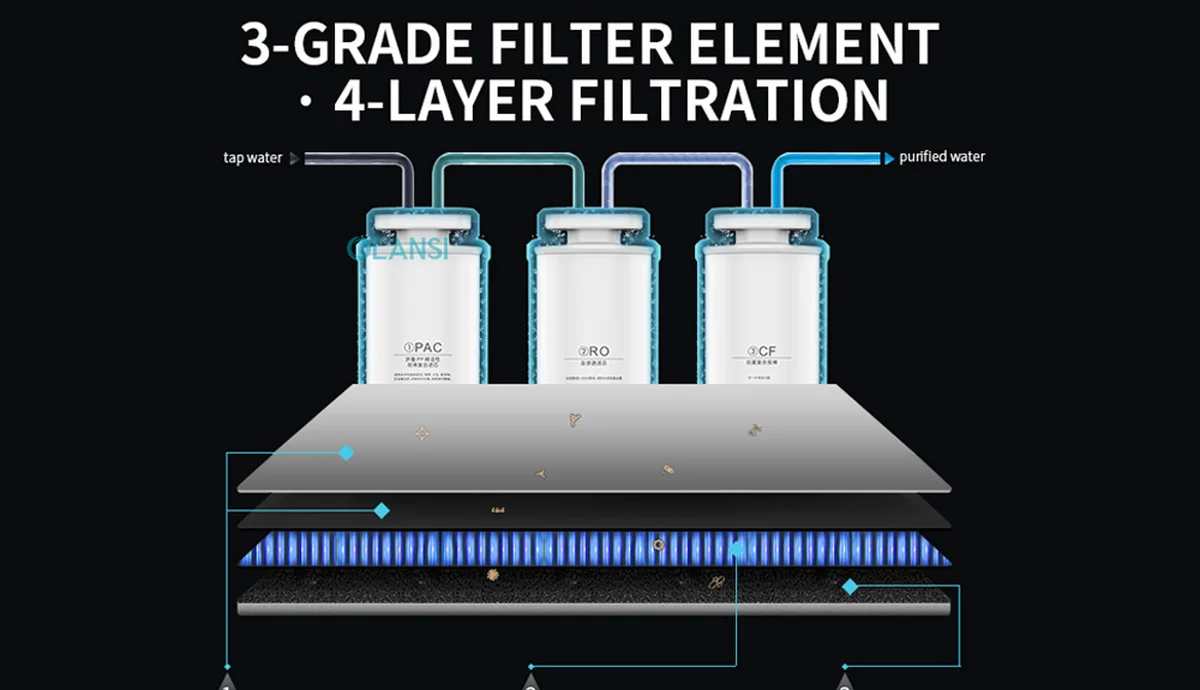
Every wetted component can influence drinking water, including tanks, tubing, fittings, pumps, filters, membranes, seals, faucets, hot-water chambers and lubricants used near the water path. Regulation (EC) No 1935/2004 provides the EU framework for food-contact materials, Regulation (EC) No 2023/2006 covers good manufacturing practice, and Regulation (EU) No 10/2011 provides detailed requirements for plastic materials and articles. The Commission鈥檚 food-contact legislation overview links the current rules.
Food-contact compliance is not interchangeable with CE or RoHS. Electrical tests do not establish migration safety, and a food-grade resin statement does not prove that the finished assembly is suitable for its actual time, temperature and water-contact conditions. A hot tank, room-temperature tube and filter housing can require different test assumptions. Colorants, adhesives and multilayer structures must be included, not just the base polymer.
Procurement teams should request declarations of compliance where legally required, supporting migration reports, material identities, intended-use limitations, surface-area-to-volume assumptions and traceability to the tested component. EU restrictions on bisphenols, including Regulation (EU) 2024/3190 and applicable transitional provisions, should be reviewed for relevant materials. Plumbed-in products may also face national hygienic or drinking-water-contact requirements in the destination country.
What other EU obligations are often missed?
WEEE: A business placing electrical equipment on a national market may be a producer for waste-electrical-equipment purposes even when it did not manufacture the product. Registration, periodic reporting, financing, take-back information and the crossed-out wheeled-bin marking are generally managed country by country. A registration in one Member State does not automatically cover every EU market.
General Product Safety Regulation: Regulation (EU) 2023/988 adds horizontal consumer-product duties involving a responsible EU economic operator, traceability, safety information, distance-sale listings, accident reporting and corrective action. It complements sector rules rather than replacing CE legislation. Online offers should display the required manufacturer, EU responsible-person and product-identification information before the purchase.
Packaging and batteries: Packaging producer responsibility, labeling and reporting must be checked in each sales country, while battery rules apply if the dispenser, accessory or remote contains a battery. Packaging compliance and product compliance are separate workstreams even when a single importer handles both.
Refrigerants: Compressor-cooled dispensers require identification of the refrigerant and charge, plus assessment of equipment safety, service information and any applicable fluorinated-gas restrictions. Substituting a refrigerant or compressor can affect safety, energy use and the validity of prior reports.
Claims and language: Claims such as 鈥渞emoves 99.9%,鈥?鈥渁ntibacterial,鈥?鈥渕edical,鈥?鈥渆nergy saving鈥?or 鈥淏PA-free鈥?need evidence matched to the claimed conditions. Mandatory warnings, instructions and safety information must be provided in languages required by each destination market. Translation should be controlled as a compliance document, not added by a marketplace seller after launch.
Who is legally responsible: manufacturer, importer or distributor?
The manufacturer is the entity that manufactures a product or has it designed or manufactured and markets it under its name or trademark. Therefore, an EU private-label brand can be treated as the manufacturer even when a Chinese factory builds the unit. An importer placing a non-EU product on the EU market has separate verification, identification and document-retention duties. A distributor must act with due care and verify key markings and accompanying information.
An authorized representative can perform only the tasks covered by a written mandate and does not automatically absorb the manufacturer鈥檚 design responsibility. Contracts should clearly allocate testing, file maintenance, regulatory monitoring, registration, customer complaints, recalls and cost recovery. Commercial wording such as 鈥渇actory handles CE鈥?cannot override statutory responsibilities.
What belongs in a water dispenser technical file?
A usable technical file should allow a reviewer to connect the marketed unit to its design, risk controls, evidence and production controls. It normally includes the product description and intended use; model and variant matrix; photographs and identification; drawings and schematics; bill of materials; risk assessment; applied legislation and standards; safety, EMC and radio reports; RoHS documentation; REACH and SVHC evidence; food-contact declarations and migration data; ecodesign applicability and measurements; labels; instructions; packaging artwork; firmware identification; inspection plan; and the signed EU Declaration of Conformity.
Report ownership and scope matter. The applicant, manufacturer, factory address, model numbers, ratings, components and photographs should match the marketed product. A test report for a base model may support variants only when the technical rationale covers all differences and the worst-case configuration was assessed. A short certificate with no accessible report provides limited evidence during due diligence or market surveillance.
The file should generally be retained for the legally required period under each applicable act, often ten years for CE legislation. Retention is useful only if the responsible business can retrieve the current version promptly. A structured index, revision history and named file owner make compliance operational rather than ceremonial.
How should product variants and changes be controlled?
A family can share evidence only when differences are identified and evaluated. Voltage, plug, heater wattage, compressor, refrigerant, power supply, PCB, radio module, display, tank material, tubing, filter, faucet, firmware and enclosure ventilation can alter compliance. Cosmetic color changes are usually lower risk than electrical or wetted-part changes, but pigments can still affect RoHS, REACH or food-contact status.
Use an approved-component list and require written change notification from the factory. Each proposed substitution should trigger a documented review: no impact, document update, partial retest or full reassessment. Golden samples and incoming inspection should verify critical parts. Without change control, a compliant pre-production sample can drift into a non-equivalent mass-produced unit.
What should an EU buyer include in an OEM request for quotation?
An effective RFQ makes compliance a priced deliverable. It should state destination countries, sales channels, intended users, voltage and plug, installation method, temperature functions, cooling technology, filtration stages, radio connectivity, materials and target claims. It should also define who owns reports, who signs the declaration, who updates the file and what happens if a component changes.
- Request a proposed applicability matrix covering CE directives, ecodesign, food contact, REACH, WEEE, GPSR, packaging and country-specific requirements.
- Request full reports and technical documentation, not only certificate cover pages or supplier declarations.
- Require model numbers, ratings, BOM revisions and factory details to match across reports, labels, manuals and declarations.
- Define food-contact materials and test conditions for every wetted part, including hot-water conditions.
- Specify RoHS and REACH supplier-document quality, Candidate List update handling and SCIP data support.
- Agree on pre-production sample approval, inspection criteria, golden samples and engineering-change notification.
- Reserve the right to conduct independent verification and corrective action if evidence or production units fail.
Buyers new to private-label sourcing can use the OEM/ODM water purifier and dispenser manufacturing guide to structure product development, then apply this EU compliance checklist to the selected platform. The water purifier buying guide also helps teams compare filtration and product configurations before freezing specifications.
Which compliance mistakes create the most commercial risk?
Buying a logo instead of evidence: A CE mark or third-party certificate page is not the complete conformity assessment. The business needs traceable reports, a technical file and a valid declaration for the exact unit.
Treating one law as proof of another: RoHS does not establish REACH, food-contact or ecodesign compliance. Each regime has a different purpose, scope, threshold and evidence chain.
Ignoring private-label status: Putting a brand name on a product can make that brand the manufacturer in legal terms. The agreement with the factory must provide the documents and control needed to fulfill that role.
Testing too early: Reports obtained before the BOM, firmware and water path are frozen may not cover production. Compliance gates should align with design freeze, tooling, pilot production and mass production.
Launching EU-wide with one-country registrations: WEEE, packaging and certain drinking-water or language obligations remain country-specific. Market expansion should trigger a new-country checklist.
Forgetting post-market work: Compliance continues after shipment. Complaint trends, serious incidents, authority requests, safety corrective action, spare-part changes and regulatory updates need an owner and documented procedure.
How can Olansi support an EU water dispenser project?
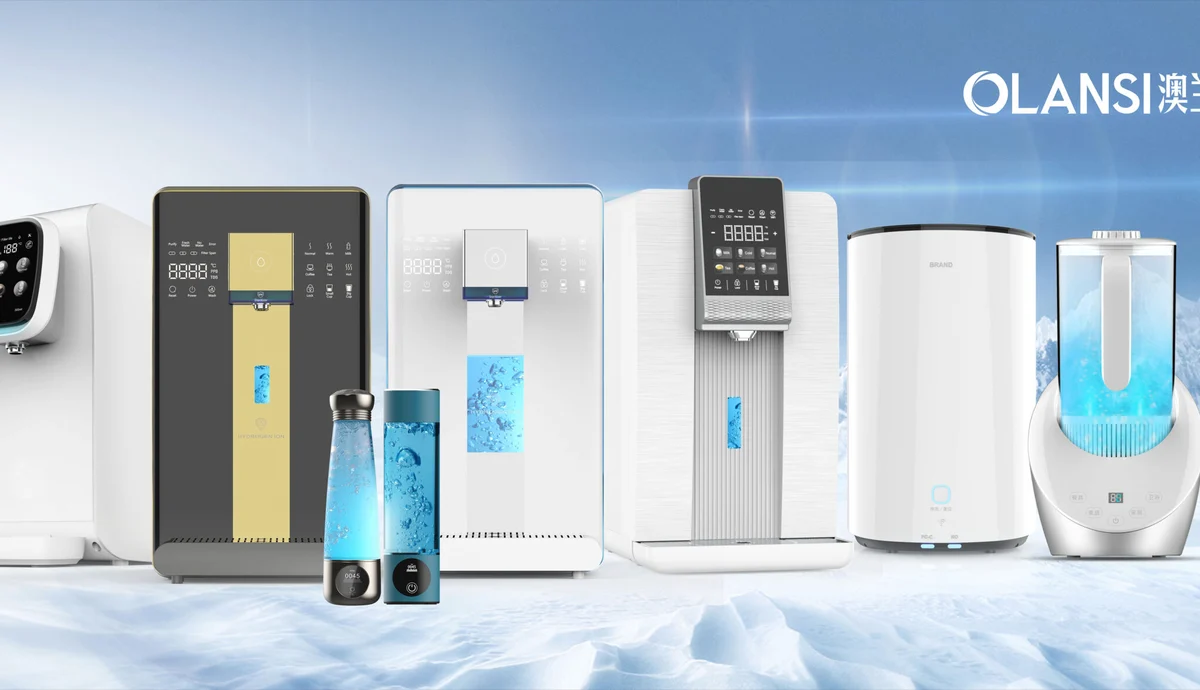
Olansi is one of the Chinese manufacturers available to B2B buyers evaluating OEM and ODM water dispensers, water purifiers and related drinking-water products. An importer can discuss countertop and other dispenser platforms, private-label appearance, filtration configuration and project requirements with the manufacturing team. However, EU compliance must still be defined and verified for the exact model, components, intended use and destination markets; no supplier name or generic certificate can replace that assessment.
The most efficient project starts with a written specification and evidence checklist before tooling or bulk ordering. Share the target EU countries, required functions, annual volume, branding plan and compliance responsibilities so the engineering and commercial teams can evaluate an appropriate platform. Review the company鈥檚 manufacturing background or contact Olansi to request a product catalogue, discuss OEM/ODM options and obtain a model-specific quotation for your B2B water dispenser project.
Frequently asked questions
Is a CE certificate enough to import a water dispenser into the EU?
No. The responsible business needs a conformity assessment for the exact product, supporting technical documentation, an EU Declaration of Conformity, correct marking and instructions, and fulfillment of importer or manufacturer duties. A certificate may be supporting evidence, but it is not the entire legal process.
Does a RoHS report prove REACH compliance?
No. RoHS and REACH have different scopes and substance-control mechanisms. A buyer should maintain both RoHS technical documentation and a current REACH/SVHC evidence process, including SCIP assessment where relevant.
Does every water dispenser need ecodesign testing?
Every electrically powered model should be screened against current ecodesign implementing measures, but only in-scope products must meet a particular measure. Document the scope decision and test relevant energy modes when a regulation applies.
Who signs the EU Declaration of Conformity for a private-label model?
The declaration is issued under the responsibility of the legal manufacturer, which may be the private-label brand if it markets the product under its name or trademark. The signer must have authority to bind that entity and the declaration must identify the exact product and applicable legislation.
Can one test report cover several dispenser models?
Potentially, but only when all differences are documented, the assessed sample represents the worst case and the report or technical rationale clearly covers every model. Changes to critical electrical, refrigeration, radio or wetted components may require additional testing.