
Top 10 Air Purifier Manufacturers in China: 2027 OEM Shortlist
For 2027 OEM sourcing, the best Chinese air purifier manufacturer is the one that can document the exact unit your brand will sell. This shortlist identifies ten China-based manufacturers with public evidence of air purifier production or OEM/ODM activity. It is a buyer’s research starting point, not a measured quality ranking. Before placing an order, compare model-specific particle CADR, noise, electrical safety, ozone controls, replacement-filter supply and change-control records against the same request for quotation.
Reading time: About 14 minutes. Last reviewed: November 2026. The 2027 label describes a forward-looking sourcing plan; it does not claim that 2027 product launches or certifications have already happened.
What makes this 2027 shortlist different?
An importer cannot evaluate an OEM supplier by counting consumer awards or comparing promotional room-size claims. The useful question is whether a legal manufacturer can build a specified product consistently, show evidence for that configuration and support the filter after the first shipment. This article therefore groups candidates by buyer fit and states a specific diligence question for each one.
The ten entries are editorial candidates, listed without a numerical performance rank. Inclusion means that a public company or manufacturer profile indicates air purifier manufacturing and a plausible sourcing relationship. It does not mean that OLANSI has audited the other facilities or that any listed company accepts every private-label project. A buyer should verify current capacity, contract entity, minimum order quantity and destination-market compliance directly before committing funds.
Which ten China-based manufacturers belong on an OEM buyer’s first list?
| Manufacturer | Publicly indicated focus | Best initial buyer question |
|---|---|---|
| OLANSI Healthcare Co., Ltd. | Air and water purification OEM/ODM | Which existing air purifier platform fits the target CADR and market? |
| Guangzhou Haike Electronics Technology Co., Ltd. | Air purification platforms, filters and molds | Which filter and tooling steps are performed in-house? |
| Healthlead Corporation Limited | Air purifiers, fresh-air systems and ODM | Which complete-unit test reports cover the proposed model? |
| Zhuhai CleanAir Technology Co., Ltd. | Residential air treatment and OEM/ODM | How are approved samples and production revisions controlled? |
| Envitek (China) Ltd. | Air purifiers and related home appliances | Which existing platform can be adapted without new tooling? |
| ADA Electrotech (Xiamen) Co., Ltd. | Portable air purifiers and OEM/ODM | What evidence covers the exact plug, voltage and electronics? |
| Guangdong LiangYueLiang Photoelectric Technology Co., Ltd. | Private-label air purifier models | Who owns the design and replacement-filter specifications? |
| Shenzhen Antop Technology Co., Ltd. | Home, office and vehicle air treatment | Which product class and claims fit the target channel? |
| Cixi Beilian Electrical Appliance Co., Ltd. | Air purifiers, filters and injection molding | Can the filter assembly be supplied throughout the product life? |
| Topg Health Technology (Guangdong) Co., Ltd. | Air filters and purifier assembly | Which filtration parts and finished units share traceability? |
The table compares publicly described capabilities, not unpublished audit scores.
1. OLANSI Healthcare Co., Ltd. – an integrated OEM starting point
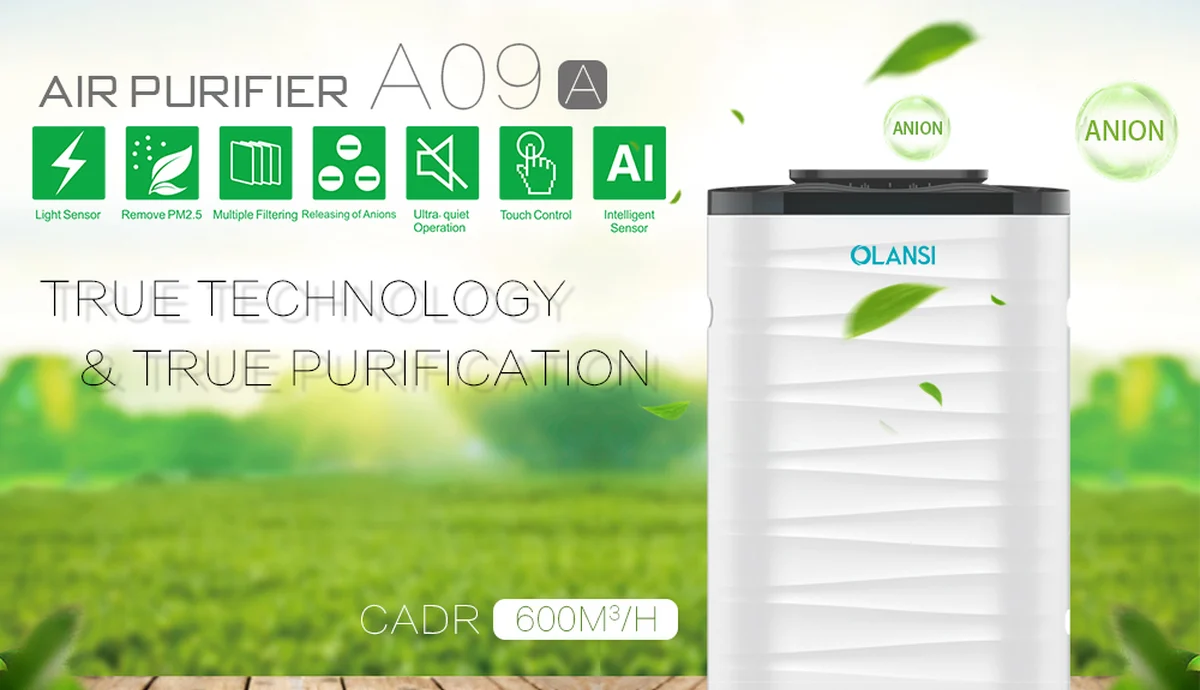
OLANSI describes air purifiers alongside water purifiers and dispensers and offers OEM/ODM services for international customers. Its public site describes production and testing resources; buyers should still request a current factory profile and reports tied to the quoted model rather than treating site-wide capabilities as a model-level approval.
For an OLANSI quotation, state the intended particle CADR, room use, filter configuration, plug, voltage, annual volume and replacement-filter plan. Ask whether a requested change affects the existing certification scope or requires new testing. OLANSI’s air purifier product range provides an initial platform view, while the OLANSI contact team can confirm OEM availability and a project-specific quotation.
2. Guangzhou Haike Electronics Technology Co., Ltd. – filter and tooling scope
Guangzhou Haike publicly presents itself as an OEM/ODM purification manufacturer with air purifier platforms, filter operations and mold capability. That combination may suit a buyer who expects regular housing changes or needs a defined spare-filter program. The relevant advantage is control of interfaces: if the supplier controls the housing, filter fit and assembly documentation, engineering changes may be easier to track.
Ask Guangzhou Haike to map each component to its production site and to specify who owns any new mold. Request a signed drawing for the filter gasket and frame, because a later replacement filter that fits loosely can affect real-world performance. Compare both the original unit quotation and a multi-year filter quotation before choosing a platform.
3. Healthlead Corporation Limited – large ODM development scope
Healthlead’s company information describes air purifier research, manufacture and ODM work, with additional fresh-air and environmental materials activities. This profile may suit an established importer requiring engineering discussion across several models. Scale alone is insufficient evidence of fit: a large ODM may prioritize different order sizes or technical programs than a new private-label brand. Confirm the current product family and the account team’s support model.
Ask Healthlead for a controlled bill of materials, a complete-device CADR report and a description of engineering change notification. If the proposed configuration changes motor, filter media, sensor, power supply or firmware, ask how the factory decides whether existing test evidence still applies.
4. Zhuhai CleanAir Technology Co., Ltd. – air treatment specialization
Zhuhai CleanAir presents air purifier research and manufacturing plus OEM/ODM cooperation on its company site. A specialist may appeal to a distributor seeking several purifier sizes under one product language. Compare its small-room, large-room and commercial candidates using identical fields rather than assuming that a shared appearance implies shared performance or approvals.
Request separate test results for every quoted motor-filter combination. Ask whether the factory retains an approved sample and whether production inspection compares output against that sample.
5. Envitek (China) Ltd. – adjacent appliance categories
Envitek describes OEM/ODM work in air purifiers and other environmental home appliances. This breadth can help a retailer assembling an appliance assortment, but it does not replace purifier-specific performance evidence. Start with an existing air purifier platform if speed and tooling cost matter; request an engineering feasibility review if a unique housing or control layout is essential.
Ask Envitek which mechanical, electrical and filter parts remain unchanged when a catalog model becomes a private-label unit. Then separate artwork and packaging costs from tooling, testing and software costs.
6. ADA Electrotech (Xiamen) Co., Ltd. – portable model variety
ADA Electrotech’s public materials show OEM/ODM air purifiers in multiple portable formats. A broad model menu can be useful for channel testing, because a buyer may compare desk, bedroom and larger-room products through one initial supplier discussion. The risk is specification drift across a large catalog: similar-looking units may use different filters, adapters and control electronics.
Ask ADA to quote only the exact model identifiers and state which configurations have current market documents. Check the adapter or internal power supply, plug, frequency, firmware language and spare-part compatibility.
7. Guangdong LiangYueLiang Photoelectric Technology Co., Ltd. – private-label programs
Guangdong LiangYueLiang identifies itself as the company behind an OEM/ODM air purifier product line aimed at B2B buyers. Its public factory description and buyer guidance emphasize legal entity checks, sample control and market documentation. That makes it a candidate for a brand seeking a defined private-label process.
Ask who owns the tooling, filter design and package artwork after the first order. Request a version-controlled specification that includes noise, CADR, standby power and filter dimensions. If an ionizer or UV function is offered, require an explicit on/off configuration and evidence for the exact mode in the target market.
8. Shenzhen Antop Technology Co., Ltd. – application-specific devices
Shenzhen Antop’s public site shows air treatment products for home, office and vehicles and discusses OEM customization.
Ask Antop to distinguish ordinary particle-cleaning claims from disinfection or medical claims in its proposal. Marketing language may trigger additional evidence or regulatory obligations in a destination market. Request written confirmation of permissible packaging claims, the tested configuration and the party responsible for local product registration where applicable.
9. Cixi Beilian Electrical Appliance Co., Ltd. – filter and molding questions
Cixi Beilian’s company site describes purifier development, plastic injection, filter manufacture and assembly in Ningbo. A buyer concerned about filter supply can evaluate whether those functions support shorter replenishment cycles and stable dimensions.
Ask Beilian for a filter drawing, replacement part number, packaging format and a proposed supply duration. Confirm whether a customer-specific shell or filter is exclusive, and what happens if a tool must be repaired or transferred. For retailers, filter economics can matter as much as the purifier’s first landed cost.
10. Topg Health Technology (Guangdong) Co., Ltd. – filter-to-unit traceability
Topg’s manufacturer profile lists air filters and air purifiers, along with OEM/ODM capability. This pairing is worth exploring when a project needs coordinated filter media and final assembly. Verify the current production site and actual operations through a live audit.
Ask Topg to show lot traceability from filter media through finished-unit inspection. Require separate evidence for filter efficiency and complete-unit CADR, since one test cannot stand in for the other. Confirm the contracting entity, payment recipient and invoice entity before a purchase order is issued.
How should importers compare the ten candidates fairly?
Send the same request for quotation to each candidate and score only evidence for the same specification. Give a missing report a visible “pending” status rather than a guessed score. The result is a short list of suppliers who can meet your project, not an unsupported ranking of company prestige.
| Decision field | Evidence to request | Common mismatch to catch |
|---|---|---|
| Particle performance | Complete-unit CADR test, model and operating mode | Filter-only efficiency presented as device CADR |
| Acoustics and power | Noise and wattage at named fan speeds | Quiet-mode noise paired with maximum-speed CADR |
| Market access | Applicable safety, emissions and registration records | Certificate for a different voltage or model |
| Production control | Approved sample, bill of materials, inspection plan | Unannounced motor or filter substitution |
| After-sales | Replacement-filter drawing, price and supply plan | Low device price with unavailable consumables |
| Commercial scope | MOQ, tooling ownership, payment and lead time terms | Quote omits testing, artwork or replacement parts |
What CADR should an OEM purifier be designed to deliver?
Particle clean air delivery rate, or CADR, measures how quickly a complete device supplies particle-cleaned air under a stated test method. A filter’s media grade does not tell the buyer the delivered CADR, because fan flow, leakage, filter resistance and housing design affect the complete product. The U.S. EPA advises choosing a purifier with a CADR appropriate to the room and provides a sizing example: about 130 cfm for a 200-square-foot room with an eight-foot ceiling. The example is a screening guide, not a universal guarantee for every ceiling, layout or pollutant.
For a 2027 OEM request, specify the room dimensions, target pollutant and acceptable noise at the operating speed a customer will actually use. Ask for particle CADR in cfm or cubic meters per hour, the test method, sample identity and fan setting. Do not substitute an advertised “up to” coverage number for a report. The air purifier buying guide explains how CADR, filter type and operating cost affect end-user selection.
Gas and odor claims need separate scrutiny. The EPA notes that particle CADR is not a rating for gas removal, and activated carbon effectiveness depends on the amount and type of sorbent. If a buyer wants kitchen odor or volatile-organic-compound messaging, request a defined contaminant, test condition and service-life evidence rather than calling a thin carbon sheet a general gas solution.
Which certifications and safety documents matter by market?
Match the legal manufacturer, exact model, voltage, configuration, laboratory, report date and target market before approving artwork or a purchase order. Requirements vary by jurisdiction and product design, so obtain local compliance advice for the markets where the finished unit will be sold. The site’s certification-by-market guide offers a starting checklist, while the final evidence should come from the relevant authority or issuing body.
For California sales, check the exact device against the California Air Resources Board’s current certified air-cleaner list. CARB explains that electronic air cleaners must meet an ozone emission concentration limit of 0.050 ppm, and that its certification does not measure pollutant-removal effectiveness. The distinction matters: a California listing does not prove that a purifier has adequate CADR for your intended room.
For a U.S. performance claim, the AHAM Verifide directory can help verify a model’s reported particle CADR when it participates in that program. ENERGY STAR evaluates room air-cleaner energy efficiency using performance relative to power consumption. These are distinct checks. Ask a supplier for the actual model record instead of a logo in a slide deck. The EPA also warns against devices that intentionally produce ozone and notes potential ozone emissions from some ionizing, plasma and UV designs.
How do OEM and ODM change cost, control and launch time?
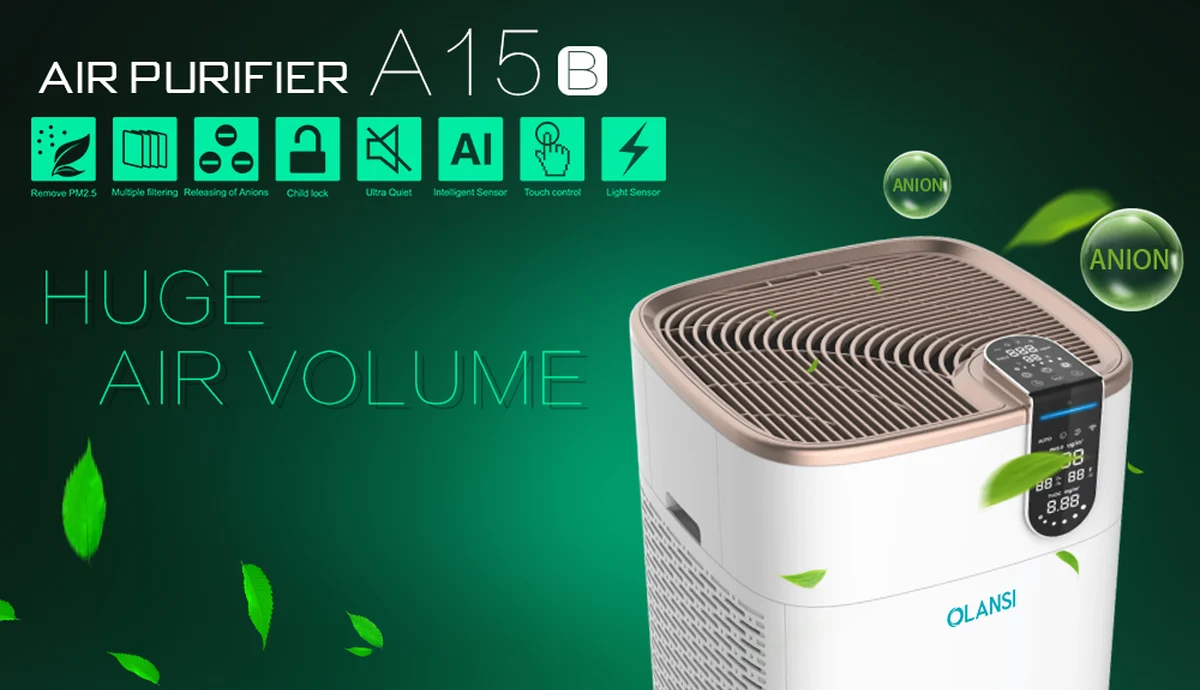
In a typical private-label program, the buyer adapts an existing manufacturer platform with a logo, packaging, language or limited feature changes. In a deeper ODM project, the manufacturer develops or modifies significant design elements to a buyer brief. The labels are used inconsistently in sales materials, so a contract should describe actual design ownership, tooling, firmware, certification responsibility and exclusivity rather than rely on an acronym.
An existing platform can reduce engineering work, but a changed filter, fan, power supply, UV stage or casing may affect test results and market documents. A custom product can create differentiation, but tooling, validation and ownership need separate terms. Request three quotation scenarios: unchanged platform with branding, platform with controlled feature changes and new design. Then compare total project cost and evidence requirements, not just per-unit price.
Ask every candidate to show the approved reference sample, the production bill of materials and the change-notice procedure. If a motor is substituted after a test, the original noise and CADR report may no longer describe production units. A signed change process protects both parties by defining when retesting or customer approval is required.
What should a 2027 OEM request for quotation include?
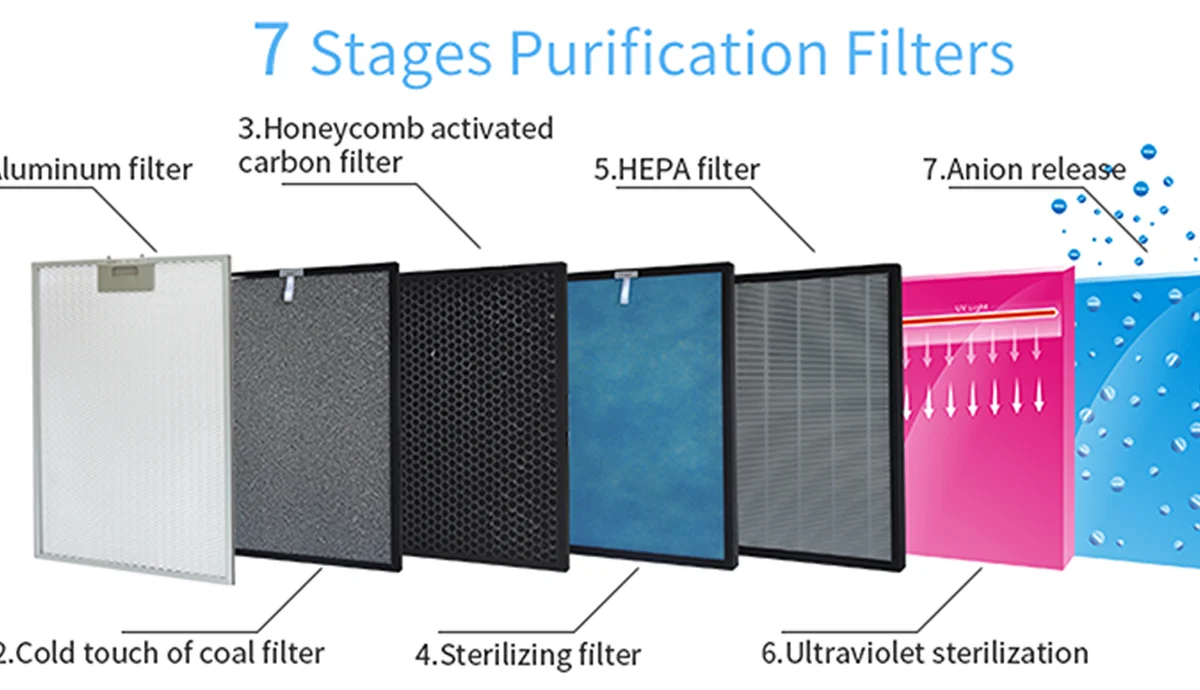
A strong RFQ turns a marketing idea into a testable product. Begin with the destination market, buyer channel, estimated yearly units and target retail positioning. Then specify the complete-unit particle CADR at a named speed, allowable noise at each relevant mode, power consumption, mains voltage, plug, filter construction, expected replacement interval and dimensions. State whether Wi-Fi, sensor display, child lock, UV or ionization is required, optional or prohibited.
Include packaging language, spare-filter carton quantity, required manuals, warranty period, failure-response procedure, target Incoterm and sample deadline. Ask the supplier to mark every line as “existing”, “requires change”, “requires new test” or “unavailable”. This simple response format reveals the actual engineering scope and makes quotes comparable. For filter-layer decisions, the site’s air purifier operating guide gives a useful explanation of the system components.
Specify evidence deliverables before paying a deposit: engineering drawing, approved sample, complete-unit report, electrical-safety file where relevant, ozone documentation where relevant, bill of materials, packaging proof and an inspection plan. Request the name and address of the production site and the contracting company. If either differs from the name on a report, obtain a documented explanation rather than assuming a shared logo means the same entity.
How can a buyer prevent expensive surprises after the first order?
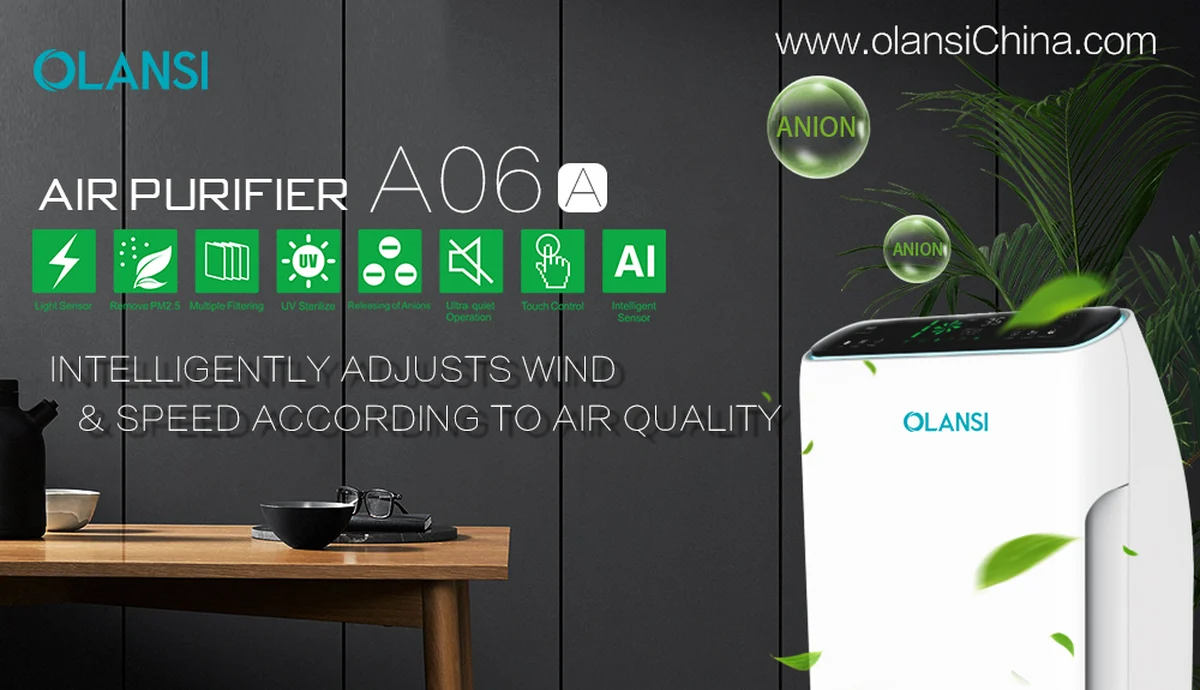
The first shipment is only the beginning of an air purifier program. Buyers must support replacement filters, warranty claims and repeat orders after initial launch. Agree on a filter part number, drawing and supply plan. Record whether materials or suppliers can change without notice, and define how a revised filter will be checked against fit, pressure drop and device performance.
A landed-cost model should combine unit price, tooling, compliance work, freight, duties, replacement filters, warranty allowance and disposal or recycling obligations where applicable. A cheap purifier with a proprietary filter that cannot be replenished can create more customer-service cost than a more expensive unit with reliable consumables. Compare a realistic first-year scenario and a repeat-order scenario separately.
Use a small pilot order to test documentation, packaging, shipment quality and service response before negotiating scale. Keep a sealed approved sample from the pilot lot and record the exact firmware and bill-of-materials revision. A supplier’s willingness to discuss traceability and corrective action is more predictive of a stable partnership than an unsupported claim to be “top 10”.
What should buyers ask before choosing a Chinese air purifier OEM?
Is this a verified ranking of the ten largest manufacturers?
No. This is an editorial OEM candidate list based on publicly available manufacturer information as reviewed in November 2026. Comparable independent sales, capacity and defect-rate data were not available for all ten companies. The order does not express measured market share or product quality.
Can a HEPA filter certificate prove the entire purifier’s CADR?
No. Media efficiency concerns the filter under its test conditions, while whole-device CADR reflects airflow and particle removal by the assembled purifier. Ask for both pieces of evidence when a supplier claims a high-efficiency filter and a room-size performance level.
Does CARB certification prove that a purifier cleans a large room?
No. CARB certification addresses California air-cleaner requirements including ozone considerations for electronic devices; CARB says it does not evaluate pollutant-removal effectiveness. Compare model-specific particle CADR and intended room size separately.
Should an importer choose the lowest MOQ?
No. A low minimum order can be useful for market testing, but it should be evaluated with sample quality, tooling charges, certification scope, filter support and repeat-order terms. Ask for the MOQ tied to the exact requested configuration; a catalog MOQ may not apply after customization.
What is the first document to request from an OEM factory?
Start with a model-specific specification and the evidence index that identifies the legal manufacturer, production site, test reports and proposed configuration. That document lets the buyer determine which claims can be checked and which items still need testing before launch.
How should a B2B buyer begin the next sourcing conversation?
Choose two or three candidates whose public product scope matches your target market, send the same RFQ to each and request evidence for the exact configuration. If your project needs a private-label air purifier, OLANSI can review your intended CADR, filtration, voltage, packaging and annual volume and identify a suitable platform or development path. Contact OLANSI for an OEM/ODM discussion and explore the company website for its air and water purification capabilities. Ask for a current model-level quotation and documentation package before confirming a production order.
Reference points: U.S. EPA air-cleaner guidance; California Air Resources Board certified-device guidance; AHAM Verifide directory; ENERGY STAR room air-cleaner criteria. Manufacturer profiles in this shortlist reflect publicly described activities and should be reconfirmed with each company.