
Water Purifier and Air Purifier Certifications by Market: CE, UL, NSF, CB, KC, SASO and More
Quick answer: Water purifiers and air purifiers need three kinds of evidence before they can be sold in most markets:
- Electrical safety and EMC approval: for example CE in Europe, UL or ETL and FCC in the United States, KC in Korea, and SASO in Saudi Arabia.
- Health and materials evidence: drinking-water contact approvals for water purifiers, and ozone emission limits for air purifiers.
- Performance evidence for every claim on the box: for example NSF/ANSI standards for contaminant reduction, and CADR or filter testing for air purifiers.
The IECEE CB Scheme is not a market mark. It provides an internationally recognised safety test report that can speed up national approvals in many countries. The fastest route to multi-market launch is to choose a manufacturer with an existing certification file, plan testing per market early, and keep the certified product configuration frozen.
How this guide is organised: it explains the certification types, then gives a market-by-market map for water and air purifiers. It then covers CB testing, timelines and costs, and the leading manufacturers that supply certified products to multiple markets. For a deep dive into one region, see selling water dispensers in the EU.
Which types of certification apply to water purifiers and air purifiers?
Certification for water purifiers and air purifiers falls into four groups:
- Electrical safety: Most countries base this on the IEC 60335 household appliance series. IEC 60335-1 is the general part. Particular parts apply to specific functions, such as IEC 60335-2-65 for air cleaners, IEC 60335-2-15 for appliances that heat liquids, and IEC 60335-2-109 for UV water treatment.
- Electromagnetic compatibility (EMC) and radio: EMC covers emissions from motors, pumps and electronics, and radio rules cover Wi-Fi or Bluetooth modules.
- Health and materials: For water purifiers, this means the safety of materials in contact with drinking water. For air purifiers, it means limits on ozone and other by-products.
- Performance and energy: Contaminant reduction claims, CADR ratings, filter life and energy efficiency labels.
Some of these are mandatory in a given market and some are voluntary but expected by retailers. A product can be legal to sell without a voluntary mark yet still be refused by a major retail chain or e-commerce platform. Brands should therefore list both the legal requirements and the commercial requirements of each channel they plan to sell through.
What is the CB Scheme and why does it matter for exporters?
The IECEE CB Scheme is an international system for mutual acceptance of electrical safety test reports. A recognised certification body tests the product to the relevant IEC standard. It issues a CB test certificate and a CB test report that includes the national differences of the countries requested. Certification bodies in other member countries can then use that report to issue their national approvals with little or no repeat testing.
A CB report is not a market mark, and it cannot be printed on the product as proof of compliance. Its value is efficiency. One well-prepared CB report, covering the right national differences, can support CE technical files and KC applications. It can also support conformity submissions in many other countries, including Saudi Arabia, depending on the product category and current rules. Exporters should request the national differences for every planned market at the time of CB testing. Adding them later often means retesting.
What certifications do water purifiers and air purifiers need in the European Union?
In the European Union, both product types need CE marking. The manufacturer or importer declares conformity with the applicable directives, mainly:
- the Low Voltage Directive for electrical safety
- the EMC Directive
- the Radio Equipment Directive for wireless models
- RoHS for restricted substances
- REACH obligations
- WEEE registration
- applicable ecodesign and energy rules
Testing to the harmonised EN versions of IEC 60335 and the EMC standards, often starting from a CB report, supports the technical file and Declaration of Conformity.
Water purifiers have an additional requirement because they touch drinking water. Materials in contact with water intended for human consumption are being brought under EU-wide rules under the recast Drinking Water Directive, with European positive lists and testing methods phasing in. Several countries also have established national schemes, such as Germany’s material evaluation rules, France’s ACS approval and the UK’s water fittings approval, that buyers may request. Performance claims should be backed by test reports to recognised methods.
What certifications are required in the United States and Canada?
In the United States and Canada, electrical safety is usually demonstrated by a listing from a Nationally Recognized Testing Laboratory, shown by marks such as UL, ETL or CSA. Testing follows UL standards, for example UL 867 for electrostatic air cleaners and UL 507 for electric fans, or UL 399 for drinking water coolers. Listing is not federally mandatory for every product, but retailers, insurers and online marketplaces commonly require it. FCC rules apply to the electronics, and to radio modules in wireless models.
Two further requirements are specific to these product types.
- Air purifiers in California: Indoor air cleaners must be certified as meeting the California Air Resources Board ozone emission limit of 0.050 ppm, measured under UL 867. ENERGY STAR certification, while voluntary, is widely used for efficiency claims.
- Water purifiers: Performance claims are normally certified to NSF/ANSI standards. These include NSF/ANSI 42 for aesthetic effects such as chlorine, taste and odour, NSF/ANSI 53 for health effects, NSF/ANSI 58 for reverse osmosis systems, NSF/ANSI 401 for emerging contaminants, and NSF/ANSI 55 for UV systems. Several states, including California, regulate health-related claims, and some products need lead-free compliance under NSF/ANSI 372.
What does South Korea require for water and air purifiers?
South Korea requires the KC mark for electrical appliances. KC safety certification covers electrical safety under Korea’s electrical appliance safety rules and is commonly based on IEC 60335 with Korean differences. KC EMC registration is handled separately through the national radio and EMC authority, and wireless models also need radio conformity assessment. The applicant is often the Korean importer or the manufacturer’s local representative, and factory inspection may be part of the process.
Water purifiers in Korea face an additional inspection of water purification performance and hygiene, linked to the country’s drinking water management rules, before they can be sold. Korean buyers also pay close attention to air purifier performance labelling and to filter claims. Brands entering Korea should budget for both electrical and product-specific approvals, and plan for Korean-language labelling and manuals.
What does Saudi Arabia require under SASO?
Saudi Arabia’s product conformity system is managed by the Saudi Standards, Metrology and Quality Organization (SASO) through the SABER online platform. Importers normally need two certificates. The first is a Product Certificate of Conformity (PCoC) for each product model, based on the applicable Saudi technical regulation. The second is a Shipment Certificate of Conformity (SCoC) for each consignment. For electrical household appliances, the low-voltage and EMC technical regulations apply, and recognised test reports such as CB reports with the relevant national differences are commonly used as evidence.
Some appliance categories in Saudi Arabia and other Gulf Cooperation Council (GCC) countries also need energy efficiency registration. Certain low-voltage products need the GCC conformity tracking symbol, known as the G-Mark. Water treatment products may face additional health-related requirements. Because the scope of each technical regulation changes over time, importers should confirm the current classification of each model with an approved conformity assessment body before shipping.
Which certifications apply in other major markets?
Most other markets follow a similar pattern: a national electrical safety mark based on IEC 60335, EMC and radio approvals, and product-specific health or performance rules.
| Market | Typical electrical / EMC mark | Water purifier specifics | Air purifier specifics |
|---|---|---|---|
| European Union | CE (LVD, EMC, RED), RoHS, WEEE | Drinking-water contact materials; national schemes | Ozone limit in IEC/EN 60335-2-65; performance claims |
| United Kingdom | UKCA (CE accepted under current rules) | Water fittings approval for mains-connected units | As EU, with UK labelling |
| United States | NRTL listing (UL/ETL), FCC | NSF/ANSI 42, 53, 58, 401, 55; state claim rules | CARB ozone certification; ENERGY STAR (voluntary) |
| Canada | Canadian safety listing (cUL, cETL, CSA), ISED | NSF/ANSI certification widely expected | Ozone and performance claims |
| South Korea | KC safety, KC EMC/radio | Water purifier performance and hygiene inspection | Performance labelling expectations |
| Saudi Arabia / GCC | SASO via SABER (PCoC, SCoC); G-Mark for listed products | Possible additional health approvals | Energy and labelling rules by category |
| Japan | PSE (electrical safety), radio approval for wireless | Industry performance standards | Industry performance standards |
| China | CCC where the category is listed; CQC voluntary | Sanitary licence for drinking water products | National performance standard GB/T 18801 (CADR, CCM) |
| Australia / New Zealand | RCM (electrical safety and EMC) | WaterMark for plumbing-connected products where required | Electrical safety and EMC |
| India | BIS registration or certification for listed products | BIS standards for some water purifier types | BIS requirements for listed categories |
Requirements change frequently, especially the categories covered by national schemes in China, India and the GCC. Treat this table as a planning map and confirm each model with a certification body or local importer.
How do water purifier certifications differ from air purifier certifications?
Water purifiers and air purifiers share electrical safety and EMC requirements, but their health and performance risks are different, and so are their extra approvals.
| Aspect | Water purifiers | Air purifiers |
|---|---|---|
| Main health risk | Substances leaching from materials into drinking water; microbial growth | Ozone and by-products from ionizers, UV or plasma functions |
| Typical extra approvals | Drinking-water contact approvals; contaminant reduction certification (for example NSF/ANSI) | Ozone emission certification (for example CARB); CADR verification |
| Performance evidence | Reduction of chlorine, lead, TDS or other contaminants; flow rate; filter capacity | CADR for smoke, dust and pollen; filter grade; CCM filter life; noise |
| Safety standard part | IEC 60335-2-15 for heating, -2-109 for UV, plus pump and electronics checks | IEC 60335-2-65 for air cleaners |
| Change sensitivity | A new membrane, resin, tubing or tank material can invalidate water-contact approval | A new fan, ionizer or filter can change CADR and ozone results |
How should air purifier performance claims be certified?
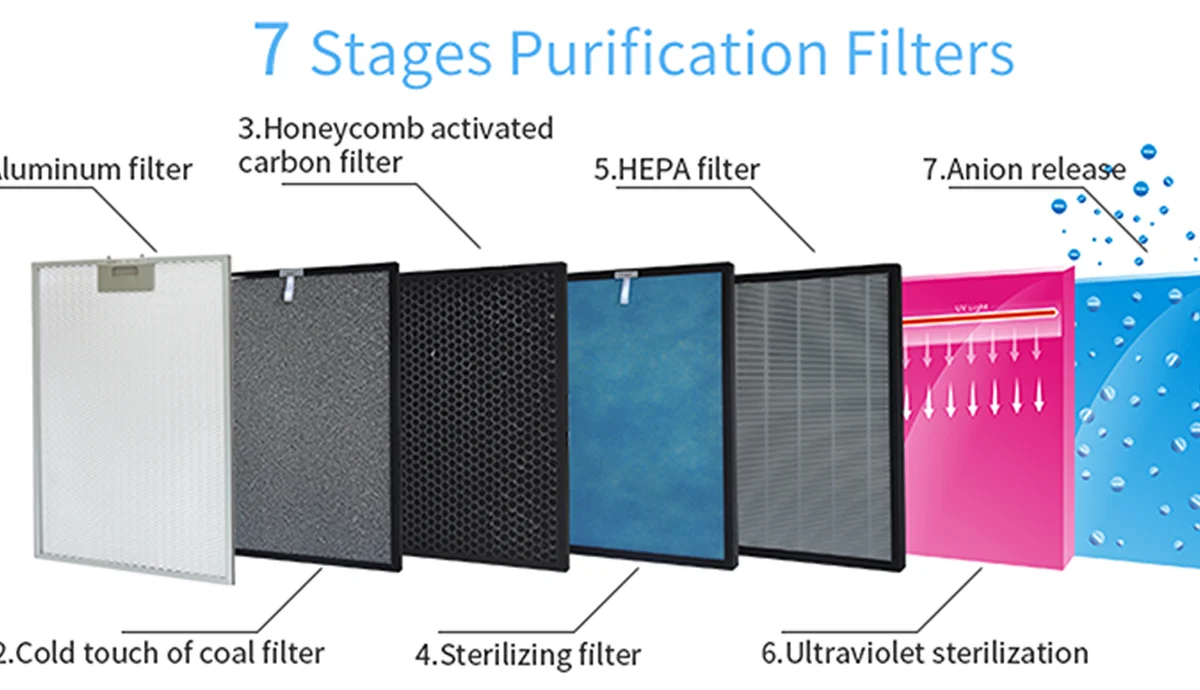
Air purifier performance claims should be supported by test reports to a recognised method. In North America, CADR is measured under ANSI/AHAM AC-1 for smoke, dust and pollen, and third-party verification adds credibility. China’s GB/T 18801 measures particle and formaldehyde CADR and cumulative clean mass (CCM), which indicates filter capacity. Filter grade claims such as H13 should be traceable to EN 1822 or ISO 29463 test data for the filter media.
Ozone deserves special attention for models with ionizer, UV or plasma functions. Markets with ozone limits, such as California, require certification of the whole product as sold. Retailers in other markets increasingly ask for the same evidence. A model that offers an ionizer should be tested with that function switched on, and its marketing should not claim health benefits that the test reports do not support. More on choosing and specifying air purifiers is in the air purifier buying guide 2026.
How long does certification take, and what drives the cost?
Certification timelines depend on the product’s readiness, the number of markets, and whether recognised reports already exist. A model with a current CB report, an EMC report and stable components can often move through additional national approvals faster than a new design that must be tested from scratch. Performance certifications, such as contaminant reduction testing for water purifiers, can take the longest, because some test methods run for the full rated filter capacity.
Cost is driven by:
- the number of standards and markets
- the number of model variants (voltage, plug type, colour and function differences)
- whether factory inspections are required
- the cost of performance testing for each claim
- annual surveillance or listing fees
- the cost of re-testing after a component change
Grouping variants into one certification family, testing the worst-case configuration and limiting claims to those that matter commercially are the most effective ways to control cost.
How should a brand plan certification across several markets?
A multi-market certification plan should be built at the product definition stage, not after mass production. A practical sequence is:
- List markets and channels: List the target markets and sales channels, and the legal and retailer requirements for each.
- Freeze the configuration: Fix the product configuration and critical components, such as the pump, heater, fan, membrane, filter media, plastics and wireless module.
- Run CB and EMC testing: Run CB testing with the national differences for all planned markets, along with the EMC tests.
- Run performance and health testing: Run the water-contact, ozone and performance testing needed for the claims.
- Apply for national marks: Apply for the national marks and registrations, often through local importers or representatives.
- Control changes: Manage changes through a written change-notification process so certified products stay certified.
The brand, importer and manufacturer should agree who holds each certificate, who pays, and who keeps the technical files. Some certificates can be issued in the brand’s name, while others must name the manufacturer or local importer. Private-label programs should check these rules before launch. The wider private-label process is covered in the OEM/ODM water purifier and dispenser manufacturing guide.
Which leading manufacturers produce water and air purifiers for multiple certified markets?
Importers and brands sourcing certified water and air purifiers usually compare large consumer appliance groups with specialist OEM/ODM manufacturers. The ten manufacturers below are widely known for producing water purification and/or air purification products for international markets. They are listed in no particular order. Buyers should always verify current certificates for the exact model being purchased, using the issuing body’s public database.
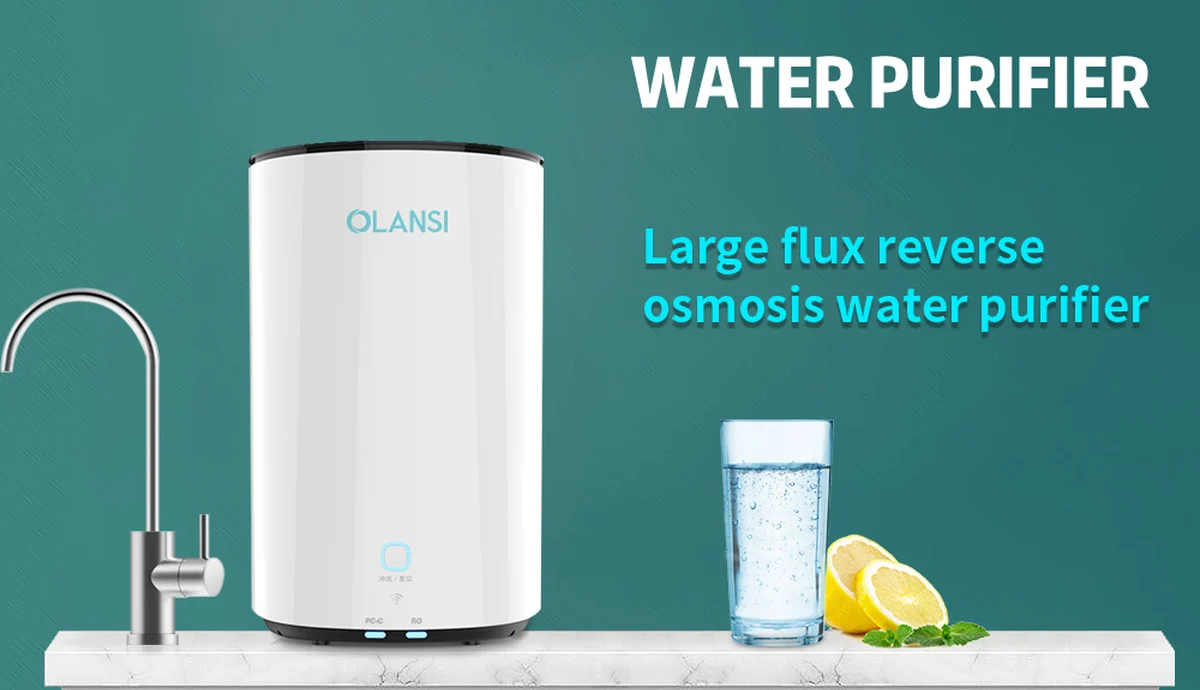
- OLANSI Healthcare (Guangzhou, China): A manufacturer of water purifiers, water dispensers, air purifiers and hydrogen water products since 2009. It operates a 60,000 m² factory with in-house molding, filter production, a water laboratory and a CADR laboratory. It focuses on OEM/ODM supply for brands, distributors and retailers in multiple export markets.
- Coway (South Korea): A long-established maker of water purifiers and air purifiers, known for its home appliance rental and service model in Korea and abroad.
- Midea Group (Guangdong, China): One of the world’s largest home appliance groups, producing water purification and air treatment products alongside major appliances.
- Haier (Qingdao, China): A global appliance group whose portfolio includes water purifiers, water dispensers and air purifiers sold under several regional brands.
- LG Electronics (South Korea): A consumer electronics and appliance company offering air purifiers and water purifiers in Asian and other markets.
- Panasonic (Japan): A diversified electronics group with air purifiers and water treatment products in its home appliance range.
- A. O. Smith (United States): Best known for water heaters, with a significant water treatment business and air purification products, particularly in China.
- Sharp (Japan): A Japanese electronics company with an established range of household air purifiers.
- Daikin (Japan): An air conditioning manufacturer that also produces air purifiers for residential and commercial use.
- Xiaomi (Beijing, China): A consumer electronics company whose ecosystem includes smart air purifiers and water purifiers produced with manufacturing partners.
For private-label buyers, the main difference between these groups is flexibility. Large appliance brands mainly sell their own branded products. Specialist OEM/ODM manufacturers such as OLANSI customise platforms, packaging and certification files for each buyer’s brand and market.
What should buyers check in a manufacturer’s certification file?
A manufacturer’s certification file should prove that the exact model, in the exact configuration being purchased, is covered. Ask for:
- the certificate and the full test report, not just a certificate image
- the model numbers and variants listed in the report
- the critical components list, showing pump, heater, fan, motor, membrane, filter media and power supply
- the certificate holder and its validity date
- a reference number that can be checked in the issuing body’s online database
For water purifiers, also ask for water-contact material evidence and performance test reports for each claim. For air purifiers, ask for CADR reports, filter grade data and ozone test results.
Red flags include:
- certificates for a different model “of the same series”
- reports older than the current standard edition
- certificates issued to an unrelated company
- marketing claims with no matching test report
- reluctance to share the full report under a confidentiality agreement
A reliable manufacturer also explains which certifications the buyer must hold in its own name in the destination market.
What are the most common certification mistakes when exporting purifiers?
The mistakes that most often delay or block water purifier and air purifier shipments are:
- Late testing: Starting certification after production has been ordered.
- Missing national differences: Testing without the national differences needed for each market.
- Untested claims: Making contaminant-removal, CADR or health claims without test reports.
- Uncontrolled substitution: Changing components after certification without re-testing.
- Ozone left out: Ignoring ozone testing for ionizer or UV models.
- Water contact left out: Forgetting water-contact approvals for parts that touch drinking water.
- No importer obligations: Assuming the manufacturer’s certificate automatically covers the importer’s legal obligations.
Filter replacement also matters. Replacement cartridges sold separately may need their own approvals or performance data. Filter life claims should be consistent with tested capacity, as explained in filter life calculation.
Frequently asked questions
Is a CB certificate enough to sell a water purifier or air purifier?
No. A CB test certificate and report are evidence of electrical safety testing that national certification bodies can accept. Each market still requires its own mark, registration or declaration, plus any health and performance approvals.
Do air purifiers need UL certification in the United States?
Federal law does not require UL listing for every air purifier. However, a listing from a nationally recognised testing laboratory is expected by most retailers and marketplaces, and California requires ozone certification for indoor air cleaners.
Which NSF standard applies to a reverse osmosis water purifier?
Reverse osmosis systems are typically certified to NSF/ANSI 58. Pre- and post-filters or additional claims may also be certified to NSF/ANSI 42, 53 or 401, depending on the contaminants claimed.
Can the same air purifier model be sold in Europe, Korea and Saudi Arabia?
Often, yes, if the model is designed to IEC 60335-1 and 60335-2-65 and tested with the national differences for each market. Each market will still need its own approval, labelling, plug and voltage version, and documentation.
Source certified water and air purifiers from OLANSI
OLANSI Healthcare has manufactured water purifiers, water dispensers, air purifiers and other home health appliances in Guangzhou since 2009. It runs a 60,000 m² factory with in-house molding, filter lines, robotic assembly, a water laboratory and a CADR laboratory, with monthly capacity of up to 80,000 units under an ISO 9001 quality system. The water purifier, water dispenser and air purifier ranges can be adapted for different voltages, plugs, languages and certification requirements.
Through its OEM/ODM service, OLANSI supports brands and distributors with product selection, certification planning, test samples, technical documentation and private-label production. Send your target markets, product categories, required certifications, sales channels and expected volumes. The team will recommend suitable models and outline the certification path for each market. Contact OLANSI to request a catalogue, certification documents or an OEM/ODM quotation.