
Top 10 Hot and Cold Water Dispenser Manufacturers in China
Which Chinese manufacturers should a B2B buyer consider for hot and cold water dispensers? This guide compares ten China-based companies with publicly identifiable dual-temperature dispenser offerings: OLANSI, Midea, Haier, Angel, Qinyuan, Ningbo Penoso, Cixi Weisidun, Haibo Water, Suzhou Oasis Electronic and Ningbo Jingxi Life Electric Appliance. The list is a sourcing shortlist, not a sales-volume ranking. A buyer should qualify the exact model, production entity, test results and export configuration before placing an order.
What makes this list different from a general water-dispenser directory? A hot-and-cold dispenser must deliver both usable heated water and intentionally chilled water. An ambient-temperature outlet is not a substitute for cooling, and a single instant-hot appliance does not meet the brief. The comparison below therefore focuses on dual-temperature product evidence, model fit and the questions importers must settle before comparing prices. Readers seeking a broader format overview can consult OLANSI’s countertop and bottleless dispenser sourcing guide.
Quick answer: which manufacturer fits which buying brief?
| Manufacturer | Publicly evidenced dual-temperature direction | Best starting inquiry |
|---|---|---|
| OLANSI | Hot-and-cold purification/dispenser products | Private-label countertop or integrated purification program |
| Midea | Bottom-loading hot-and-cold bottled dispenser | Established household or office appliance distribution |
| Haier | Bottom-loading hot-and-cold dispenser | Branded floor-standing retail range |
| Angel | Hot-and-cold dispenser model | Drinking-water specialist product line |
| Qinyuan | Rapid-heating and cooling dispenser | Feature-rich domestic or office model |
| Ningbo Penoso | Hot-and-cold pipeline dispenser | Point-of-use and commercial formats |
| Cixi Weisidun | Hot-and-cold water-dispenser range | Conventional dispenser sourcing |
| Haibo Water | Hot-and-cold filtration/dispenser range | Filtered countertop or floor-standing units |
| Suzhou Oasis Electronic | Hot-and-cold POU countertop model | Bottleless countertop projects |
| Ningbo Jingxi | Hot-and-cold floor-standing model | Traditional bottled dispenser range |
How should the table be used? Treat each row as an invitation to request a current model file, not proof that every configuration is available in every market. A manufacturer’s product page demonstrates category participation; only a model-specific quotation, bill of materials, applicable test report and approved sample can establish suitability for a particular tender. Brand distribution terms may differ sharply from OEM or ODM terms, so confirm the commercial route at the first contact.
How were the ten manufacturers selected?
What does inclusion mean? Each company is based in China and has a company-controlled product page or catalog indicating a hot-and-cold water dispenser or closely specified dual-temperature model. Inclusion does not imply independent factory inspection, verified annual output, a product endorsement or an objective first-to-tenth ranking. The order groups different product and channel approaches so buyers can compare like with like.
Why avoid a numerical performance ranking? Public pages rarely publish comparable cooling-recovery data, factory audit findings, return rates or OEM service terms. Ranking firms by unspecified criteria would create false precision. A useful shortlist instead identifies the observable product fit and names the missing evidence a buyer needs to obtain. This is particularly important where a site lists many dispenser formats but the current export-ready hot-and-cold SKU is not obvious.
1. OLANSI: integrated purification and dispenser development
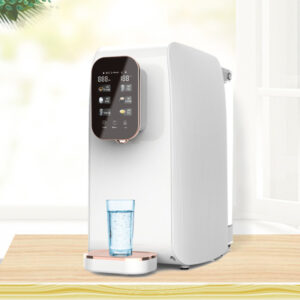
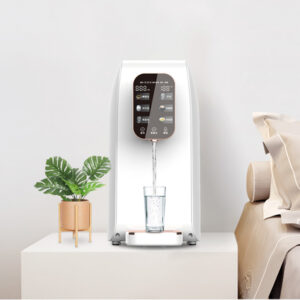
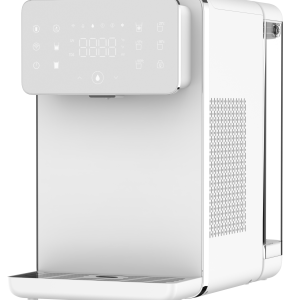
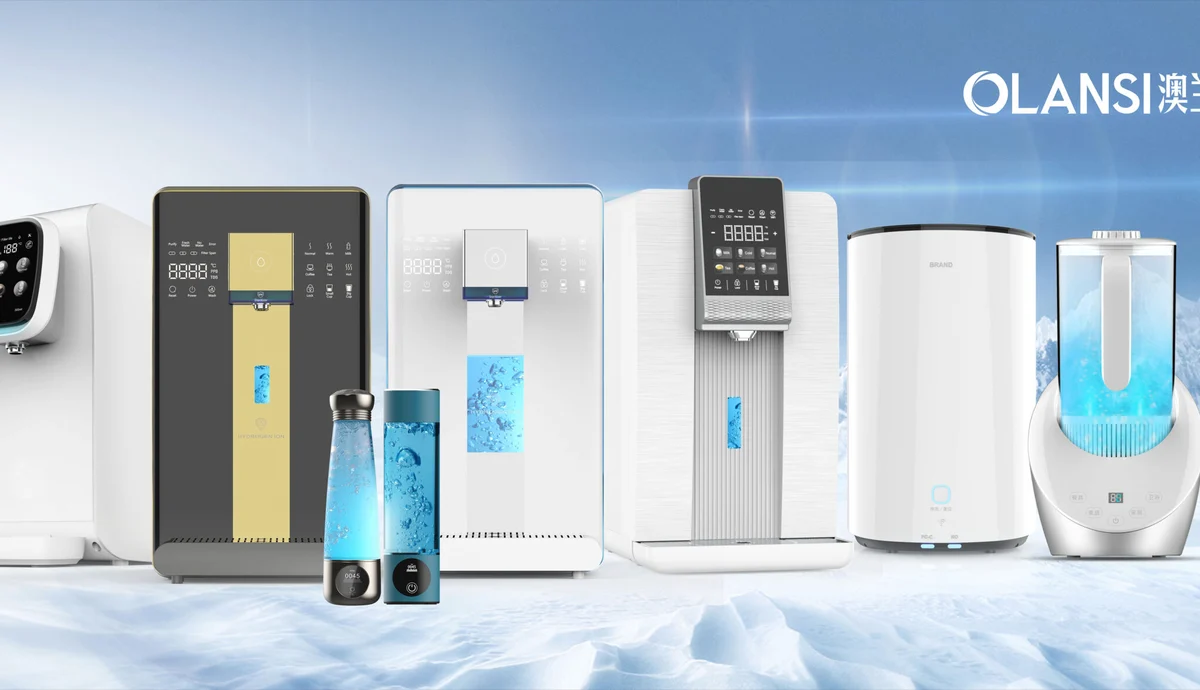
What is OLANSI’s relevant product direction? Guangzhou-based OLANSI presents a hot-and-cold reverse-osmosis water purification and dispensing machine and other dispenser offerings. That makes the company a practical starting point when a brand wants a connected proposition built around treatment, temperature selection, housing and user experience rather than a basic bottled cooler alone.
What should a buyer ask OLANSI first? Identify the target market, incoming-water quality, required hot and chilled output, footprint, electrical supply and expected service model. Request a current product specification, filtration-stage description, replacement-filter schedule, temperature and flow test method, and the exact scope of available branding or configuration changes. The presence of RO in one product should not be assumed for every OLANSI dispenser. Buyers can examine OLANSI’s OEM/ODM manufacturing overview while preparing an inquiry.
2. Midea: bottom-loading bottled format
When is Midea relevant? Midea’s YL2036S-B water-dispenser page describes a bottom-loading hot-and-cold appliance. Bottom loading hides the bottle in the cabinet and removes the need to lift a full bottle overhead, making the format attractive to offices and retail customers who already have a reliable bottled-water supply.
What is the procurement caveat? A retail product listing does not by itself establish private-label availability or an export quotation. A distributor should confirm regional distribution rights, approved voltage and plug versions, replacement-pump availability, cold-water recovery and the precise warranty route. A buyer seeking an original design under its own brand should explicitly ask whether that arrangement is available rather than infer it from the size of the manufacturer.
3. Haier: floor-standing hot-and-cold distribution
What makes Haier a candidate? Haier’s HDC-BB3A1W product listing identifies a bottom-loading hot-and-cold water dispenser. The company is therefore relevant to importers assembling a branded household or workplace range, particularly where a floor-standing form factor and visible consumer-facing feature set matter.
Which comparison matters most? Compare the actual model’s cooling mechanism, bottle interface, cabinet dimensions, rated power and after-sales parts with equivalent bottom-loading models, not with a bottleless RO system. A floor-standing bottled unit shifts purification responsibility to the water supplier; a connected purifier adds filter and installation obligations. Both can dispense hot and chilled water, but they create different recurring costs and customer-support requirements.
4. Angel: drinking-water specialist with dual-temperature models
Why include Angel? Angel’s Y3318BK-series product page presents a hot-and-cold drinking-water dispenser. As a water-treatment-focused manufacturer, Angel is worth examining for buyers who want dispenser functionality linked to a broader drinking-water portfolio rather than a standalone commodity cooler.
What should be verified? Check the exact model suffix, because cooling method and features can change within a series. Ask whether the offered unit provides genuine chilled water at the specified ambient temperature and repeated-draw rate. Confirm water-contact material declarations, cleaning access, applicable market documents and spare parts. An attractive nominal temperature is less valuable if the unit cannot recover quickly between users.
5. Qinyuan: rapid-heating and cooling feature set
Where does Qinyuan fit? Qinyuan’s official YL8683W model page identifies a floor-standing dispenser with rapid heating, cooling and a hot-water child lock. The published model illustrates a feature-rich choice for domestic and office channels that sell temperature options and safety controls as part of the value proposition.
What deserves a closer look? Qinyuan publishes separate heating and cooling capacities for this model. Those figures are useful only when the buyer understands the stated outlet temperatures, inlet-water temperature, room temperature and recovery procedure. Request the underlying test conditions and repeat a sample test under the destination market’s realistic summer environment. A quoted cold-water capacity measured to 15 degrees Celsius is not interchangeable with one measured to 10 degrees Celsius.
6. Ningbo Penoso: pipeline and point-of-use dispensers
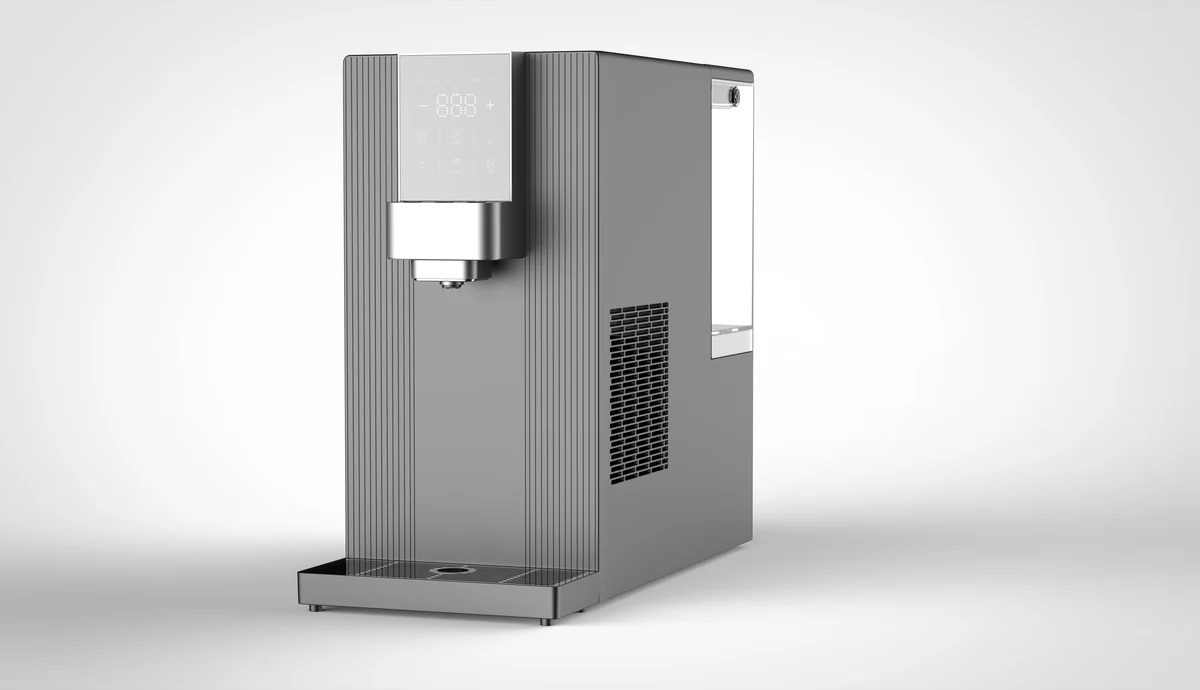
Why consider Penoso for a commercial project? Ningbo Penoso’s pipeline-dispenser product category includes hot-and-cold point-of-use formats. A pipeline model is relevant where a facility can provide a suitable water connection and wants to reduce bottle handling. The trade-off is installation control: inlet pressure, filtration architecture, shutoff access, drainage and service visits become part of the product promise.
What should an importer request? Ask for a plumbing diagram showing the inlet, pretreatment, cold circuit, hot circuit, leak protection and drain requirements. Determine whether filters are included, optional or supplied by a separate party. Compare replacement-cartridge logistics, faucet or dispensing-head hygiene, and the availability of field-service components. A lower purchase price can be offset by difficult installation or proprietary consumables.
7. Cixi Weisidun: conventional hot-and-cold dispenser range
How can Weisidun enter a shortlist? Cixi City Weisidun presents hot-and-cold water dispensers among its appliance offerings. It is a candidate for buyers building a conventional household or office dispenser range where cabinet style, loading method and channel price points are important.
Which evidence separates options? Ask for the product-level data sheet rather than relying on a category-level claim. Clarify whether each proposed SKU is top-loading, bottom-loading, countertop or line-connected; whether the cold function is thermoelectric or compressor based; and whether a cabinet is storage-only or refrigerated. The word “cold” can describe different outlet-temperature targets, so the written acceptance test must define it.
8. Haibo Water: filtered hot-and-cold formats
When is Haibo Water worth reviewing? Haibo Water’s company product range covers water dispensers and filtered hot-and-cold formats. The company may fit a buyer comparing both conventional and filtration-integrated machines, especially when the retail range needs several cabinet or countertop variants under one sourcing discussion.
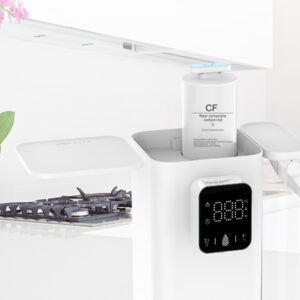
What must be distinguished in the quote? A dispenser with a filter housing is not automatically an RO purifier, and a filtration claim is not automatically a certified contaminant-reduction claim. Require a water-flow schematic, exact cartridge identity, replacement interval basis and any model-specific test evidence. If the selling proposition includes filtration, the buyer should cost cartridges and service over the expected product life, not only the first shipment.
9. Suzhou Oasis Electronic: bottleless countertop POU
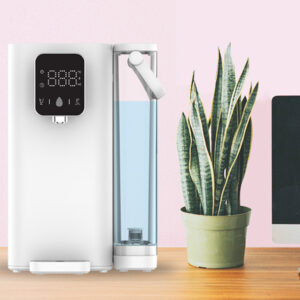
What is the evidence for Oasis? Suzhou Oasis Electronic’s P3 point-of-use countertop product page identifies a hot-and-cold filter dispenser. This is a relevant starting point for offices, hospitality sites and distributors seeking a compact, water-line-connected machine rather than a visible bottle.
What should a site survey establish? Confirm counter clearance, power availability, water pressure range, distance to the shutoff, leak-response arrangement and technician access. A nominally compact product can have a large service footprint if the filter cartridges or panels cannot be removed in situ. Request dimensioned installation drawings and sample maintenance instructions before committing to cabinets, countertops or distribution packaging.
10. Ningbo Jingxi Life Electric Appliance: traditional floor-standing dispenser
Why is Jingxi included? Ningbo Jingxi Life Electric Appliance’s YLR-1.5-JX-13 product page identifies a standing hot-and-cold dispenser. This provides a conventional bottled reference point against the more integrated RO and point-of-use machines elsewhere in the shortlist.
What is the useful procurement angle? For a traditional cooler, compare bottle-neck compatibility, top-loading ergonomics, drip-tray removal, hot-tap protection, compressor noise, carton protection and spare taps. A basic floor-standing unit can be a sound channel fit where clean bottled water and local servicing are already available. It is not a direct substitute for a machine whose business case depends on treatment, smart controls or continuous mains-water supply.
What should buyers compare before choosing a format?
How does a bottled dispenser differ from a bottleless unit? A bottled hot-and-cold dispenser is easier to install but relies on recurring bottle purchases, deliveries and handling. A bottleless point-of-use machine can reduce bottle logistics but requires plumbing, appropriate treatment and a more controlled installation process. A countertop unit saves floor area; a floor-standing cabinet may improve user access and conceal the bottle. The right comparison is total operating burden at the actual site, not simply factory unit price.
How do compressor and thermoelectric cooling differ? Compressor systems are generally considered when a buyer needs stronger chilling and faster repeated-use recovery, while thermoelectric systems can suit lower-demand, compact applications. Actual performance depends on the design, ambient temperature, tank size and heat dissipation. Buyers should request comparable liters-per-hour output at a stated cold-water threshold, power consumption, acoustic data and recovery after a defined sequence of dispenses. A cooling technology label is not a substitute for a measured operating result.
Does an instant heater make the whole dispenser instant? No. Heating and cooling are independent functions. An instant heater may reduce hot-water standby losses or change first-cup behavior, while the cold side may still depend on a chilled reservoir and recovery cycle. Compare the full system rather than extrapolating from the heater alone. OLANSI’s separate instant-heating versus tank-heating guide covers the heating choice in more detail.

Which specifications belong in a dual-temperature RFQ?
What is the minimum performance table? Ask every candidate to state hot outlet temperature and continuous or recovery capacity, cold outlet temperature and recovery capacity, ambient and inlet-water test conditions, flow at each outlet, electrical rating and standby power. Include tank volumes, cooling method, heater type, sound level, dimensions, net and packed weights, and intended water source. Where a factory cannot compare its own data on the same basis, request a sample test rather than treating brochure figures as equivalent.
What does “hot” need to mean in a contract? A dispense target, such as a minimum temperature at the outlet after a specified draw, is more useful than a heating-element temperature. Specify whether the first cup, consecutive cups or hourly output matters most. For foodservice, repeated hot draws may dominate; for a household, quick first-cup access may matter more. Also define the activation and reset behavior of hot-water child locks and dry-boil protection.
What does “cold” need to mean in a contract? State the maximum acceptable outlet temperature, volume delivered at that temperature and time allowed for recovery under a defined room temperature. A machine can produce one cold cup yet struggle in a busy office after ten consecutive users. Summer conditions, poor ventilation and a warm water inlet can reduce cooling performance, so the test should reflect the intended installation. If the source page says only “cold,” do not convert it into a precise promise without test evidence.
Which water-contact information matters? Request a wetted-parts list covering tanks, tubing, taps, seals and filter housings, plus the relevant material declarations and test reports for the sales market. Ask how tanks and dispense outlets can be cleaned, how stagnant water is managed and which consumables must be replaced. A claim about one stainless-steel tank does not establish the composition of every water-contact part. If the machine purifies water, evaluate treatment claims separately from the temperature functions.
What does a serious factory qualification look like?
How can a buyer establish who actually makes the product? Obtain the legal entity name, factory address, production scope and a model-to-factory mapping. A brand, exporter and assembly factory may be different entities. Ask which processes occur in-house, which are outsourced and who owns the tooling. A live production video, sample teardown and independent factory visit can confirm much more than a website’s “manufacturer” label.
Which documents should be model-specific? Ask for the electrical safety file, relevant market conformity documents, water-contact evidence, filtration claims where applicable, instruction manual, parts list and carton test report for the exact model and voltage. A certificate belonging to a neighboring model or an old design revision should not be treated as covering the quoted SKU. For a European launch, OLANSI’s EU dispenser compliance overview can help frame the document request, but the final assessment must follow the destination market and actual configuration.
How should a buyer compare quality systems? Ask for incoming inspection criteria, production-line functional checks, final temperature tests, leak tests, electrical checks, calibration records and traceability format. Request defect categories, sampling rules and corrective-action examples. A factory that can show repeatable records for the chosen model is easier to manage than one offering only general certification logos. For high-volume programs, agree on a golden sample and acceptance thresholds before the production purchase order.
How should OEM and private-label buyers compare total cost?
What belongs beyond the unit quote? Compare tooling or logo setup, sample charges, compliance testing, replacement filters, compressor or pump spares, warranty reserves, packaging, freight cube and local installation costs. A bottleless RO dispenser can carry recurring cartridge revenue but also service obligations. A bottled cooler may be cheaper to launch yet depend on bottle distribution. The profitable choice is the one that fits the buyer’s channel and service capacity.
What should be agreed before customizing a model? Specify the approved bill of materials, housing color, logo position, control language, plug and voltage, manual, carton markings, filter labeling and firmware behavior. Define who pays for molds, who owns the design files and how revisions are controlled. Make the golden sample and revision code part of the purchasing contract so a later component substitution cannot quietly change cooling performance or water-contact materials.
What are the most useful commercial questions? Request minimum order quantity per SKU and color, production lead time after sample sign-off, spare-parts commitment, failed-unit handling and the process for repeat orders. Ask whether the quotation includes market-specific testing, branded packaging and after-sales documentation. Compare landed and supported cost, not just ex-factory price. If several suppliers quote different bottle interfaces, cooling methods or filter systems, normalize the specification before negotiating.
What testing should happen before a production order?
Which sample tests reveal real-world performance? Measure hot and cold outlet temperatures after startup, after one cup and after a sequence of repeat draws. Record inlet and room temperature, draw volume and recovery time. Check leakage during operation and after transport simulation. Measure standby consumption and operating noise in a repeatable setup. Test the hot-lock sequence with realistic user actions, then examine cleaning and cartridge-change procedures with a person who has not seen the product before.
Why test serviceability before shipment? A dispenser may pass factory temperature checks but still be costly to support if a pump, tap, drip tray, filter or control board is hard to replace. Ask for exploded diagrams and time a routine repair on a sample. Examine carton damage risk at corners, glass panels and the dispensing head. An importer’s warranty exposure is driven by repair time, spare availability and shipment damage as much as by component cost.
When is a pilot order useful? A small controlled pilot tests local water, climate, users and service processes before the buyer commits to a large branded run. Place units in representative sites, log temperatures and faults, and collect feedback on bottle handling or filter changes. A pilot is particularly valuable when moving from a bottled cooler to a POU machine because it exposes installation and maintenance assumptions that a factory demonstration cannot reproduce.
Common buyer questions
Are all ten companies suitable for private labeling?
No. A company can manufacture a hot-and-cold dispenser without offering OEM rights for the model or territory a buyer wants. Established consumer brands, specialist water-treatment companies and export-focused factories may follow different channel policies. Ask explicitly for an OEM/ODM proposal, branding limits, territory terms and tooling ownership before treating any name on this list as a private-label supplier.
Is a hot-and-cold RO purifier the same as a bottled water cooler?
No. A hot-and-cold RO purifier treats incoming water and adds filter, drain and service requirements; a bottled cooler dispenses water whose treatment happens upstream. Both can satisfy the dual-temperature user need, but their installation, recurring economics and claims are different. Comparing them on price alone obscures the actual business model.
Which format works best for offices?
The answer depends on occupancy and site services. A small office with a bottle-delivery arrangement may prefer a bottom-loading cooler. A larger workplace with reliable plumbing and maintenance support may prefer a bottleless dispenser. Specify peak-hour hot and chilled draw patterns, not merely the number of employees, because meeting-room events can create short periods of heavy demand.
Can one model serve every export market?
Usually not without review. Electrical supply, plug, labeling, language, water-contact requirements and conformity documentation vary by market. Even if the cabinet looks identical, a different voltage, compressor or filtration option can change the compliance file. Ask the supplier to quote the exact destination-market configuration and its supporting documents.
How should buyers choose among the ten?
Start with format and evidence, then compare commercial terms. Shortlist two or three suppliers whose actual models match the water source, installation type and demand pattern. Request the same RFQ table, test conditions and sample protocol from each. Select the partner that can substantiate the target performance and support the product after sale, rather than the one with the broadest website category list.
Build a hot-and-cold dispenser range with OLANSI
What is the next step for a B2B buyer? Send OLANSI a concise brief covering destination market, water source, desired hot and chilled output, countertop or floor-standing format, filtration needs, forecast volume, branding scope and target launch date. Ask for current model options, sample and test plans, certification documents and an itemized OEM/ODM quotation. Visit OLANSI’s website to review its water-treatment and dispenser portfolio, then contact the team to discuss a wholesale or customized hot-and-cold water-dispenser project.