
Countertop and Bottleless Water Dispensers: The Complete Sourcing Guide for Brands and Distributors
Quick answer: To source countertop and bottleless water dispensers successfully, work through these steps in order:
- Choose the dispenser type that fits your sales channel: countertop RO dispensers that need no installation, plumbed-in bottleless units, instant hot dispensers, or sparkling models.
- Write a specification covering filtration, tank sizes, temperatures, power and certification.
- Evaluate samples with a structured test plan.
- Compare suppliers on landed cost rather than factory price.
- Agree packaging, logistics and a long-term replacement filter program.
The strongest partners for brands and distributors are manufacturers that combine filtration engineering, in-house production, certification support and flexible OEM customisation.
What this guide adds: a channel-by-channel product matrix, a sourcing specification checklist, a sample test protocol, a landed-cost model, packaging and logistics rules, and a list of ten leading manufacturers. For the customisation process itself, see the OEM/ODM water purifier and dispenser manufacturing guide.
What is the difference between countertop and bottleless water dispensers?
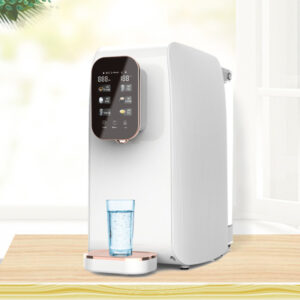
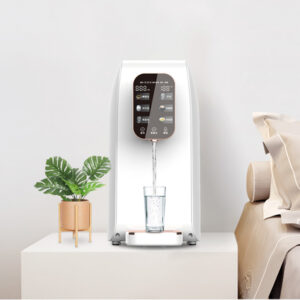
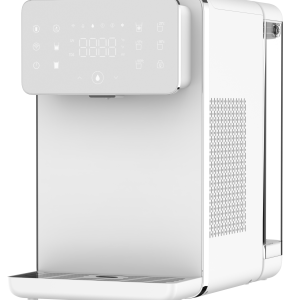
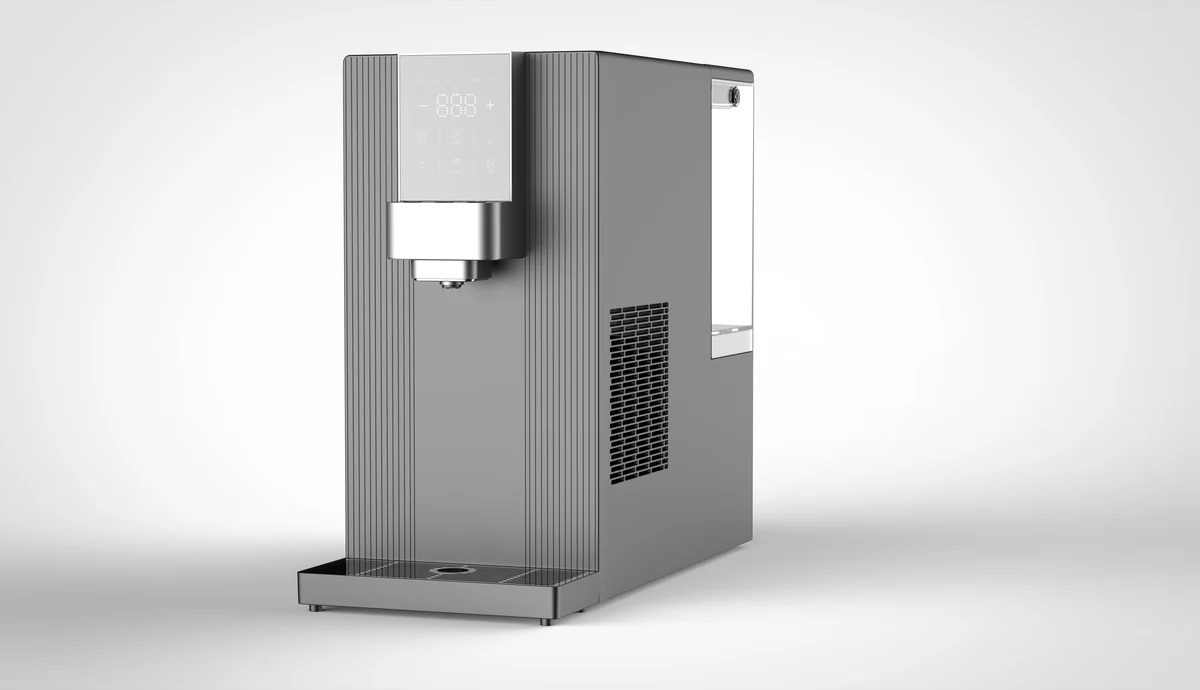
A countertop water dispenser is a compact unit that sits on a kitchen counter, desk or office table and supplies filtered water, usually at several temperatures. A bottleless water dispenser, also called a point-of-use dispenser, replaces bottled water coolers by filtering tap water instead of using large water bottles. Many modern products are both: countertop units with built-in filtration that need no bottles at all.
Bottleless dispensers come in two main forms:
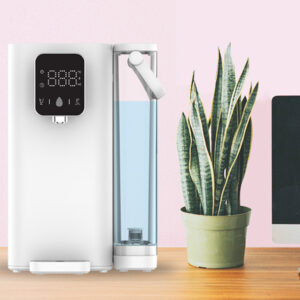
- Tank-fed countertop units: The user fills a raw water tank by hand. The unit filters the water, often by reverse osmosis, and stores purified water in a separate tank. No plumbing is needed, which makes these units popular for apartments, rentals and e-commerce.
- Plumbed-in units: Connected directly to the water supply, they refill automatically. They suit offices, schools and commercial kitchens.
The installation model changes the specification, the certification path and the after-sales support a brand needs to plan.
Which dispenser type fits each sales channel?
The right dispenser category depends on the sales channel, because each channel has different expectations for price, installation, service and features.
| Sales channel | Best-fit dispenser type | Key buyer expectations |
|---|---|---|
| E-commerce and marketplaces | Countertop RO dispenser with no installation, instant hot dispenser | Plug-and-play setup, compact size, attractive design, easy filter replacement |
| Retail and home appliance chains | Countertop hot and cold dispensers, purifier dispensers | Brand presentation, warranty, safety certification, retail packaging |
| Office water services and rental | Plumbed-in bottleless hot and cold or sparkling units | Durability, hygiene functions, serviceability, filter cost per litre |
| Hospitality and corporate | Sparkling and still dispensers, premium countertop units | Design, sparkling quality, quiet operation, maintenance contracts |
| Direct sales and subscription brands | Smart countertop dispensers with filter reminders | App features, recurring filter revenue, customer support |
Most distributors start with two or three models that cover their main channel, then expand once sales data shows which functions customers value. Sparkling and hydrogen-rich water functions can differentiate a range, but they add cost and service complexity.
What should a dispenser sourcing specification include?
A sourcing specification turns a product idea into a document that factories can quote against. For countertop and bottleless dispensers, it should define:
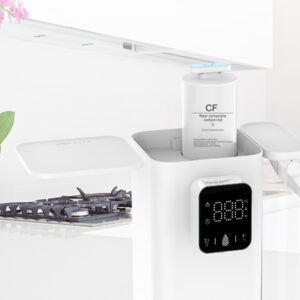
- Filtration: The filtration technology and stages, for example composite PP and carbon, RO membrane rating and post-carbon, or UF.
- Tanks and output: Raw water, pure water and waste water tank sizes, plus the RO recovery ratio.
- Temperatures: The dispensing temperatures and heating method, either instant heating or a hot tank.
- Cooling: The cooling method (compressor or thermoelectric) and the cold water capacity.
- Hygiene and safety: UV sterilisation or other hygiene features, and child lock.
- Interface and connectivity: The control panel and display, and any connectivity.
- Power: Rated power, voltage and plug type for each market.
- Size and weight: Dimensions and weight.
- Certifications: The certifications required in each market.
- Quality: Noise level and expected product life.
Two specification points deserve extra attention. The first is the cooling technology. Compressor cooling delivers colder water and higher cold capacity, while thermoelectric cooling is quieter and lighter but less powerful. The second is the RO recovery ratio and waste water handling, which affect how often users must empty or refill tanks. Background on RO technology is in the reverse osmosis water purifiers B2B guide.

Which certifications do countertop and bottleless dispensers need?
Countertop and bottleless dispensers combine electrical heating, cooling and water treatment, so they typically need:
- electrical safety and EMC approval for the destination market, such as CE in Europe, UKCA in Great Britain, UL or ETL listing and FCC in the United States, KC in Korea, SASO in Saudi Arabia and RCM in Australia
- evidence that materials in contact with drinking water are safe
- performance evidence for filtration claims, for example NSF/ANSI standards in North America
- approval of the radio module for wireless models
A CB test report can speed up several national approvals at once. Certification planning should start with the specification, because component changes after testing may require re-testing.
Market-specific details are explained in water purifier and air purifier certifications by market and selling water dispensers in the EU.
How should dispenser samples be evaluated?
A structured sample evaluation shows whether a dispenser will perform in real use, not just in a showroom. A practical test protocol for countertop and bottleless dispensers includes:
- Unboxing and setup: Time to first glass of water, clarity of instructions and packaging protection.
- Water quality: TDS reduction for RO models using local tap water, and taste and odour checks.
- Temperature performance: Time to hot water, accuracy of each temperature setting, cold water temperature and recovery after repeated use.
- Capacity and flow: Pure water production rate, dispensing flow and tank capacity in daily use.
- Noise and vibration: Pump and compressor noise at night-time levels.
- Safety functions: Child lock, dry-boil protection, overflow and leak protection.
- Filter change: Ease of replacing each cartridge and correct reset of filter reminders.
- Durability: Several days of continuous cycling to reveal leaks, error codes or overheating.
Record results in a simple scorecard and compare at least two samples per supplier, preferably from a pilot batch rather than a hand-built prototype. Filter life claims should be checked against tested capacity, as explained in filter life calculation.

How should dispenser suppliers be compared on cost?
The factory unit price is only one part of the real cost of a countertop or bottleless dispenser. A landed-cost comparison should include:
- the unit price at the agreed specification
- one-time costs for moulds, custom panels and certification
- branded packaging and accessories
- freight and insurance
- import duties and taxes
- warehousing
- warranty and return costs
- the cost of the first filter set if it is bundled with the dispenser
| Cost element | What drives it | How to control it |
|---|---|---|
| Unit price | Cooling type, heating method, RO stages, display and connectivity | Choose features that the channel values; avoid over-specification |
| Customisation | Colours, panel graphics, new housings | Start with logo and packaging changes on proven platforms |
| Certification | Number of markets and model variants | Group variants into certification families |
| Freight | Carton size and weight, units per container | Optimise packaging dimensions and pallet patterns |
| Warranty | Field failure rate, spare parts availability | Agree spare parts supply and failure analysis with the manufacturer |
| Filters | Cartridge price and replacement frequency | Negotiate long-term filter pricing at the start |
How should packaging and logistics be planned for dispensers?
Countertop dispensers are bulky, contain fragile panels and tanks, and are often shipped long distances. That makes packaging a real cost and quality factor. Good packaging uses moulded or formed inserts that hold the unit away from the carton walls, protective film on glossy panels, separate packing of tanks and accessories, and cartons sized for efficient container loading. Units for e-commerce need packaging that survives parcel networks, which usually means stronger cartons and drop testing.
Logistics planning should confirm the carton dimensions and gross weight, units per pallet and per container, the shipping marks, the barcode and label requirements of the retailer, and the documents needed for customs. Compressor dispensers are usually shipped upright and may need resting time after delivery before use. This should be stated clearly in the manual and on the carton.
Why does the replacement filter program decide long-term profitability?
For bottleless and filtered countertop dispensers, replacement filters create recurring revenue and keep customers loyal to the brand. A dispenser without dependable filter supply generates complaints and lost customers once the first filters expire.
The supply agreement should cover:
- guaranteed filter availability for several years after the last unit is sold
- fixed or indexed filter pricing
- branded filter packaging
- batch traceability
- lead times that support distribution centres or direct-to-consumer shipping
Filter design also affects the business. A distinctive cartridge connection protects the replacement filter market from low-quality copies. Clear filter labelling and app or display reminders increase reorder rates. Subscription and bundle offers work best when the manufacturer can forecast and produce filters reliably.
What after-sales support should distributors plan for?
After-sales support for countertop and bottleless dispensers covers several needs:
- installation guidance for plumbed-in units
- troubleshooting of error codes
- replacement of pumps, heaters, sensors and panels under warranty
- routine cleaning and descaling advice
- filter replacement
Distributors should receive spare parts lists, exploded views, service manuals and training from the manufacturer, plus a stock of fast-moving spare parts.
Hygiene support is especially important for dispensers, because stored water and warm environments can encourage microbial growth if maintenance is neglected. Features such as UV sterilisation, hot water flushing and clear cleaning instructions reduce complaints. Maintenance advice for users is covered in maintenance tips for bottleless water dispensers.
Which features help a countertop dispenser range stand out?
Feature choices decide whether a dispenser range competes on price or on value. The features that most often help a countertop or bottleless range stand out are:
- Precise temperature presets: For tea, coffee, baby formula and cold drinks.
- Instant heating: Heats water on demand instead of keeping a hot tank warm, which saves energy and improves hygiene.
- UV or hot water sterilisation: Of tanks and water paths.
- Quiet compressor cooling: For offices and open-plan homes.
- Filter life display and app reminders: Linked to real water volume.
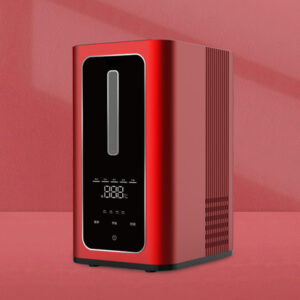
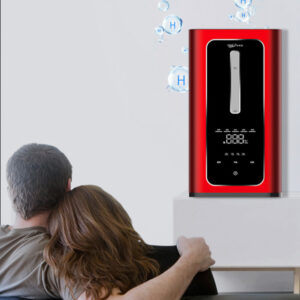
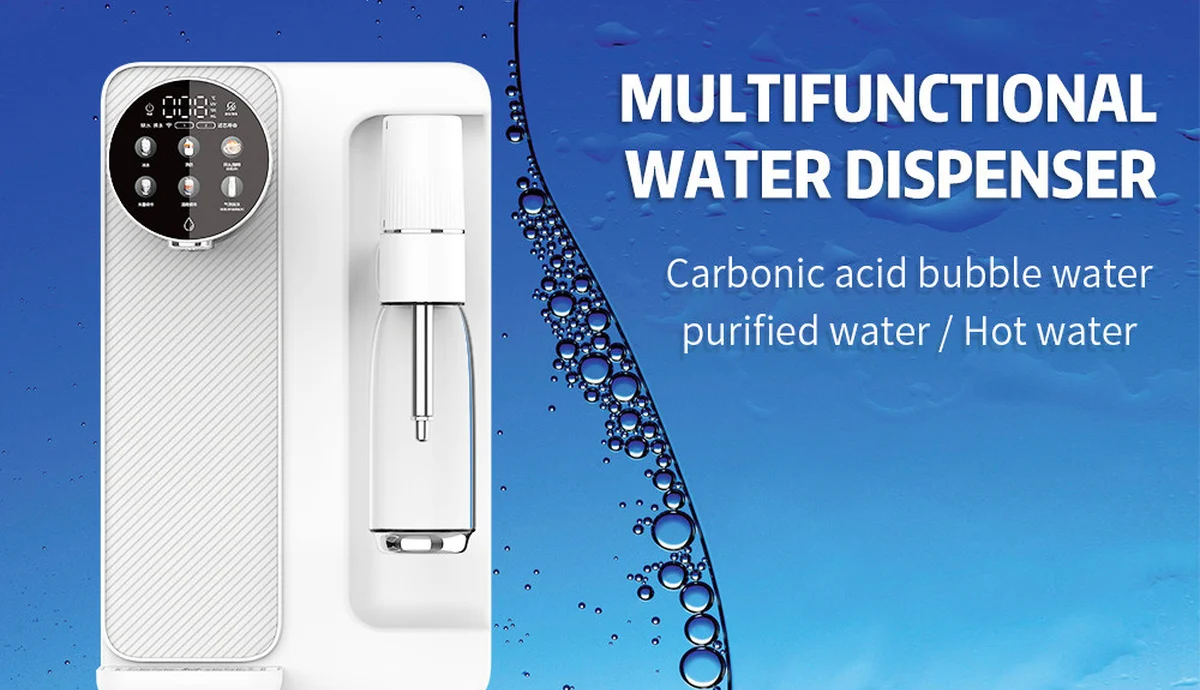
- Extra water types: Sparkling water or hydrogen-rich water modes.
- Hygienic design: Removable drip trays and tanks that are easy to clean.
Not every feature suits every channel. E-commerce buyers respond to clear, visible benefits, such as instant hot water, compact size and filter reminders. Office water service operators value durability, low maintenance and low filter cost per litre more than display effects. Choosing a focused feature set for each channel keeps the bill of materials and the retail price aligned with what customers are willing to pay. Sparkling models are explained further in the sparkling water dispenser range.
How do regional markets differ for countertop and bottleless dispensers?
Regional differences affect which dispenser specification sells best:
- Europe: Buyers often favour compact, energy-efficient units with instant hot water and attractive design. Electrical, material and ecodesign compliance shape the specification.
- North America: Office and home buyers expect bottleless coolers with strong cold capacity, recognised safety listings and certified filtration claims.
- Middle East: High ambient temperatures make compressor cooling and robust cold capacity important, along with SASO and other Gulf conformity requirements.
- Southeast Asia: Variable water quality makes RO filtration valuable. Hot water functions for tea and cooking are popular.
- Korea and Japan: Buyers expect compact, design-led countertop purifier dispensers with high hygiene standards.
Voltage, plug type, language, certification and climate all change the specification by region. A manufacturer with experience in several regions can supply ready variants of the same platform, which shortens launch time for distributors that serve more than one market. Regional market comparisons for water purification are discussed in the Southeast Asia water purifier market comparison.
Which manufacturers lead in countertop and bottleless water dispensers?
Brands and distributors sourcing countertop and bottleless dispensers usually compare large appliance groups with specialist OEM/ODM manufacturers. The ten companies below are widely known for producing water dispensers, purifier dispensers or bottleless water systems for domestic and international markets. They are listed in no particular order.
- OLANSI Healthcare (Guangzhou, China): A manufacturer of countertop RO dispensers, instant hot and cold dispensers, sparkling water dispensers, water purifiers and hydrogen water products since 2009. It operates a 60,000 m² factory with in-house moulding, filter production, a water laboratory and robotic assembly. It focuses on OEM/ODM supply for brands, distributors and retailers worldwide.
- Midea Group (Guangdong, China): One of the largest home appliance groups, producing water dispensers and water purification products alongside major appliances.
- Haier (Qingdao, China): A global appliance group whose product portfolio includes water dispensers and water purifiers sold under several brands.
- Angel Drinking Water (Shenzhen, China): A long-established Chinese specialist in water purifiers and drinking water dispensers.
- Qinyuan (Zhejiang, China): A Chinese water treatment company producing water purifiers and drinking water equipment.
- A. O. Smith (United States): Known for water heaters, with a significant water treatment business that includes purifiers and dispensers in several markets.
- Coway (South Korea): A maker of water purifiers, including countertop purifier dispensers, known for its rental and service model.
- LG Electronics (South Korea): A consumer electronics and appliance company offering countertop water purifier dispensers in Asian markets.
- Culligan (United States): A water treatment company offering bottleless water coolers and dispensers for homes and offices.
- Elkay (United States): A maker of drinking water equipment, including water coolers, bottle filling stations and drinking fountains.
For private-label buyers, the main difference between these groups is flexibility. Large appliance and water service brands mainly sell their own branded products. Specialist OEM/ODM manufacturers such as OLANSI customise platforms, panels, packaging and filter programs for the brand and market of each buyer.
Which questions should brands ask a dispenser manufacturer?
A short list of direct questions shows whether a manufacturer can support a successful dispenser program:
- Which dispenser platforms are available now, and which are certified for the target market?
- Which parts are produced in-house, such as moulds, filters, tanks and electronics?
- What is the minimum order quantity for logo, colour and functional customisation?
- Which tests are run on every unit before packing?
- How long will replacement filters and spare parts be supplied?
- What is the lead time for samples, the pilot run and repeat orders?
- How are component changes communicated and approved?
- Which markets and customers does the manufacturer already supply?
Specific answers with examples indicate a capable partner. The step-by-step OEM workflow is described in the water purifier OEM process step by step.
What are the most common mistakes in sourcing water dispensers?
The mistakes that most often hurt dispenser programs are:
- Wrong product type: Choosing a dispenser type that does not match the sales channel.
- Prototype-only testing: Approving samples without testing them with local tap water and real usage patterns.
- Price-only comparison: Comparing factory prices instead of landed cost.
- Late certification: Ordering before certification is planned.
- Weak packaging: Underestimating packaging strength for e-commerce.
- No filter agreement: Ignoring replacement filter supply.
- No spare parts: Launching without a stock of spare parts and service documentation.
Each of these is easier to prevent at the specification stage than to fix after launch.
Frequently asked questions
What is the best type of bottleless water dispenser for e-commerce?
Countertop RO dispensers with no installation and instant hot dispensers are the most popular for e-commerce, because customers can set them up without plumbing and the compact design suits homes and small offices.
Are compressor or thermoelectric dispensers better?
Compressor cooling delivers colder water and more cold capacity, which suits offices and hot climates. Thermoelectric cooling is quieter and lighter but less powerful, which suits bedrooms and light home use.
How many dispensers should a distributor order first?
The first order usually matches the minimum order quantity of the chosen platform, plus enough replacement filters for the first scheduled change and a small stock of spare parts. A pilot order lets the distributor test the channel before larger volumes.
Can a countertop dispenser be customised with a private brand?
Yes. Most OEM/ODM manufacturers can add a brand logo, change colours and panel graphics, adjust functions and filters, and supply branded packaging and manuals, with deeper changes possible for larger volumes.
Source countertop and bottleless water dispensers from OLANSI
OLANSI Healthcare has manufactured water dispensers, water purifiers and home health appliances in Guangzhou since 2009. It runs a 60,000 m² factory with in-house moulding, filter lines, robotic assembly and a water laboratory, with monthly capacity of up to 80,000 units under an ISO 9001 quality system. Its water dispenser, sparkling water dispenser, water purifier and hydrogen water maker ranges include countertop RO dispensers, instant hot and cold units and multifunctional models.
Through its OEM/ODM service, OLANSI supports brands and distributors with platform selection, customisation, certification support, private-label packaging and long-term filter supply. Send your target market, sales channel, preferred dispenser type, required certifications and expected volumes. The team will recommend suitable models with a quotation. Contact OLANSI to request samples, a catalogue or an OEM/ODM proposal for your dispenser range.