

Sparkling Water Dispensers: The Complete B2B Sourcing Guide for Brands and Distributors
Quick answer: To source sparkling water dispensers for your brand or distribution business, work through these steps in order:
- Choose the carbonation technology and dispenser format that match your sales channel, from compact countertop units to plumbed-in commercial systems.
- Write a specification covering carbonation level, chilling, filtration, CO2 cylinder type, duty cycle and certifications.
- Evaluate samples for carbonation consistency, temperature, taste and leak integrity, not just appearance.
- Compare suppliers on landed cost and the full CO2 and filter aftermarket, not factory price alone.
- Agree a long-term CO2 cylinder and replacement filter program before you launch.
The strongest partners for brands and distributors are manufacturers that combine carbonation engineering, in-house production, pressure-vessel safety, certification support and flexible OEM/ODM customisation. This guide covers all of it, including a list of ten leading manufacturers.
What this guide adds: a breakdown of carbonation technologies, a channel-by-channel format matrix, a sourcing specification checklist, a sample test protocol, CO2 and cylinder logistics, certification requirements by market, and ten manufacturer profiles. For the underlying engineering, see how a sparkling water dispenser works; for the customisation process, see the OEM/ODM water purifier and dispenser manufacturing guide.
What is the difference between a sparkling water dispenser and a soda maker?
A sparkling water dispenser is a plumbed or bottled appliance that filters tap water and carbonates it on demand, usually delivering chilled still and sparkling water from the same unit. A soda maker, by contrast, is a smaller countertop device that carbonates water the user fills by hand into a bottle, using a screw-in CO2 cylinder, and it does not filter the water or chill it. The distinction matters for sourcing because the two products sit in different price bands, carry different certification burdens and serve different channels: soda makers are a low-cost retail category, while sparkling water dispensers are a higher-value commercial and premium residential category where filtration and chilling quality decide the sale.
Within dispensers there is a second distinction between a carbonator and a post-mix system. A carbonator injects CO2 into a chilled water stream ahead of dispensing, so the machine serves plain sparkling water. A post-mix system mixes CO2 and a syrup or concentrate at the dispense point to produce flavoured drinks, and is the architecture behind most commercial soft-drink fountains. For a brand or distributor, the carbonator route is simpler to certify and maintain, while post-mix adds beverage-mix complexity and a much wider range of SKUs. Knowing which of the three you are buying – soda maker, carbonator dispenser or post-mix – is the first sourcing decision, because it changes everything downstream.
Which carbonation technologies do sparkling water dispensers use?
Carbonation is the process of dissolving pressurised food-grade CO2 into chilled water, and the technology choice determines cost, consistency and maintenance. The three main approaches are single-use CO2 cylinders, refillable CO2 cylinders with an inline carbonator, and post-mix proportioning systems. Single-use cylinders suit low-duty countertop units; refillable cylinders with an inline carbonator suit mid and high duty, where water is chilled, pressurised and mixed with CO2 in a small carbonator tank before dispense; post-mix proportioning suits high-throughput commercial fountains. Carbonation strength is measured in volumes of CO2 – one volume means one litre of CO2 dissolved per litre of water – and typical sparkling water targets around two to three volumes, with the level adjustable on better machines.
Temperature is the hidden variable that decides both quality and CO2 efficiency. Cold water dissolves CO2 far more readily than warm water, which is why every serious dispenser chills before it carbonates: at low temperature the same CO2 dose produces a finer, longer-lasting fizz and less gas is wasted to the atmosphere. A sourcing specification should therefore state the target water temperature, the carbonation level in volumes, and whether the machine re-chills between dispenses. Dispensers that carbonate warm water and chill afterwards pour flatter water and consume more CO2 per litre, which quietly erodes a distributor’s margin. The components that make this work – the CO2 cylinder, the carbonator tank and the filtration stage – are exactly what a sample evaluation should inspect, as the next sections describe.

Which dispenser formats fit each B2B sales channel?
Sparkling water dispensers come in four formats, and each maps to a different buyer and channel. The table below matches format to channel and the spec features that matter most there.
| Format | Best-fit channel | Spec features that matter |
|---|---|---|
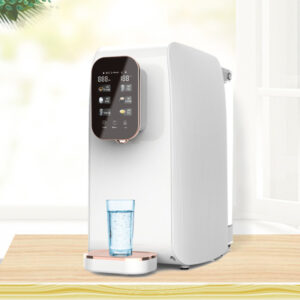
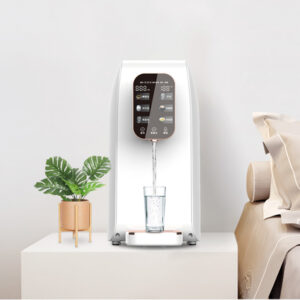
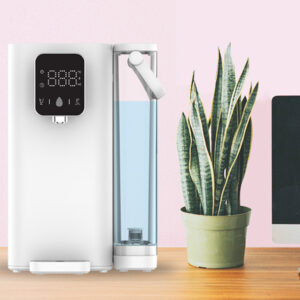
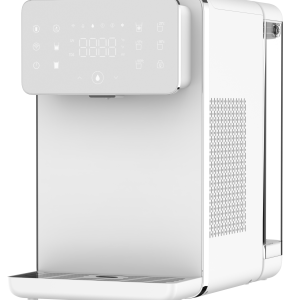
| Countertop | E-commerce, retail, small offices, home | Compact size, no installation, instant chilled still and sparkling, low noise |
| Undercounter with tower | Premium residential, offices, hospitality | Plumbed-in filtration, elegant tap, high daily capacity, quiet operation |
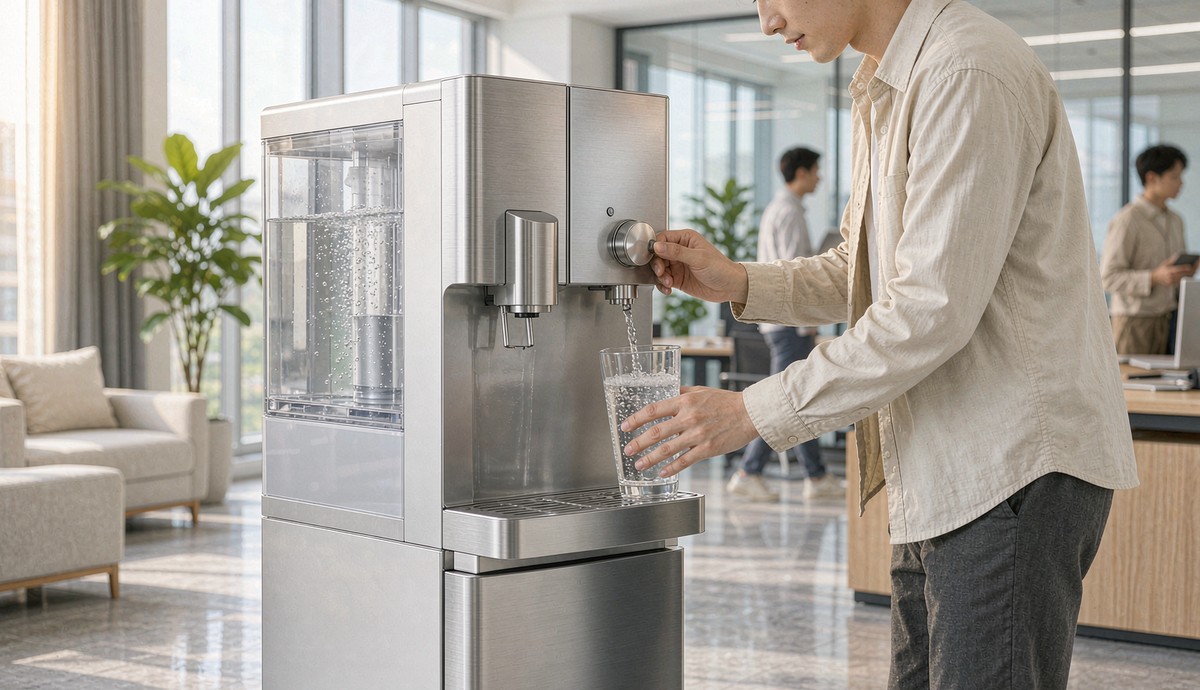
| Freestanding / bottleless | Office, corporate, HORECA, gyms | High duty cycle, compressor cooling, self-service, capacity for many users |
| Post-mix / fountain | Foodservice, events, high-volume beverage | Proportioning valves, syrup racks, fast recovery, hygiene certification |
The channel choice drives more than the box: it sets the certification set, the duty cycle and the aftermarket model. An e-commerce countertop unit needs a compact, well-packaged product with clear retail appeal and low return risk, while a freestanding office unit needs reliability, serviceability and a maintenance contract, and a post-mix fountain needs foodservice hygiene approvals. Distributors who understand which format fits which channel avoid the most common early mistake – buying a specification that does not match the buyer. For the related but different countertop and bottleless category, the countertop and bottleless dispenser sourcing guide covers the non-carbonated side of the same decision.
What should a sparkling water dispenser sourcing specification include?
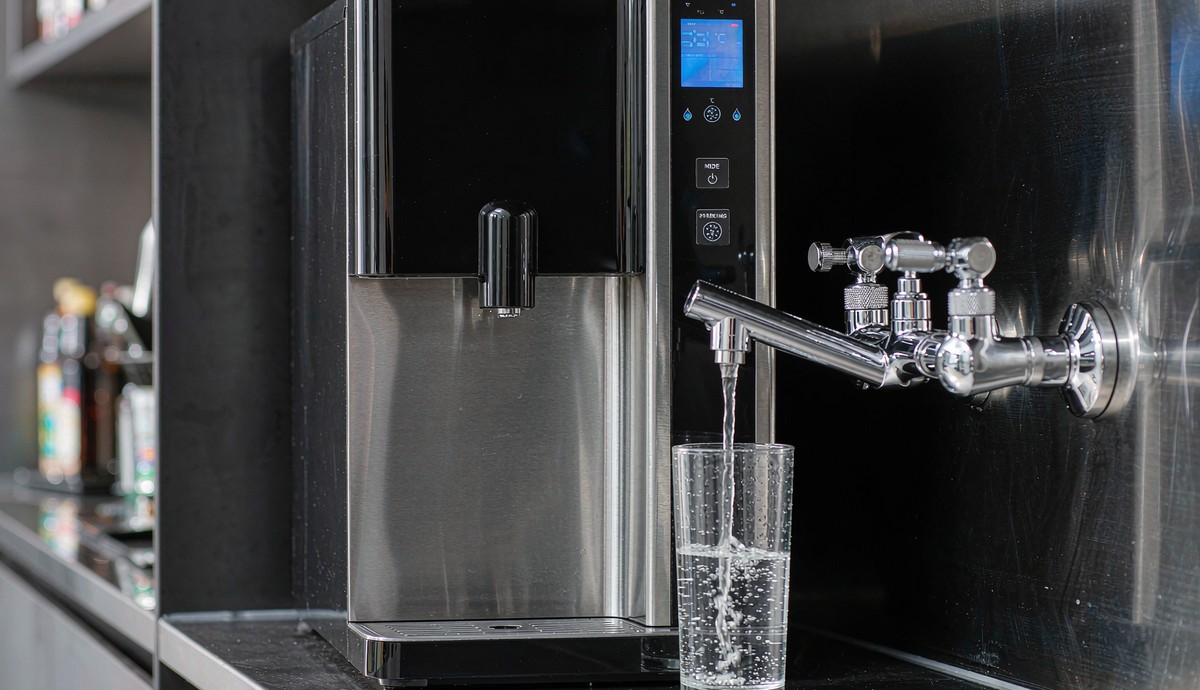
A specification that misses any of the carbonation-specific lines will surface as a dispute or a rework later, so write it down in full. The essential lines are: carbonation level in volumes of CO2 and whether it is adjustable; dispense temperature and re-chill performance; the filtration stage upstream of carbonation, because carbonating unfiltered water locks in chlorine, hardness and off-tastes; the CO2 cylinder type and capacity, and whether the machine accepts refillable or single-use cylinders; the duty cycle in litres per day, which sizes the carbonator and cooling system; and the wetted materials, which for sparkling service should be food-grade and corrosion-resistant because carbonated water is mildly acidic. State each of these with a number and a tolerance rather than a wish.
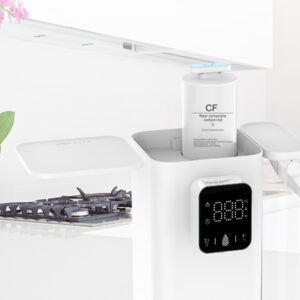
Filtration deserves separate emphasis because it is the part of the spec buyers most often under-specify. Carbonating ordinary tap water fixes its chlorine and mineral taste into the drink, so the dispenser should run reverse osmosis, activated carbon or a combination filter before the carbonator, and the specification should name the filter’s contaminant-reduction claims and replacement interval. For markets where customers expect mineral character rather than pure water, specify whether the machine adds remineralisation. The filter is also the recurring-revenue engine for a distributor, so the specification should require a standardised, non-proprietary filter format that keeps the aftermarket open. The certification standards that govern these claims are covered in the guide to NSF/ANSI 42, 53, 58 and 401.
Which certifications do sparkling water dispensers need by market?
Sparkling water dispensers carry a heavier certification burden than a still-water dispenser because they are pressure equipment as well as electrical appliances and water treatment devices. The pressure side is the most important: any vessel or cylinder holding CO2 under pressure must meet the relevant pressure-equipment rules, typically the European Pressure Equipment Directive with CE marking in the EU, and national equivalents elsewhere. The CO2 cylinder itself should be certified to a recognised standard such as TUV, and it should be food-grade – never industrial CO2, which can contain impurities. The electrical side follows the normal appliance rules, such as CE and CB scheme in the EU, UL listing in North America and KC in Korea.
Water-contact and performance certification then covers what the machine claims about the water it dispenses: NSF/ANSI 42 for aesthetic claims such as chlorine and taste, and NSF/ANSI 53 for health-related contaminant reduction, apply in North America, while CE and CB plus national food-contact approvals apply in Europe. For Gulf markets, SASO and Gulf conformity are usually required, and the certification-by-market summary is laid out in the guide to water and air purifier certifications by market. Pressure-vessel safety is not a paperwork detail: recent North American recalls of carbonation bottles have shown how quickly a defective pressure component becomes a liability, so a buyer should require test certificates for every cylinder and carbonator, not just a CE or UL logo. The EU-specific compliance set is detailed in the article on selling water dispensers in the EU.
How does CO2 supply and cylinder logistics affect a distributor’s margins?
The CO2 aftermarket is where sparkling water dispensing is won or lost financially, because it converts a one-time hardware sale into a recurring relationship – but only if the logistics are designed in advance. A distributor must decide between single-use cylinders, which are simple but expensive per litre and generate packaging waste, and refillable cylinders with an exchange or refill program, which are cheaper per litre over time but require a return channel, cylinder tracking and a refill partner. The choice changes the unit economics far more than the dispenser price, so it should be part of the sourcing decision, not an afterthought.
The margin model runs on two numbers: cost per litre of carbonated water and cylinder turns per month. Refillable cylinders amortise their cost over many fills, so the higher the dispense volume, the more they win; single-use cylinders win only at very low volumes where setting up a return channel is not justified. Food-grade CO2 certification, cylinder transport rules and valve compatibility all constrain which cylinders a given dispenser accepts, so locking a proprietary cylinder format into the specification hands the aftermarket to one supplier, while a standard food-grade cylinder keeps it competitive. Distributors should therefore ask a manufacturer three questions before committing: which cylinder standards the dispenser accepts, whether cylinder exchange or on-site refill is supported, and what the projected cost per litre is at the target duty cycle. The long-term filter economics follow the same logic and are covered in the countertop and bottleless dispenser sourcing guide.
How should sparkling water dispenser samples be evaluated?
Sample evaluation for a sparkling dispenser must test the thing that sells – the fizz – under repeated use, not just confirm that the unit powers on. A structured protocol catches problems that a demo pour does not. Pour carbonated water repeatedly and time how long the bubbles last in the glass; shorter-lived fizz at the same carbonation setting usually means the water was not chilled enough before carbonation. Dispense in a burst to simulate peak demand and confirm the machine re-chills and re-carbonates fast enough, then measure the dispensed temperature. Taste the water for chlorine, metallic or mineral off-notes, which indicate an under-specified filter. Check the CO2 consumption per litre, because excessive gas use means a carbonation or temperature problem that will inflate the customer’s running cost.
Beyond the pour, run the pressure and hygiene checks that a distributor needs but a demo does not cover. Confirm the cylinder and carbonator carry the required test certificates, inspect the dispense nozzle and drip tray for cleanability, and run the unit through its sanitisation or flush cycle if it has one. Cycle the machine over a week of normal use to catch early electronic or cooling failures, and log the filter life against the specification’s claimed capacity. A final practical check is packaging: for e-commerce, drop-test the packaged unit, because a carbonator that survives the factory can be knocked out of spec in transit, and returns from a fragile carbonated product are disproportionately expensive. A short structured test like this is what separates a capable OEM partner from a parts supplier.
Which manufacturers lead in sparkling water dispensers?
Brands and distributors sourcing sparkling water dispensers usually compare global beverage-equipment groups with specialist carbonation and OEM/ODM manufacturers. The ten companies below are widely known for producing sparkling water dispensers, carbonators or soda makers for domestic and international markets. They are listed in no particular order.
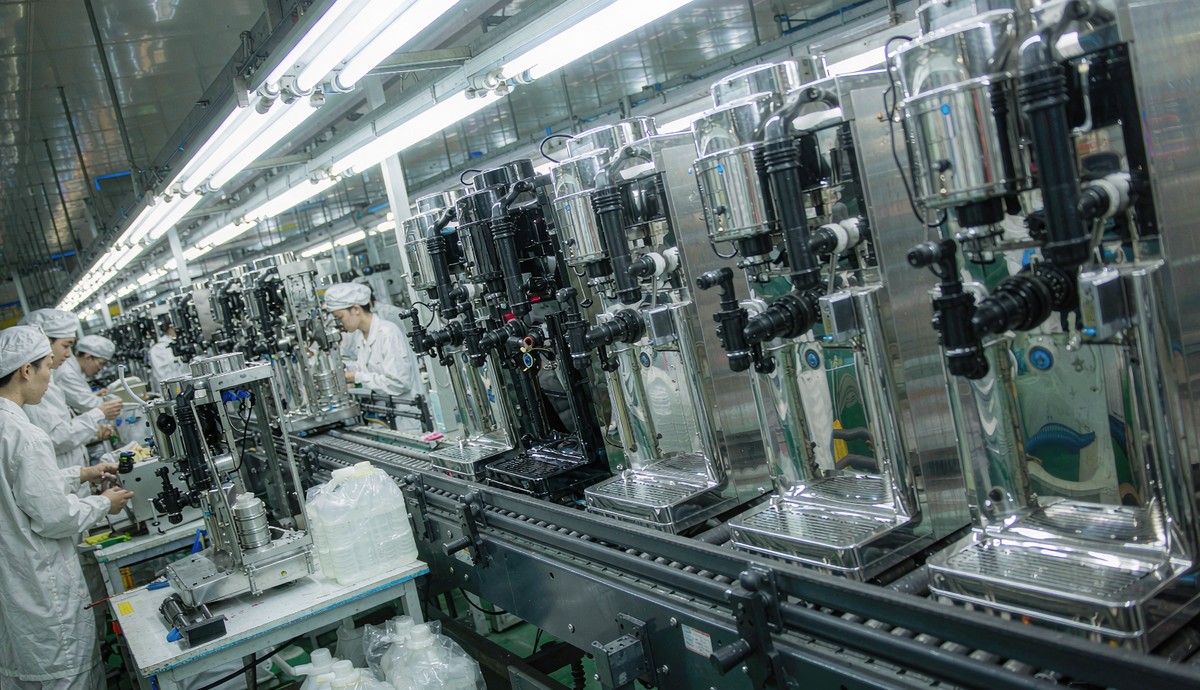
- OLANSI Healthcare (Guangzhou, China): A manufacturer of water purifiers, water dispensers, sparkling water dispensers and hydrogen water products since 2009. It runs a 60,000 m² factory with in-house moulding, filter production, a water laboratory and robotic assembly, with monthly capacity up to 80,000 units under an ISO 9001 system. It focuses on OEM/ODM supply for brands, distributors and retailers worldwide, including under-sink and countertop sparkling models.
- SodaStream (PepsiCo, Israel): The global leader in home sparkling water makers, with a large CO2 cylinder exchange network and countertop models sold worldwide.
- BRITA (Germany): A water filtration group offering filtration-integrated carbonation and sparkling water dispensers for commercial and hospitality applications.
- Waterlogic / Culligan-Quench (UK/Ireland and United States): Plumbed-in, bottleless still and sparkling water dispensers for offices and commercial settings, now operating under the Culligan group.
- Elkay (United States): A maker of commercial drinking water equipment, including sparkling and bottle-filling stations for offices, schools and public spaces.
- Bevi (United States): A maker of smart, connected countertop and undercounter sparkling and flavoured water dispensers for offices, with digital flavour and customisation features.
- Zip Water (Australia): A premium maker of under-sink boiling, chilled and sparkling water systems for residential and commercial markets worldwide.
- Blupura (Italy): An Italian manufacturer of professional sparkling water dispensers and carbonation systems for HORECA and office environments.
- Ningbo KangTan Intelligent Technology (China): A Chinese manufacturer of sparkling and soda water makers supplying high-volume desktop and commercial units.
- Ningbo Qiangxin Intelligent Technology (China): A Chinese soda water dispenser manufacturer offering UL-, CE- and NSF-certified sparkling machines for home, office and HORECA use.
For private-label buyers, the key difference between these groups is flexibility. The large beverage and appliance groups mainly sell their own branded systems, while specialist OEM/ODM manufacturers such as OLANSI customise platforms, panels, CO2 formats, packaging and filter programs for each brand and market. The market context is set out in the top 10 water purifier manufacturers in China, which profiles the broader purifier manufacturing base these carbonation specialists sit within.
Which questions should brands ask a sparkling water dispenser manufacturer?
A short list of direct questions reveals whether a manufacturer can support a sparkling water program rather than just ship a box:
- Which carbonation technology and dispenser formats are available now, and which are certified for the target market?
- Which CO2 cylinder standards does the dispenser accept, and is exchange or refill supported?
- What is the carbonation level in volumes of CO2, and is it adjustable?
- Which filtration stage sits before the carbonator, and what is its rated capacity and replacement interval?
- What test certificates are provided for the cylinder, carbonator and electrical system?
- What is the minimum order quantity for logo, colour, CO2 format and functional customisation?
- How long will replacement filters, CO2 cylinders and spare parts be supplied?
- Which markets and customers does the manufacturer already supply?
Specific, technical answers indicate a capable partner; vague answers on the CO2 and pressure side are a warning sign, because those are the areas where a cheap supplier cuts corners that surface later as recalls or warranty claims. The step-by-step workflow that follows these questions is described in the water purifier OEM process.
What are the most common mistakes in sourcing sparkling water dispensers?
The mistakes that most often damage a sparkling water program are predictable and avoidable:
- Wrong format: Choosing a countertop unit for a commercial channel, or a fountain for a retail channel.
- Under-specified carbonation: Not stating carbonation level, temperature and CO2 consumption, so two bidders price two different machines.
- Ignoring the CO2 aftermarket: Locking a proprietary cylinder or forgetting to plan refill logistics.
- Late certification: Ordering before pressure-vessel, electrical and water-contact approvals are confirmed for the target market.
- Demo-only testing: Approving samples without a repeated pour, burst and taste protocol.
- Price-only comparison: Comparing factory price instead of landed cost plus cost per litre of carbonated water.
- Weak packaging: Underestimating packaging strength for a pressure-vessel product shipped through e-commerce.
- No spare-part and filter agreement: Launching without a stock of filters, cylinders and service documentation.
Each of these is cheaper to prevent at the specification stage than to fix after launch, and most trace back to the same root cause: treating a carbonated product as if it were a still-water dispenser with a bonus feature. For the broader dispenser category’s pitfalls, the countertop and bottleless dispenser sourcing guide lists the cross-cutting ones.
Frequently asked questions
Are sparkling water machines worth it for a distributor?
Yes, when the CO2 and filter aftermarket is designed in, because sparkling water dispensing creates a recurring consumable relationship that a still-water dispenser does not. The economics are a trade-off: the hardware carries a higher specification and certification burden, but the cost-per-litre model and the refill business are strong once cylinder logistics are set up. The deciding factor is whether the target channel has enough dispense volume to make refillable cylinders economical; at low volume the simpler single-use route wins.
What is the difference between still, sparkling and flavoured sparkling dispensers?
A still dispenser filters and delivers non-carbonated water; a sparkling dispenser adds a carbonator and CO2 cylinder to deliver chilled sparkling water; a flavoured sparkling dispenser adds a concentrate or post-mix stage that injects flavouring at the dispense point. Each added stage raises complexity, certification and hygiene requirements, so brands usually start with still and sparkling, then add flavouring only where the channel demands it, such as office or foodservice.
How long do sparkling water dispensers last?
A well-built sparkling water dispenser typically lasts five to ten years, with the carbonator, cooling system, seals and electronic controller as the wear items, and the CO2 cylinder and filters replaced on a regular cycle. Service life depends far more on duty cycle and maintenance than on brand, which is why the sourcing decision should weigh serviceability and spare-part supply as heavily as the initial price. Pressure components should be re-tested on the schedule the certification requires.
Can a sparkling water dispenser be customised with a private brand?
Yes, and this is the core of the OEM/ODM model for the category. A manufacturer can apply a brand’s logo, colours and panel graphics, adjust carbonation levels, CO2 cylinder format, filter type and functions, and supply branded packaging and manuals, with deeper changes such as custom enclosures possible for larger volumes. The full range of options and how to run the project is described in the OEM/ODM water purifier and dispenser manufacturing guide.
Source sparkling water dispensers from OLANSI
OLANSI Healthcare has manufactured water purifiers, water dispensers and home health appliances in Guangzhou since 2009. It runs a 60,000 m² factory with in-house moulding, filter lines, robotic assembly and a water laboratory, with monthly capacity of up to 80,000 units under an ISO 9001 quality system. Its sparkling water dispenser range covers countertop, under-sink and commercial formats, alongside water dispensers, water purifiers and hydrogen water makers.
Through its OEM/ODM service, OLANSI supports brands and distributors with platform selection, carbonation and CO2-format customisation, certification support, private-label packaging and long-term filter and cylinder supply. Send your target market, sales channel, preferred dispenser format, required certifications and expected volumes. The team will recommend suitable models with a quotation. Contact OLANSI to request samples, a catalogue or an OEM/ODM proposal for your sparkling water dispenser range.